8 Texas State Parks Near Fort Worth: Drive Times and Tips
It’s Saturday morning. The calendar’s clear, the coffee’s still warm, and you’re staring at the same question a lot of Fort Worth weekends start with. Is a longer drive southwest for dinosaur tracks worth it, or will a closer lake and a picnic table do the job just fine?
That choice is the whole point of this guide to Texas state parks near Fort Worth. I’m not ranking these eight parks from best to worst. I’m framing each one by the trip it actually suits, whether that’s a two-hour morning, a half-day with one clear purpose, a full weekend under a tent, or a multi-day lake stay where driving home the same night would waste the best hours.
Drive times here are estimates, and they’re only half the decision. The other half is reliability. A park can be close on the map and still be a poor pick if trails close after rain, the day-use lot fills early, or the activity you wanted depends on river or lake conditions that changed overnight.
So use this list fast. Find the park that matches the day you’ve got, note the practical catch for that park, then confirm fees, swimming rules, and alerts on the official park page before you load the car. That’s how you avoid the classic Fort Worth mistake, driving out on a clear morning and discovering the plan was never going to work that day.
Table of Contents
- 1. Dinosaur Valley State Park (Glen Rose)
- 2. Lake Mineral Wells State Park & Trailway
- 3. Possum Kingdom State Park
- 4. Cedar Hill State Park
- 5. Fort Richardson State Park & Historic Site
- 6. Lake Whitney State Park
- 7. Cleburne State Park
- 8. Meridian State Park
- Texas State Parks Near Fort Worth at a Glance
- Pick Your Fort Worth Park by the Trip You Want
1. Dinosaur Valley State Park (Glen Rose)
Start here if you want the one park in this list nobody confuses with any other. Dinosaur Valley sits along the Paluxy River near Glen Rose, southwest of Fort Worth, and it’s built around tracks you can stand next to in the riverbed. That’s a strong same-day trip if you leave early, and an even better overnight if your kids want to return to the tracks twice.
The scale helps explain the draw. The Texas Parks and Wildlife Department history page says the park covers 1,587 acres, opened in 1972, and protects tracks made roughly 113 million years ago during the Cretaceous Period. You’ll see evidence of three-toed theropods and large, rounded sauropod impressions in the exposed Paluxy riverbed.
Here’s a quick visual breakdown of what a track-focused visit looks like.
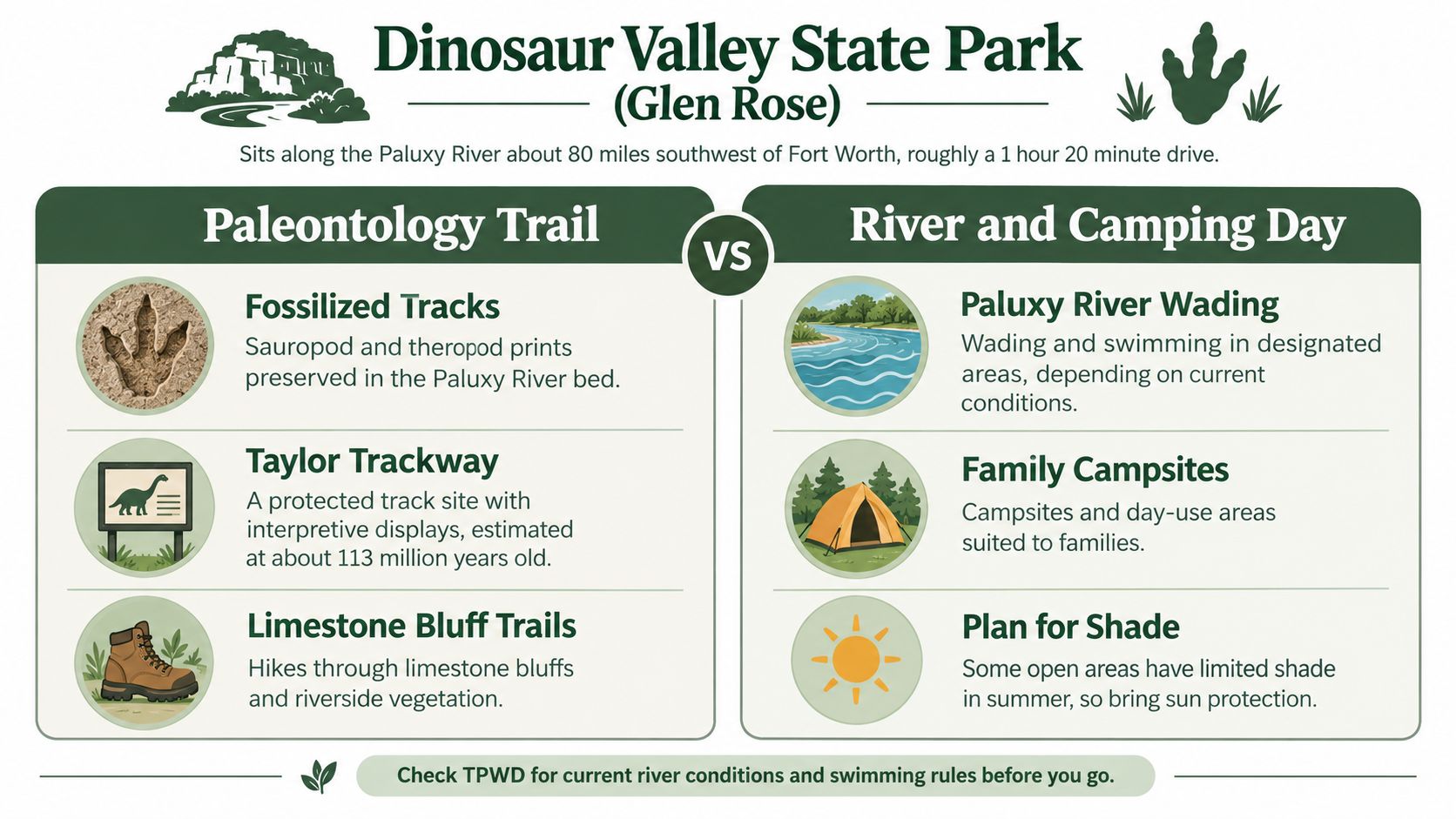
How a Good Day Usually Goes
Families do this well when they walk the track sites in the cool morning, then switch to wading in the Paluxy once the limestone heats up. Teachers use the same sequence for field trips, moving from Cretaceous geology at the tracks to a shaded lunch and a short trail. Either way, don’t plan the tracks for midday in summer. The heat off pale rock is punishing.
The catch is footing and water. Limestone gets slippery when wet, and river conditions decide what you can see and where you can safely swim. Check current conditions before you leave, not when you’re standing at the bank.
- Wear water shoes with grip: Smooth sandals slide on wet limestone.
- Arrive early: The popular track sites get crowded and hot.
- Pack sun protection and water: Shade is limited near the riverbed.
This short video gives you a sense of the riverbed before you commit the drive.
2. Lake Mineral Wells State Park & Trailway
If Dinosaur Valley is the destination trip, Lake Mineral Wells is the relaxed reset. It sits west of Fort Worth on Lake Mineral Wells, with woodland, grassland, shoreline, and a long multi-use trailway that links the park to nearby communities. I’d pick it for a same-day outing that doesn’t need a single headline attraction to justify the drive.
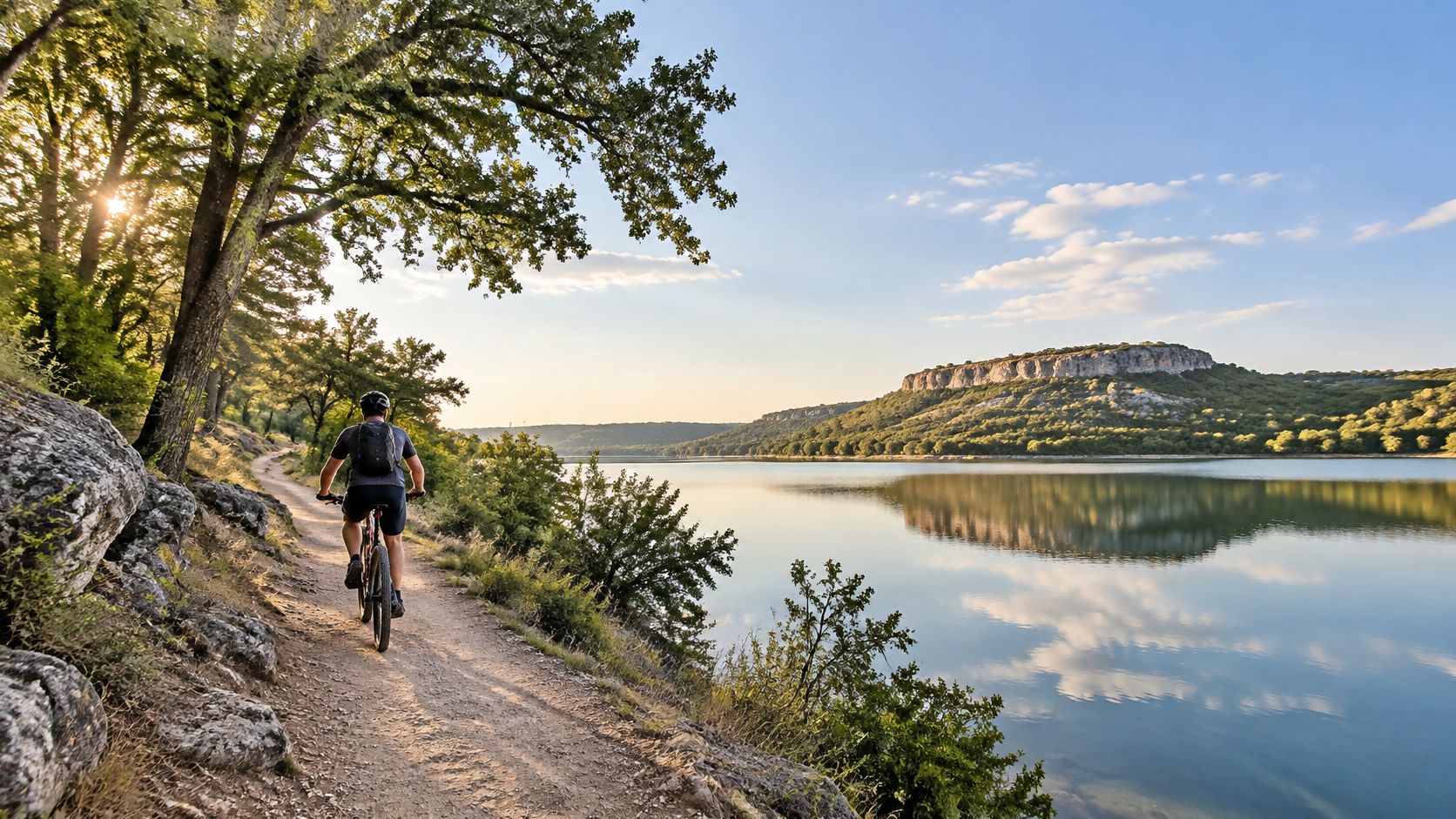
Cyclists get the most out of the format. Say you park at the lake, ride an out-and-back section of the trailway in the morning, then come back for lunch and an hour of bank fishing. You’ve used the park’s two strengths without rushing either one. Anglers working the cooler morning hours follow the same logic in reverse.
This is the kind of lakeside riding the park suits best.
The surrounding town adds context you’ll notice on the drive in. Mineral Wells built its identity on mineral-water spa heritage, so the trip pairs naturally with a slow stop in town after the park. That makes it easier to fill a full day without forcing extra miles on the trail.
Practical rule: Carry more water than you think you need on the trailway. Shade and water stops may be limited, and turning around thirsty ruins an otherwise easy ride.
Plan Around Heat and Lake Level
Check trail status and lake levels before you plan a boat launch. What works for a shoreline walk may not work for launching. Spring and fall give you the most comfortable temperatures for the exposed sections.
Bring bug spray for lakeside areas in warmer months. It’s a small thing, but it’s the difference between staying for sunset and packing up early. For most Fort Worth visitors, that’s the whole trade-off here. It’s not dramatic. It’s easy, flexible, and close enough that you don’t need an overnight to feel you got your money’s worth.
3. Possum Kingdom State Park
Possum Kingdom is where I’d stop pretending a day trip is enough. The park sits on Possum Kingdom Lake in Palo Pinto County, well west of Fort Worth, and the draw is scale. Clear water, rugged shoreline, and steep rock bluffs give you a bigger lake experience than the nearer metro parks can match. That rewards a full weekend, not a quick swim and a long drive home.
Families who rent a pontoon boat near the lake understand the rhythm. You launch in the morning, find a cove, swim, eat on the water, and let the afternoon run long. Campers booking lakeside sites for a summer weekend are after the same thing. The best hours here are early morning and late evening, and overnight visitors get both.
If you’re comparing this kind of trip with other reservoirs, the guide to the best boating lakes in Texas helps you judge whether Possum Kingdom’s drive beats a closer launch. For many boaters, it does. For a family that only wants two hours of swimming, it doesn’t.
The Catch Is Logistics
Services near the park are limited, so you can’t improvise your way through missing fuel, ice, or food. Plan supplies before you leave Fort Worth. Check the wind forecast too. A big open reservoir that looks calm at the ramp can turn choppy by afternoon, and that changes the day for smaller boats and young swimmers.
- Book campsites early: Holiday weekends fill first, and lakeside sites go fastest.
- Bring a life jacket for everyone: Texas boating rules require them, and rentals don’t excuse you from checking fit.
- Fuel up before the final stretch: Don’t count on convenient stops near the park.
Choose Possum Kingdom when the lake itself is the trip. If you’re squeezing it between other plans, you’re paying the longest drive in this list for the shortest version of what makes it good.
4. Cedar Hill State Park
Cedar Hill is the most convenient park here, and convenience creates its main problem. It sits on Joe Pool Lake south of Dallas, east of Fort Worth, close enough for a weekday evening or a half-day weekend plan. Because it’s that accessible, parking, picnic space, and trailheads can fill before you expect them to.
The resources are bigger than a quick-visit park usually offers. The Texas Parks and Wildlife Department park page lists 1,826 acres on the shore of 7,500-acre Joe Pool Lake, approximately 30 miles from downtown Fort Worth. The same page notes the state acquired the park in 1982 and opened it in 1991, and that the DORBA Trail system crosses 1,200 acres for hikers and mountain bikers.
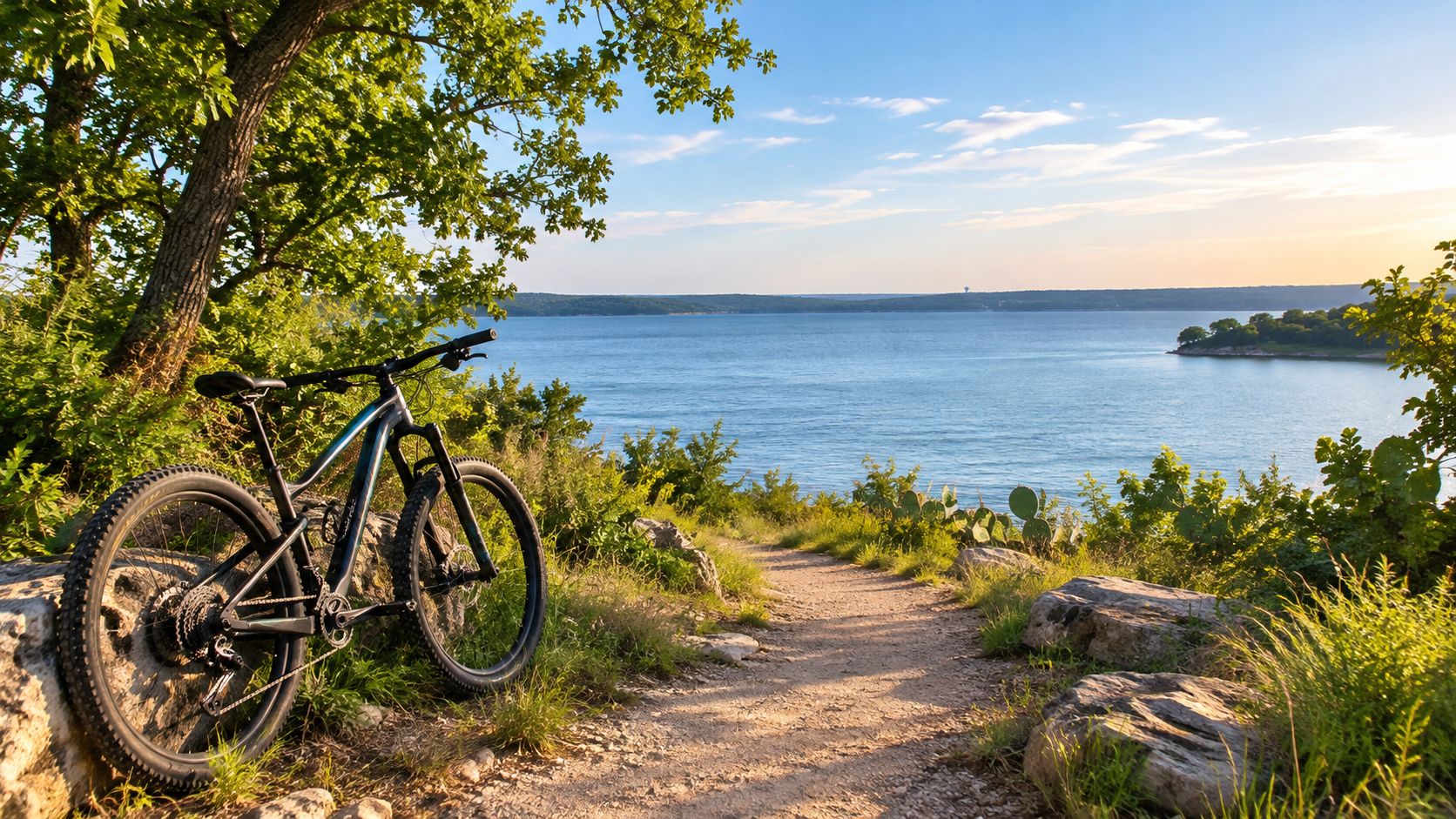
Mountain bikers use those trails as a training ground for regional races, which tells you something about the effort level. This isn’t a flat loop for a casual spin. Families use the other side of the park, day-use areas for picnics and lake swimming in summer, with Penn Farm adding a historic stop between activities.
A trail view like this is why riders keep coming back.
Check the Trail Before You Load the Bike
Rain changes everything here. Muddy sections close, and riding them damages the surface for everyone after you. Check conditions after rain, bring a repair kit and extra water, and have a backup plan at the lake if the trail’s shut.
Time your drive outside rush hour if you’re coming from Fort Worth on a weekday. A short map distance doesn’t guarantee a short trip across the metroplex. Arrive early on weekends, and you’ll get the park you were hoping for.
5. Fort Richardson State Park & Historic Site
Some parks you visit for water. Fort Richardson, near Jacksboro northwest of Fort Worth, you visit for a story you can walk through. The park preserves a U.S. Army frontier post, with restored historic structures set in open ground that still feels like a working military site. Pair that with nearby Lost Creek Reservoir, and you’ve got a half-day with a clear purpose.
School groups come for frontier history lessons and site tours, and that structure works for families too. Read the interpretive signs as you go rather than treating the buildings as photo stops. The fort’s role protecting frontier settlements makes more sense when you move building to building in order. Anglers often flip the day, fishing Lost Creek Reservoir in the morning and touring the grounds once the bite slows.
If you’re building a shortlist of options in this direction, the list of state parks near Fort Worth shows how this drive compares with the lake parks to the west and south. Fort Richardson wins when history is the main event, not a backup for a rained-out swim.
Hours Matter More Here
A lake is open when you get there. A historic building may not be. Check museum and building hours before you arrive, because a locked interpretive center turns a purposeful trip into a short walk. That’s the practical catch, and it’s easy to avoid.
- Pack food and water: Amenities are limited, and you’ll stay longer than planned if the tour’s good.
- Combine activities: History in the morning, fishing or hiking after, fills the day without rushing.
- Bring sun cover: The open parade-ground feel means limited shade between structures.
Don’t drive to Jacksboro without confirming what’s open that day. The history is the reason for the trip, so protect it first.
6. Lake Whitney State Park
Lake Whitney suits people who want a large reservoir without the scene that comes with the biggest-name lakes. The park sits on Lake Whitney in Hill County, south of Fort Worth, and it keeps the formula simple. Fish, camp, swim, picnic, repeat tomorrow. I’d call it a full weekend park, because the drive feels long for a single afternoon but easy for two slow days.
Anglers set the tone. Say you launch from the park ramp at first light for bass, come in for a late breakfast at camp, then swim and picnic along the shoreline in the afternoon. That’s a complete day with no driving between activities. Families camping for the weekend follow the same loop, just with more time in the water and less time watching a fish finder.
Whitney sits in the Prairies and Lakes region, and browsing the Prairies and Lakes regional park listings helps if you’re deciding between this reservoir and the other southern options on this list. The difference is mood. Whitney is quieter and simpler, which is either the point or a drawback depending on your group.
Simple Amenities Mean You Pack the Rest
Don’t arrive counting on nearby supplies. Pack food and gear before you leave. Check lake level and ramp conditions before you commit to launching, since a shoreline picnic tolerates conditions a boat trailer won’t.
Bring your fishing license if you’re fishing beyond any park-specific exemption, and confirm current regulations before the trip. Spring and fall give you the most comfortable camping, with warm days for the water and cooler nights for sleeping. In high summer, plan the swim and shade hours as carefully as the fishing. The park rewards that planning. It’s not trying to entertain you every hour. It gives you a big lake, a campsite, and room to slow down.
7. Cleburne State Park
Cleburne is the easy yes. It’s a compact park on Lake Pat Cleburne in Johnson County, south of Fort Worth, and it doesn’t ask much of you. Wooded trails, a calm lake, picnic areas, and camping, all close enough that a relaxed same-day outing still feels relaxed on the drive home. For a family testing whether the kids actually like camping, I recommend starting here rather than committing to a longer haul.
Early morning is the park at its best. Kayakers paddle the calm water before the wind picks up, and the wooded trails stay cooler than the exposed shoreline later in the day. By late morning, families settle into picnic areas for cookouts and lake swimming, and the pace stays unhurried. Nothing here requires a schedule.
That simplicity has one catch. Rental options may be limited, so if paddling is the plan, bring your own kayak or canoe. Showing up hoping to rent is how a paddling morning becomes a picnic you didn’t pack properly for.
A Short Checklist for a Short Drive
- Bring your own paddle craft: Don’t base the day on rentals that may not be available.
- Check swimming rules: Confirm where swimming is allowed before anyone gets in.
- Pack insect repellent: Wooded trails mean bugs in warm months.
- Try a weekday: You’ll find quieter trails and easier picnic space.
Cleburne won’t impress visitors chasing a signature attraction. That’s fine. Its job is to be the park you actually use three or four times a year, because the drive is short, the lake is calm, and nobody in the car dreads the trip home.
8. Meridian State Park
Meridian is the quiet historian of this list. Near the town of Meridian in Bosque County, south of Fort Worth, the park is known for its Civilian Conservation Corps structures from the CCC era. Stonework, a small lake, and wooded campsites give it a character you feel immediately. It’s pretty, but it’s also a record of who built these parks and how.
Architecture students and history groups visit specifically to study that CCC stonework, and you’ll get more from the park if you borrow their approach. Walk slowly. Read the interpretive signs. Notice how the structures sit in the terrain rather than on top of it. Then do what campers here have always done, fish the lake and cook dinner within sight of work that’s lasted generations.
Worth knowing: Meridian rewards visitors who read the signs. Skip them and it’s a pleasant small park. Read them and the stonework becomes the main event.
Best as an Overnight
The drive south is long enough that an overnight makes the trip feel proportionate. You get a cooler morning for a walking tour of the historic features and an evening by the lake, instead of compressing both into a hot afternoon. Cooler months suit the historic walking best, when you can linger at each structure without hunting for shade.
Services are limited, so bring water and supplies with you. Check current access to historic structures before your trip too. Access can change, and the structures are why you’re coming. If your group wants constant activity, pick a bigger lake. If you want a small park with a genuine sense of place, Meridian is the one people remember years later.
Texas State Parks Near Fort Worth at a Glance
| Item | Drive Time from Fort Worth (est.) | Main Draw | Best For |
|---|---|---|---|
| Dinosaur Valley State Park (Glen Rose) | About 1 hr 20 min | Dinosaur tracks and Paluxy River | Families, fossil enthusiasts, and river recreation |
| Lake Mineral Wells State Park & Trailway | About 55–65 min | Lakeside multi-use trail | Biking, walking, fishing, and camping |
| Possum Kingdom State Park | About 1 hr 45 min–2 hr | Clear lake, rugged bluffs, and boating | Boating, swimming, and multi-day camping |
| Cedar Hill State Park | About 50–60 min, excluding traffic | Joe Pool Lake and mountain biking trails | Short trips, families, and biking |
| Fort Richardson State Park & Historic Site | About 1 hr 15 min | Historic 1867 Army post | History outings with hiking or fishing |
| Lake Whitney State Park | About 1 hr 25–35 min | Reservoir fishing and lakeside camping | Fishing, boating, and overnight stays |
| Cleburne State Park | About 55–65 min | Lake Pat Cleburne and wooded trails | Paddling, fishing, and beginner camping |
| Meridian State Park | About 1 hr 30 min | Historic CCC-era stone structures | History, photography, and quiet lake recreation |
Pick Your Fort Worth Park by the Trip You Want
Match the drive to the day you have. Cleburne and Lake Mineral Wells suit a relaxed same-day outing, because the plan stays simple and the drive home leaves the evening intact. Cedar Hill and Fort Richardson fit a half-day with one clear purpose, a trail ride or a historic tour, so confirm trail conditions or building hours before you go. Possum Kingdom, Lake Whitney, and Meridian reward an overnight, since their best hours are early and late. Dinosaur Valley works either way, provided you start at the tracks in the morning.
Distance is the wrong yardstick on its own. A close park with a closed trail wastes more of your Saturday than a farther park where the plan works all day. What you’re really buying is reliable hours outdoors.
Reliability starts with reservations and alerts. The Texas Parks and Wildlife Department reservations page explains that park capacity is based on visitor safety and resource protection, and that day passes on weekends and holidays should be reserved to guarantee entry. Popular parks can fill well ahead, so booking the pass belongs in the plan, on the same list as fuel and water. This guide doesn’t handle bookings: campsite and day pass reservations are made on the official Texas State Parks reservation site.
Cost deserves the same treatment. If you expect to visit several of these parks in a year, a Texas State Parks Pass can cover entry for passholders and their guests, so check the current pass price on TPWD’s official site before you buy. Whatever you pay at the gate, confirm each park’s fees, child pricing, swimming rules, pet rules, and closures on its official page, since conditions change.
Accessibility deserves a specific check too. The Texas Parks and Wildlife Department state parks directory notes that many parks have some accessible restrooms, campsites, trails, and visitor centers, and it advises calling individual parks because features vary. Ask about the exact combination you need: parking, toilets, trail surface, water access. Wet trails and changing lake levels can decide whether a route is usable that week.
None of this planning should scare you off. The Texas Parks and Wildlife Department five-year visitor study announcement reported 94% of visitors satisfied overall across 27,000 customer surveys at 70 state parks. The problems cluster before arrival: a full gate, a missed reservation, a fee you didn’t expect.
Each one is fixable the night before.
So pick by trip type, reserve what needs reserving, pack for the catch listed with your park, and check the official page the morning you leave. TX State Parks lists each park’s key facts and the date they were last checked, so you can compare the eight options side by side. The guide is independent and isn’t affiliated with or endorsed by TPWD, which is why the official park page stays the final word.
Pick the park that matches your next Saturday, then compare its fees, swimming access, dog rules, camping, and estimated drive time alongside the other seven before you reserve. TX State Parks gathers those pre-visit essentials for parks across all seven TPWD regions, with a source link and last checked date for each fact. Start your shortlist at TX State Parks and turn a clear calendar into a plan that still works when you arrive.
Fees, hours and rules change. Check the park's official TPWD page before you go.