8 Clean Lakes in Texas for Swimming and Water Quality
Clear water is only the starting point. A lake can look inviting while swimming access is restricted, rules vary by shoreline, or recent weather has changed conditions. “Clean” also doesn’t mean the same thing across every use: a reservoir may be suitable for boating yet have a localized water-quality concern, and clear water alone can’t confirm that swimming is safe.
This guide compares eight Texas destinations by their general water character, recreation options, and access. Balmorhea’s spring-fed swimming pool offers a different experience from a large reservoir, while lakes such as Buchanan and Canyon depend on specific public access points and changing levels. For any destination, check the relevant official source before traveling: TPWD for state park rules and alerts, LCRA for its lakes, the U.S. Army Corps of Engineers for Corps-managed sites, and local water authorities for their advisories.
Table of Contents
- 1. Balmorhea State Park and San Solomon Springs Pool
- 2. Inks Lake State Park
- 3. Lake Buchanan
- 4. Possum Kingdom Lake and Possum Kingdom State Park
- 5. Lake Tawakoni State Park
- 6. Lake Mineral Wells State Park
- 7. Lake Brownwood State Park
- 8. Canyon Lake and the Guadalupe River
- Clean Lakes in Texas: 8-Item Comparison
- Choose by Access, Conditions, and the Right Official Source
1. Balmorhea State Park and San Solomon Springs Pool
Balmorhea is the outlier on this list. The main draw isn’t a conventional reservoir or open lake, but a large swimming pool fed by San Solomon Springs in West Texas. Its spring-fed setting makes it one of the state’s best-known places for clear-water swimming, with a defined swimming area that feels different from a shoreline beach or boat launch.
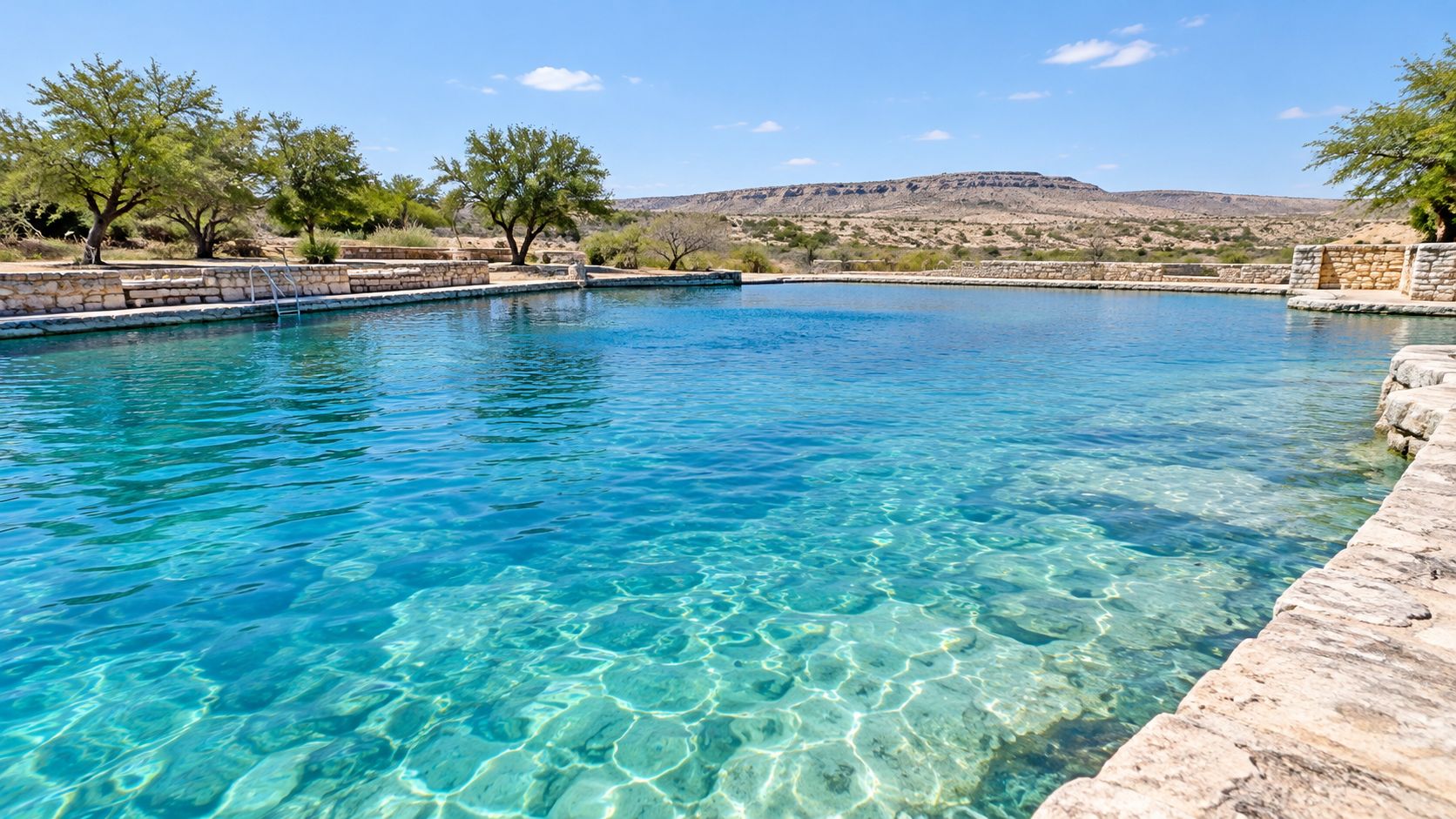
The pool also sits within a spring system that supports endangered Comanche Springs pupfish. That conservation role is a useful reminder that access and wildlife protection can shape visitor rules. Check TPWD’s Balmorhea State Park information for current swimming access, pet policies, and alerts rather than assuming all areas are open for the same activities.
Practical rule: Treat the pool as a managed swimming destination, not an unrestricted natural lake. Follow posted instructions intended to protect both visitors and the spring habitat.
Plan for a pool visit, not a remote lake day
Bring water shoes for hard surfaces and sun protection for the exposed desert setting. Food, fuel, and other services are limited nearby, so plan those needs before arriving. Early visits or weekdays can make the experience calmer, though access and crowding still depend on current park operations.
For context on other distinctive natural places in the state, see this guide to natural wonders of Texas. A short visual preview can help set expectations for the spring-fed setting.
2. Inks Lake State Park
At Inks Lake, the granite shoreline is part of the appeal. The lake lies along the Colorado River in the Highland Lakes area, and its blue water against exposed rock gives visitors a different visual experience from the wooded shores of East Texas or the limestone margins around Canyon Lake. Within the park, Devil’s Waterhole is a well-known swimming area, but its appearance doesn’t replace checking current access conditions.
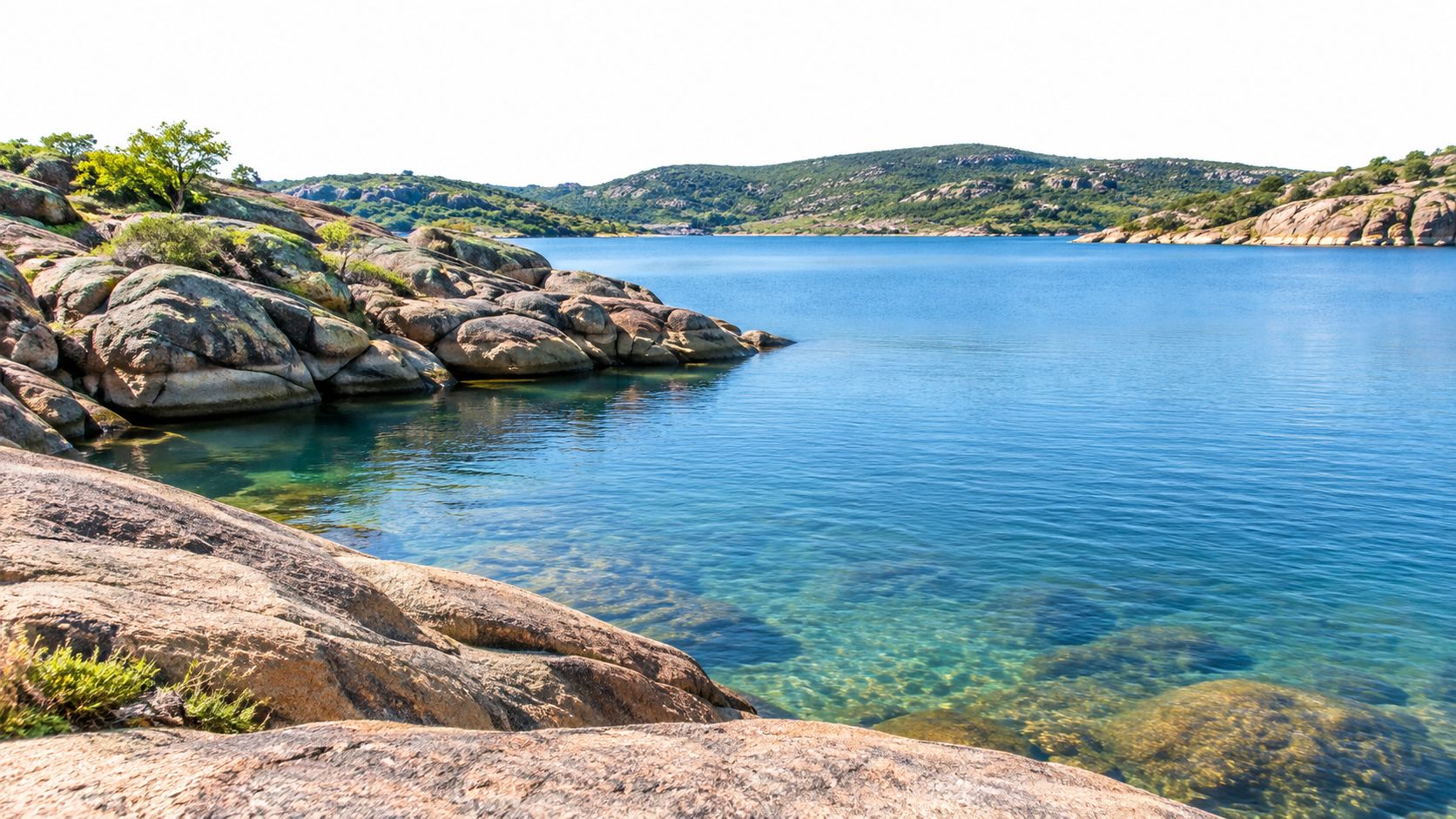
The practical distinction here is between lake character and a specific swimming spot. A visitor heading to Devil’s Waterhole should confirm park notices and rules with TPWD’s Inks Lake State Park page, especially before planning a swim around changing lake levels or seasonal conditions.
Granite makes access part of the plan
Rocky footing can be uncomfortable without suitable footwear. Water shoes are useful around uneven granite, and visitors should check the park’s current pet rules rather than assuming dogs can enter swimming areas.
Inks Lake suits people who want swimming and shoreline scenery in one park visit, but it isn’t a guarantee of a particular water level or bathing condition. If you’re planning to camp, confirm reservation availability directly through TPWD, particularly for popular travel periods. The park’s official notices are the better guide to what’s open than a general description of the lake as clear or blue.
3. Lake Buchanan
Lake Buchanan is a large Highland Lakes reservoir where visitors can combine boating, fishing, paddling, and shoreline time. Its open-water scale sets it apart from the more contained swimming experience at Balmorhea. Clear coves and deep water are part of its appeal, but conditions can differ across the reservoir, so a description of the lake as a whole won’t tell you what a specific access point looks like today.
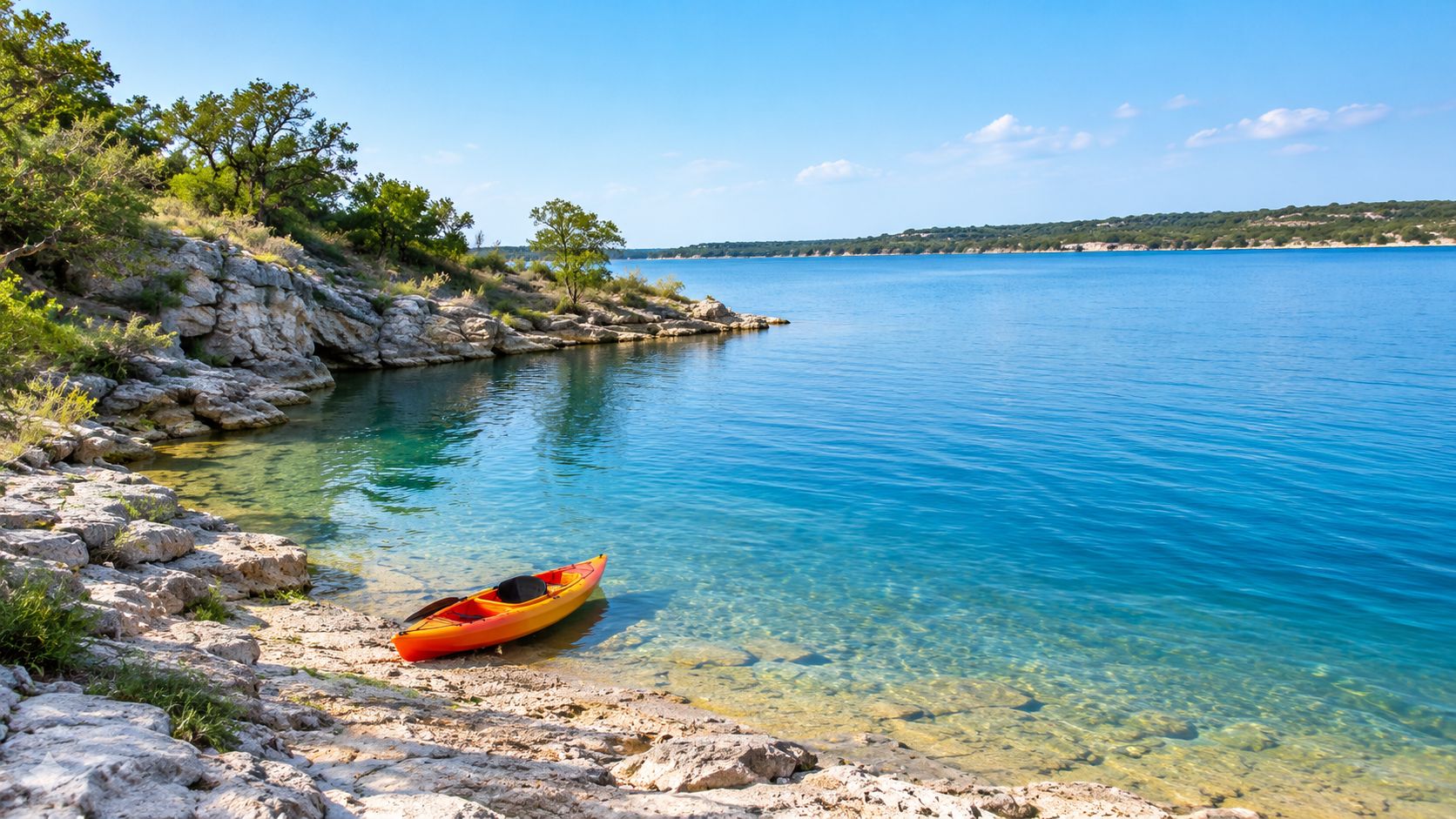
The Lower Colorado River Authority manages the lake system. Check LCRA’s lake information for current levels and access details before choosing a launch or shoreline destination. Public access points aren’t all state parks, so verify who manages the specific site and what facilities or rules apply.
A reservoir’s reputation doesn’t tell you whether a particular ramp is usable or a particular shoreline is open. Confirm the access point, not just the lake name.
Many shoreline areas offer limited shade, so bring drinking water and sun protection. Pack out trash, especially where facilities are sparse. For a low-key outing, a cove may be more suitable for paddling than an exposed stretch used by larger boats, but check local conditions and follow posted boating rules. Lake Buchanan works best for visitors who are comfortable planning around a large reservoir rather than expecting a single, clearly defined public swim beach.
4. Possum Kingdom Lake and Possum Kingdom State Park
Possum Kingdom Lake combines striking scenery with conventional reservoir recreation. Rocky canyon walls and clear-looking coves give parts of the lake a vivid blue appearance, while the larger body of water supports boating and fishing. The distinction matters: a scenic cove can be a satisfying place to spend time, but its appearance isn’t an official swimming clearance.
Possum Kingdom State Park provides a practical base for day use, camping, and boat access. Check TPWD’s Possum Kingdom State Park page for current facilities, campsite availability, and park notices. For boating basics and activity planning, consult the guide to boating in Texas state parks.
Match the access point to your plans
If you’re bringing a boat, confirm launch availability before setting out. Swimming and pet rules can differ by area, so don’t assume a rule posted at one facility applies around the lake. Visitors traveling on busy days should arrive with a plan for parking and boat access rather than relying on a particular ramp being available.
The lake’s steep and rocky margins also reward a little caution. Wear a life jacket when boating, follow posted rules, and keep children within close reach near the water. Possum Kingdom is a strong choice for visitors who want a reservoir outing with dramatic scenery, but the best plan starts with the park or access site, not with a general claim about clear water.
5. Lake Tawakoni State Park
Lake Tawakoni State Park offers a convenient mix of wooded trails, campsites, and water access for visitors traveling from the Dallas area. The lake is used for fishing and paddling, and sheltered coves can make kayaking or canoeing appealing when conditions suit a quieter outing. For anglers, the park is a place to plan time on the water; the fishery’s presence, however, doesn’t establish that a particular shoreline is suitable for swimming.
Check TPWD’s Lake Tawakoni State Park information for current park access, launch information, and swimming availability. Fishing rules and licensing requirements should also be confirmed before departure. TPWD’s fishing activity guide can help visitors find relevant park options, but the park page remains the place to verify current site-specific details.
Let the activity determine what you check
A paddler needs to know whether the intended access point is open and whether conditions are appropriate for a small craft. A swimmer should look specifically for current swimming notices and any applicable advisories, not infer safety from clear-looking water or from the presence of anglers.
Wooded trails and campsites can make insect repellent useful. If you’re planning an overnight stay, confirm campsite availability before traveling, particularly during popular spring and fall weekends. Lake Tawakoni works well for visitors who want several outdoor activities in one trip, as long as they treat swimming access as a separate question from general lake access.
6. Lake Mineral Wells State Park
Lake Mineral Wells is a quieter alternative to larger reservoirs in the region, with park trails, camping, and paddling contributing to its appeal. Visitors can make the lake one part of a broader park outing rather than planning the entire trip around a swim. That distinction is useful when a lake’s overall character sounds inviting but the current bathing status hasn’t been confirmed.
For current swimming and pet rules, boat-ramp conditions, and park alerts, consult TPWD’s Lake Mineral Wells State Park page. The responsible park authority is the best source for changes that affect a specific visit; a general description of the lake as clear or relaxed can’t confirm access on the day you arrive.
Build flexibility into a day outdoors
Some visitors come for a walk or campsite and decide whether to paddle after checking conditions. That approach is more reliable than making swimming the only purpose of a trip before confirming the rules and available access. Carry drinking water on warm days and plan for exposed areas where shade may be limited.
Spring or fall can be more comfortable seasons for combining trails and lakeside time, but weather and local conditions still matter. If you’re launching a boat, verify the ramp before packing equipment. Lake Mineral Wells is a good fit for travelers who want a low-key park visit, especially when they’re willing to make the lake activity conditional on current information.
7. Lake Brownwood State Park
Lake Brownwood State Park brings together lakeside camping, day-use areas, trails, and water access in Central West Texas. Anglers and boaters can plan around the reservoir, while families may prefer a campsite or a shorter shoreline visit. As with other Texas reservoirs, the lake’s general reputation doesn’t tell you whether a particular swimming area is open or whether recent conditions have affected recreation.
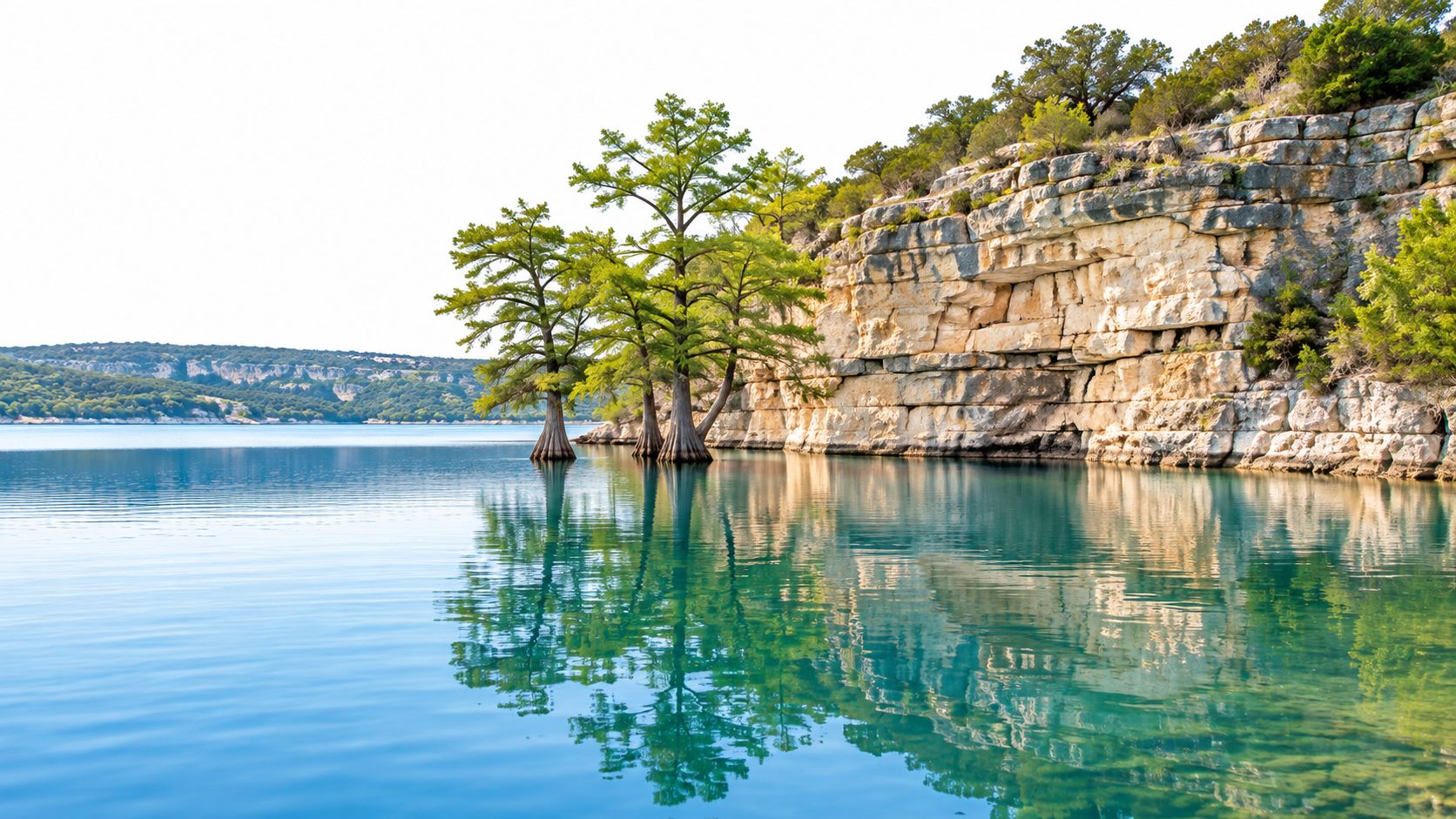
Use TPWD’s Lake Brownwood State Park page to check current cabin and campsite availability, swimming rules, and boating notices. This is particularly important if your plans depend on a specific facility rather than spending time near the water.
Pack for the location, not just the lake
Sun protection and extra drinking water are sensible choices for an exposed lakeside day. Fuel and supplies may be limited nearby, so prepare before leaving town. If you’re fishing, boating, or swimming, check the rules for that activity separately; access to the park doesn’t automatically mean every water activity is permitted in every area.
A practical visit can include a trail, a campsite, and time by the lake, with swimming left flexible until you’ve checked current notices. That makes Lake Brownwood a useful destination for mixed-interest groups, especially when some visitors want to fish or walk while others are interested in shoreline recreation.
8. Canyon Lake and the Guadalupe River
Canyon Lake’s limestone shoreline and generally clear-looking water make it a popular reservoir destination between San Antonio and Austin. Visitors come for swimming, paddling, and boating, while the nearby Guadalupe River offers a different setting downstream. Some travelers pair the lake with Guadalupe River State Park, but the river park has its own access points and rules, so treat it as a separate stop rather than an extension of the reservoir.
The U.S. Army Corps of Engineers manages Canyon Lake. Check its Canyon Lake project information for current lake levels, notices, and access information. For a river outing, use TPWD’s Guadalupe River State Park page to confirm park-specific rules and conditions.
Verify the exact place you’ll enter the water
Swimming and pet policies can vary by access point. Check the rules for the facility you plan to use, and arrive early on busy summer days if parking is essential to your plan. For paddling or boating, make sure the launch is open and suitable for your craft before loading equipment.
Canyon Lake is a better choice for visitors seeking broad reservoir recreation than for anyone expecting a single controlled swimming pool or uniform shoreline conditions. Its proximity to the Guadalupe River adds options, not a guarantee that the two sites share the same water conditions or access rules. Pick the lake park or river park first, then verify that location’s current notices.
Clean Lakes in Texas: 8-Item Comparison
| Destination | Water and setting | 🔄 Visit complexity and resources | ⭐ Key advantages | 💡 Ideal use |
|---|---|---|---|---|
| Balmorhea State Park (Phantom Lake / San Solomon Springs Pool) | Exceptionally clear, spring-fed pool; steady, relatively cool water in a West Texas desert setting | Remote; plan fuel and supplies. Check wildlife-related swimming rules | High visibility for snorkeling and wading; historic CCC-era pool | Clear-water swimming, snorkeling, and a distinctive spring ecosystem |
| Inks Lake State Park (Inks Lake) | Clear Highland Lakes water, granite shoreline, and Devil’s Waterhole | About 1 hour from Austin; reserve campsites early and bring water shoes | Swimming, diving, paddling, and camping in one park | Central Texas swimming, camping, and water activities |
| Lake Buchanan (Highland Lakes) | Generally clear reservoir with rocky coves and extensive shoreline | About 1.5 hours from Austin; check lake levels and access-site rules | Large lake with boating, paddling, and fishing opportunities | Boating, fishing, and exploring coves |
| Possum Kingdom Lake and Possum Kingdom State Park | Clear water in many areas, with steep rocky and limestone shores | About 1.5–3 hours from the Dallas–Fort Worth area; reserve campsites and check launch conditions | Scenic reservoir with park camping and boat access | Boating, camping, and scenic lake outings |
| Lake Tawakoni State Park | Generally clear reservoir with wooded shoreline and sheltered coves | About 1 hour from Dallas; check swimming availability and reserve campsites on busy weekends | Convenient mix of camping, trails, fishing, and paddling | Dallas-area weekend trips and calm-water paddling |
| Lake Mineral Wells State Park | Relatively clear reservoir, with trails and wooded campsites | About 1 hour from Fort Worth; check ramp conditions and prepare for summer heat | Quieter setting with convenient trail and camping options | Relaxed camping, hiking, and paddling |
| Lake Brownwood State Park | Generally clear reservoir with lakeside campsites, cabins, and trails | Roughly 2 hours from Abilene; bring supplies and check lodging availability | Combines lake recreation, camping, and wildlife viewing | Camping, fishing, and family outings in Central West Texas |
| Canyon Lake (Guadalupe River) | Generally clear Hill Country reservoir with limestone shores; river park nearby | About 45 minutes–1 hour from San Antonio; check access rules and arrive early on summer weekends | Convenient to San Antonio and Austin; lake and river visits can be combined | Swimming, paddling, boating, and paired lake-and-river trips |
Choose by Access, Conditions, and the Right Official Source
The best clear-water destination depends on the kind of outing you want. Balmorhea offers a defined spring-fed swimming experience, while the Highland Lakes destinations, including Inks Lake and Lake Buchanan, center on reservoir recreation and distinct shorelines. Canyon Lake provides broad access options with the added possibility of visiting the Guadalupe River nearby, but its lake and river sites have separate managing authorities and rules.
The most important distinction is between general water character and current bathing suitability. A lake described as clear may still have restricted swimming access, changing water levels, or local conditions that call for caution. Texas evaluates water quality through a statewide monitoring and assessment framework rather than assigning each lake a single “clean” label. TCEQ’s recurring Texas Integrated Report of Surface Water Quality compares monitored waters with state standards, but a broad assessment isn’t a same-day swimming clearance.
For a visit, start with the exact park, ramp, or public access point you plan to use. Check the managing authority’s latest alerts and closures, confirm whether swimming is allowed there, and review water-level information before committing to a boat launch. TPWD’s official park pages are the primary source for state park rules, reservations, pets, and facilities; LCRA provides information for its lake system, and the Corps provides notices for Corps-managed Canyon Lake sites.
Water can also change after weather and runoff. Visible clarity is only one part of the picture, so avoid treating scenery or a lake’s reputation as proof of safety. If water looks discolored or has visible scum, don’t enter it; check official advisories and follow local public-health guidance. When swimming conditions aren’t confirmed, consider a different activity or location rather than assuming that open park access means safe bathing.
For easier trip planning, TX State Parks’ Texas park directory can help you compare state park access, activities, pet policies, camping, and other visit details. Use it as a starting point, then follow its links to the relevant official agency for current fees, rules, alerts, and closures. Confirming those details before you leave is a more dependable way to choose among the clean lakes in Texas than relying on a photo or a broad destination label.
TX State Parks brings together practical information on Texas state parks, including swimming access, pet rules, camping options, and links to official sources. Compare destinations for your next lake trip, then visit TX State Parks to plan around the park and activities that fit your visit.
Fees, hours and rules change. Check the park's official TPWD page before you go.