10 Best Bass Lakes in Texas: Where to Fish in 2026
It’s Saturday morning, the boat’s on the trailer, and you’re deciding whether to drive to a trophy lake or launch closer to home. The distant lake has the reputation. The nearby ramp gives you more time with a lure in the water, assuming it’s open and the wind cooperates.
Start with your goal, not just the biggest lake. A personal-best largemouth calls for a different plan than a family afternoon from the bank. Your travel time, boat, fishing experience, and tolerance for crowds matter as much as the name on the map.
The best bass lakes in Texas aren’t interchangeable. Fork suits a deliberate trophy hunt. Conroe makes sense for Houston-area day trips. Falcon and Amistad require more preparation, while park-based trips can work better when part of the group wants to camp, hike, or bring the dog.
Use these lakes as a shortlist, not a promise of easy fishing:
- Season: Match your approach to water temperature, weather, and available cover rather than a calendar alone.
- Access: Confirm a usable ramp or lawful bank-fishing location before committing to the drive.
- Rules: Check current lake-specific fishing regulations, license requirements, and park restrictions.
A famous fishery with an unusable launch isn’t your best option that weekend. Pick water you can reach, fish safely, and understand.
Table of Contents
- 1. Lake Fork
- 2. Sam Rayburn Reservoir
- 3. Toledo Bend Reservoir
- 4. Choke Canyon Reservoir
- 5. Falcon Lake
- 6. Lake Amistad
- 7. Lake Conroe
- 8. Lake Livingston
- 9. Possum Kingdom Lake
- 10. Richland-Chambers Reservoir
- Quick comparison of the 10 best bass lakes in Texas
- Pick Your Lake and Plan the Trip
1. Lake Fork
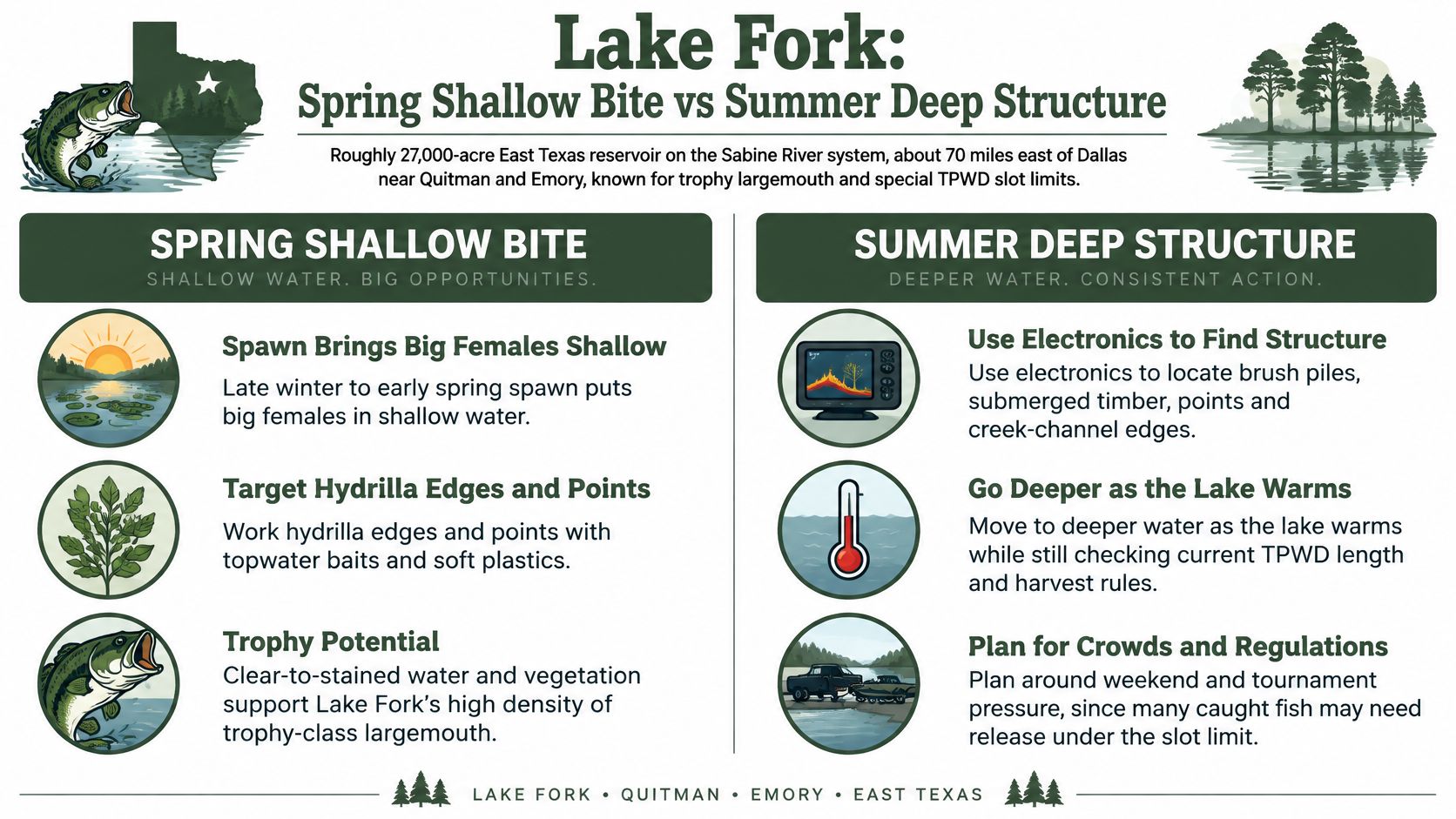
Choose Fork when a trophy matters more than a busy morning of bites. Its reputation has documented substance: the TPWD state-record table includes a 16.10-pound largemouth from Lake Fork caught in 1992. That’s evidence of exceptional individual potential, not a forecast for your trip.
For a first visit, learn a creek arm rather than racing between distant waypoints. Start around accessible cover, then work toward nearby points and channel edges. A Texas-rigged soft plastic lets you probe wood without constantly hanging exposed hooks.
Fish the conditions, not the reputation
Say you arrive after a cold front. Instead of forcing a shallow topwater bite, slow down around cover beside deeper water. A jig or lightly weighted plastic gives you a more controlled presentation.
- Season: In spring, investigate protected shallows and nearby staging areas. During summer, use sonar to locate brush, timber, and depth changes before casting.
- Access: A boat gives you more options, but submerged wood demands conservative navigation. Bank anglers should identify a specific public fishing location before traveling.
- Rules: Check current TPWD length and harvest restrictions before keeping a bass. Don’t assume statewide rules describe every lake.
Fork can attract anglers chasing the same recognizable cover. Give occupied water room, approach carefully, and resist the urge to change lures after every empty cast.
2. Sam Rayburn Reservoir
Sam Rayburn suits anglers who enjoy finding a pattern across different kinds of cover. You can build a trip around shallow presentations, offshore structure, or a deliberate progression between them. The mistake is trying to fish every promising stretch before understanding any of it.
Its fishery also reflects management, not just reputation. TPWD’s historical stocking report documents 97,000 largemouth-bass fingerlings stocked in Sam Rayburn in 1966. That historical investment provides context, but it doesn’t tell you where bass are holding today.
Make a manageable water plan
For a weekend visit, choose a creek arm with protected fishing and nearby deeper structure. Start with a moving bait to locate activity, then work productive cover with a worm or jig. Save useful waypoints, including your safe return route.
Season: Explore creek arms and shallow cover during spring and fall. In summer, investigate channel swings, brush, and offshore depth changes rather than assuming every bass stays deep.
Access: Choose your launch around the forecast. A convenient ramp can become an inconvenient return trip if you must cross exposed water into building wind.
Rules: Confirm current TPWD fishing regulations and the launch operator’s hours, fees, and closure notices.
Boat-handling rule: Choose the return route before choosing the fishing spot. A promising bite doesn’t justify crossing water your boat or passengers can’t handle comfortably.
3. Toledo Bend Reservoir
Toledo Bend is a strong choice for an angler who wants a destination trip rather than a quick exploratory lap. Its Texas-Louisiana setting adds a planning task: establish which current licensing and fishing rules apply to your exact activity and location.
Don’t treat the reservoir as a blank map to conquer. Pick a section, study creek channels and navigation routes, and identify sheltered alternatives. You’ll learn more by fishing a coherent area carefully than by spending the morning running between unrelated spots.
Start with a creek, not the whole reservoir
Say you’ve booked a weekend and the wind forecast worsens. A launch near a protected creek can preserve useful fishing time without a long exposed crossing. Work visible wood with a spinnerbait or squarebill where appropriate, then slow down with a Texas rig beside cover.
- Season: During spring, investigate protected coves and the routes connecting them to deeper water. In summer, use electronics to examine timber and channel structure before committing to a spot.
- Access: Treat marked navigation information as essential. Idle through unfamiliar timber, and don’t assume another boat’s route is suitable for your draft.
- Rules: Verify current Texas-Louisiana licensing arrangements, shore-fishing requirements, and lake-specific harvest rules through official agencies.
A guide can be useful when your main problem is unfamiliar water rather than tackle selection. Ask about safe navigation, launch choices, and how changing water levels affect the areas you intend to fish.
4. Choke Canyon Reservoir
Choke Canyon fits a South Texas fishing-and-camping weekend, provided the water and access cooperate. Don’t build the trip around an old photograph of a full reservoir. Confirm the launch you intend to use, then choose fishing areas that make sense at the current level.
Shallow cover is only useful when it’s submerged. If your planned shoreline is dry, look for remaining cover near a channel or a point with a usable depth change. Adjust the location before buying another lure.
Build the day around heat and access
A practical family plan is to fish early, take a shaded midday break, and return only if conditions suit everyone. Keep drinking water accessible rather than buried under tackle. Don’t make a child’s first fishing trip an endurance test.
- Season: In spring, work suitable points and shallow cover with spinnerbaits, crankbaits, or soft plastics. During hot weather, prioritize comfortable early and late fishing windows.
- Access: Check Choke Canyon State Park’s current notices and the status of your intended ramp or bank area. A campsite reservation doesn’t guarantee your preferred launch is usable.
- Rules: Verify TPWD fishing regulations and park-specific day-use, camping, and boating restrictions.
For a short trip, fish a compact area thoroughly. Repeatedly trailering between access points can consume the time you hoped to spend fishing.
5. Falcon Lake
Falcon is for anglers willing to exchange convenience for a deliberate border-water trip. The international setting changes the preparation. You need a clear fishing area, a legal operating plan, and current information about access and conditions before launching.
Start with the Texas lake levels guide, then verify the intended ramp with its operator. A reservoir-level reading helps you understand conditions, but it doesn’t establish that a particular launch is open or suitable for your trailer.
Prepare before heading away from the ramp
Suppose your plan involves fishing submerged brush. Rig an abrasion-resistant setup and a weedless plastic before leaving the launch. Position the boat so you can pull fish away from cover without fighting both the fish and an uncontrolled drift.
Season: Consider cooler-weather trips if summer heat would limit your fishing time. During warm conditions, start early and reassess as wind and temperature rise.
Access: Verify Falcon State Park’s current camping and access information if you’re using it as your base. Carry drinking water, navigation equipment, and a reliable way to communicate your plans.
Rules: Establish the international boundary and confirm applicable licenses, permits, boating requirements, and current advisories. Don’t cross into Mexican waters casually.
Treat the international boundary as part of your route planning, not something to figure out after you’ve followed a promising shoreline.
A local guide may be the sensible choice when you want to fish confidently without learning unfamiliar navigation and access details during a short visit.
6. Lake Amistad
The appeal at Amistad is clear-water, rocky-structure fishing in a desert setting. Choose it when you enjoy reading points, watching your electronics, and adjusting presentations. Don’t choose it merely because photographs make the water look calm.
Clear water calls for care with boat position. Keep some distance from your target, avoid unnecessary noise, and make controlled casts. Natural-colored plastics, a drop-shot rig, and a jig give you useful alternatives when a moving bait doesn’t draw a response.
Work a point before making another run
For a first visit, select a rocky point near your launch and fish its depth changes systematically. Start with a crankbait where the depth allows, then use a slower presentation to examine promising structure. Don’t leave solely because the first approach failed.
- Season: During warm weather, begin early and investigate deeper structure as conditions change. During cooler periods, adjust your retrieve to fish response rather than assuming clear water means aggressive fish.
- Access: Confirm recreation-area launch status, available services, and your return route. Carry extra water and enough fuel for a conservative margin.
- Rules: Check current national recreation area requirements, Texas fishing regulations, and international-boundary restrictions.
Use this video as trip inspiration, not as confirmation of current conditions.
Keep camping arrangements separate from fishing assumptions. Verify the actual campground and driving route instead of assuming a nearby attraction provides direct lake access.
7. Lake Conroe
For Houston-area anglers, Conroe can make more sense than a distant trophy destination. Less driving leaves more room for a focused morning session and an early return. That advantage disappears if you spend the entire trip running between crowded stretches.
Treat recreational traffic as part of the plan. Launch early when practical, keep your route compact, and have protected water available if wakes make exposed fishing unpleasant. A shorter, controlled session beats staying out because you packed lunch.
Fish what’s present today
Say you arrive expecting vegetation but find little suitable grass near your launch. Don’t keep throwing a frog over empty water. Switch to available cover, shade, or a nearby depth change and choose a presentation that fits it.
Season: In spring, explore protected shallows and available cover. In summer, concentrate on early opportunities and investigate shaded or deeper options as the day develops.
Access: Check ramp opening times, parking arrangements, and whether the facility provides the bank access your group needs. A marina entrance isn’t automatically a public fishing location.
Rules: Read current TPWD regulations and posted local boating restrictions before launching or keeping fish.
If you’re taking a beginner, bring a spinning rod with a simple soft-plastic rig. Spend time teaching an accurate cast and controlled retrieve rather than changing tackle constantly. Conroe’s practical advantage is the opportunity to return and build knowledge, not an assurance that every visit will produce bass.
8. Lake Livingston
Livingston suits a mixed-interest weekend when fishing is important but doesn’t need to occupy every hour. A park-based stay can give part of the group a place to relax while the anglers launch early. Confirm the details rather than assuming every lakeside campsite has convenient fishing.
The guide to Texas state parks with lakes can help you compare that broader trip. Keep the fishing plan specific: identify the ramp, intended water, and a sheltered alternative before booking around them.
Keep largemouth fishing deliberate
Don’t assume visible surface activity means largemouth are feeding. Choose cover and presentations for the bass you’re targeting. Around suitable timber, a Texas-rigged worm or jig lets you work individual targets instead of making random casts across open water.
- Season: In spring and fall, investigate coves, creek mouths, and usable shallow cover. During summer, start early and examine nearby depth changes when the shallow approach stalls.
- Access: Check Lake Livingston State Park’s current facilities and launch notices. Wind direction matters when deciding whether a bank location or boating route will be comfortable.
- Rules: Verify lake-specific TPWD regulations, park access restrictions, and the requirements for your fishing method.
For a family trip, decide in advance when fishing ends. A predictable return to camp makes it easier to include lunch, shade, and another activity without turning the day into competing expectations.
9. Possum Kingdom Lake
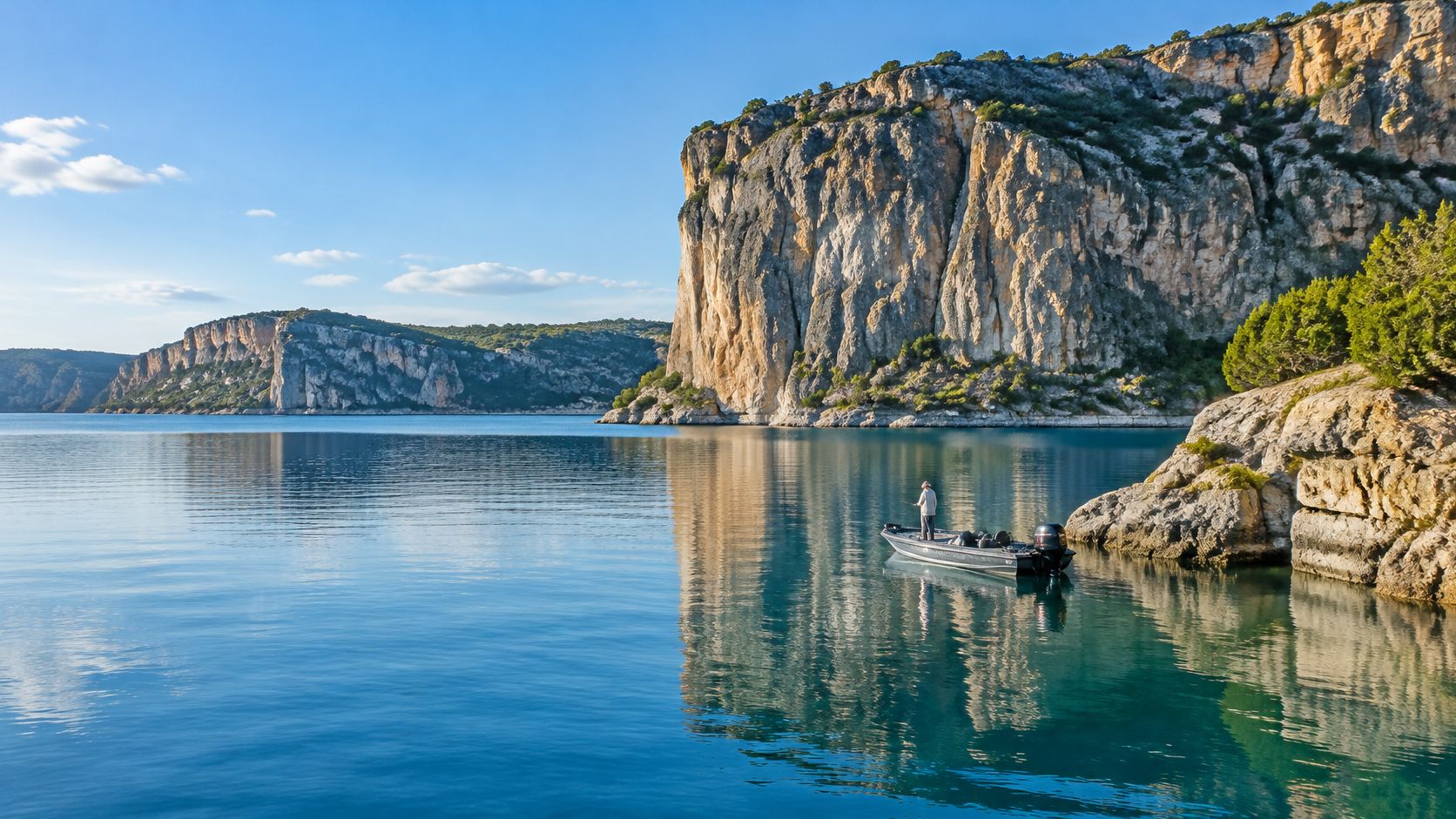
Possum Kingdom is a good fit when the whole group wants a lake weekend, but only some want to fish seriously. The rocky setting gives bass anglers structure to examine while other visitors can plan park activities. Keep those plans compatible with weather and current access.
Recreational boating can affect where and when you fish. Use the best boating lakes in Texas guide to think through a mixed-use trip, then choose your fishing window separately. A pleasant cruising afternoon isn’t necessarily the easiest time to hold a boat beside a point.
Fish depth changes, not just scenery
For a morning session, choose a rocky point and cast across different depths. Try a crankbait where it can contact suitable bottom, then a jig or finesse plastic where you need a slower approach. A dramatic cliff isn’t automatically better than a less obvious transition.
Season: Spring and fall offer opportunities to explore points with moving baits. In summer, plan an early start and adjust depth and pace to conditions.
Access: Verify Possum Kingdom State Park’s current camping, bank-fishing, and launch information. Don’t assume shoreline visible from a road is public access.
Rules: Confirm current fishing regulations and posted swimming, boating, and park restrictions.
Keep hooks and loose tackle away from shared recreation areas, especially when children or dogs are nearby.
10. Richland-Chambers Reservoir
Richland-Chambers is worth considering for a focused weekend without a border-water expedition. Approach it as water to learn, not a guaranteed numbers lake. A manageable route and a few carefully chosen areas will serve you better than a long list of borrowed waypoints.
Start by finding the relationship between shallow cover and nearby deeper water. When vegetation is present, work its edges with a weedless plastic or suitable topwater. When it isn’t, change your location or presentation instead of fishing yesterday’s description.
Give a promising area a fair test
Say you find bait near a point but get no response to a moving lure. Before leaving, work a worm through the adjacent depth change. That tests a different presentation without abandoning the conditions that first made the area interesting.
- Season: During spring, explore suitable shallow cover and protected water. In summer, investigate points and creek-channel transitions while keeping an early shallow option available.
- Access: Confirm a named public ramp, its operating status, and parking arrangements. Bank anglers need a verified fishing location, not just a road that approaches the reservoir.
- Rules: Check current TPWD regulations and the launch operator’s posted requirements before departure.
Camping check: Book the campground you’ve verified, not the nearby park you remember from an old trip report.
Don’t assume a park at another lake provides access to Richland-Chambers. Check the actual drive between your overnight base, launch, and planned fishing area before committing.
Quick comparison of the 10 best bass lakes in Texas
Match the lake to your trip. A trophy hunter, a camping family, and a Houston angler with one free Saturday need different rows from this table.
| Item | Region | Best Season | Nearby State Park | Best For |
|---|---|---|---|---|
| Lake Fork | East Texas, near Quitman and Emory | Late winter to early spring and fall | Lake Tawakoni State Park and Cooper Lake State Park | Trophy largemouth bass |
| Sam Rayburn Reservoir | Southeast Texas, near Jasper and Hemphill | Spring and fall | Martin Dies, Jr. State Park | Large-lake bass fishing and varied structure |
| Toledo Bend Reservoir | East Texas and western Louisiana border, near Hemphill and Many | Spring | Martin Dies, Jr. State Park on the Texas side; North and South Toledo Bend State Parks on the Louisiana side | Quality bass fishing across a vast reservoir |
| Choke Canyon Reservoir | South Texas, near Three Rivers and Tilden | Spring and fall | Choke Canyon State Park | Bass fishing with camping and lake access |
| Falcon Lake | South Texas, near Zapata and Falcon Heights | Cooler months | Falcon State Park | Big bass and scenic desert surroundings |
| Lake Amistad | Southwest Texas, near Del Rio | Spring and fall | Seminole Canyon State Park and Historic Site | Largemouth and smallmouth bass in clear canyon waters |
| Lake Conroe | Southeast Texas, north of Houston near Conroe | Spring and early summer | Huntsville State Park | Convenient bass fishing near Houston |
| Lake Livingston | East Texas, near Livingston and Huntsville | Spring and fall | Lake Livingston State Park | Bass fishing across varied structure |
| Possum Kingdom Lake | North-Central Texas, near Graford and Caddo | Spring and fall | Possum Kingdom State Park | Bass fishing amid clear water and limestone cliffs |
| Richland-Chambers Reservoir | East-Central Texas, near Corsicana and Fairfield | Spring | Fort Parker State Park | Shallow-vegetation bass fishing near the Dallas-Fort Worth area |
Spring fills nearly every row because that is when bass move shallow and stay reachable. Fall is the second window on most of these lakes.
Pick Your Lake and Plan the Trip
Choose the trip you can execute well. Fork fits a deliberate trophy hunt. Sam Rayburn and Toledo Bend suit anglers who enjoy learning varied water. Conroe works for a practical Houston-area outing, while Falcon and Amistad require more extensive preparation. The remaining choices can anchor fishing-and-camping weekends when their current access fits your group.
Don’t confuse trophy potential with an enjoyable day. A skilled angler with electronics and a capable boat has different options from a parent carrying spinning rods to a bank. Choose the lake and access point together, then select tackle for the water you can reach.
Confirm access before committing
Public water doesn’t automatically provide a public route across the shoreline. The TPWD fishing FAQ explains that water level and the gradient boundary can affect lawful entry and exit, so don’t cross private property without permission. Use a designated public access point rather than interpreting an exposed bank as an invitation.
The same TPWD guidance explains that visitors, including nonresidents, can fish within state-park boundaries without a fishing license under the applicable exemption, generally for bank or pier fishing. Don’t extend that exemption to a boat trip across the reservoir without checking the exact rules. License exemptions also don’t replace harvest limits or other fishing regulations.
Before departure, handle the details that can stop the trip:
- Fishing rules: Confirm current TPWD length limits, harvest restrictions, and license requirements for the specific lake and method.
- Water and weather: Check lake levels, ramp status, wind, and storm forecasts. Save a sheltered alternative.
- Park arrangements: Verify entrance fees, pet rules, camping availability, and current closures before reserving.
- Equipment: Pack life jackets, drinking water, navigation tools, and tackle suited to the cover you expect.
Our independent guide puts park fees, pet policies, camping options, and official source references together so you can compare a fishing weekend with the rest of your group’s needs. Check each fact’s last-checked date, then consult the official park page for alerts and changes. Campsite and day-pass reservations are made through the official Texas State Parks reservation site, not through our guide.
Book camping in advance once you’ve confirmed the lake and launch. Leave your route and return plan with someone, and give yourself permission to shorten the outing when conditions deteriorate. A safe, repeatable trip teaches you more than an exhausting day spent defending a bad plan.
Use TX State Parks to compare lakeside park options, camping, fees, pet rules, and estimated drive times for your bass-fishing weekend. Choose a practical base, follow the official links to verify current conditions, and reserve your campsite through the official state reservation system.
Fees, hours and rules change. Check the park's official TPWD page before you go.