Texas State Parks with Lakes: 8 Best Lake Parks for 2026
It’s Saturday in July. The cooler’s packed, the boat’s on the trailer, and everyone’s ready to leave. But the most important detail isn’t the weather or the campsite view. It’s whether the reservoir ramp is usable at the current lake level.
That’s the practical difference between choosing a lake on a map and choosing a trip that works. Among Texas state parks with lakes, some fit a swimming-first family day, others make better boating bases, and others suit anglers who’d rather fish the bank than handle a busy launch.
Advertised lake access doesn’t guarantee usable water access. The Texas Parks and Wildlife Department’s park alerts have documented low-water restrictions at Lake Abilene affecting boat ramps, kayak rentals, swimming, and fishing, while Buescher has reported reduced shoreline access even where designated fishing remained available.
Choose the activity first, then confirm that the specific access point you need is open.
These eight parks offer different starting points for swimming, boating, fishing, paddling, and camping. Fees, lake levels, rentals, and rules can change, so check each park’s official TPWD page before leaving home. For families bringing dogs, verify the rules for the places you’ll use, not just whether pets can enter the park.
Table of Contents
- 1. Possum Kingdom State Park
- 2. Inks Lake State Park
- 3. Lake Mineral Wells State Park and Trailway
- 4. Lake Somerville State Park and Trailway
- 5. Purtis Creek State Park
- 6. Lake Brownwood State Park
- 7. Lake Bob Sandlin State Park
- 8. Lake Colorado City State Park
- Texas Lake State Parks at a Glance
- Choosing Your Texas Lake Park and Booking It Right
1. Possum Kingdom State Park
Best fit for a boating-centered weekend. Possum Kingdom is the choice I’d put near the top when the boat is the reason for going, rather than an optional extra. Its lakeside setting suits a trip built around getting on the water, returning for lunch, and spending the evening at camp.
The trade-off is exposure. A shoreline campsite or picnic spot can give you an appealing view without giving you comfortable afternoon shade, so pack drinking water, sun protection, and a securely anchored shade shelter where permitted.
Use the activity comparison below to think through what everyone will do while the boat’s out.
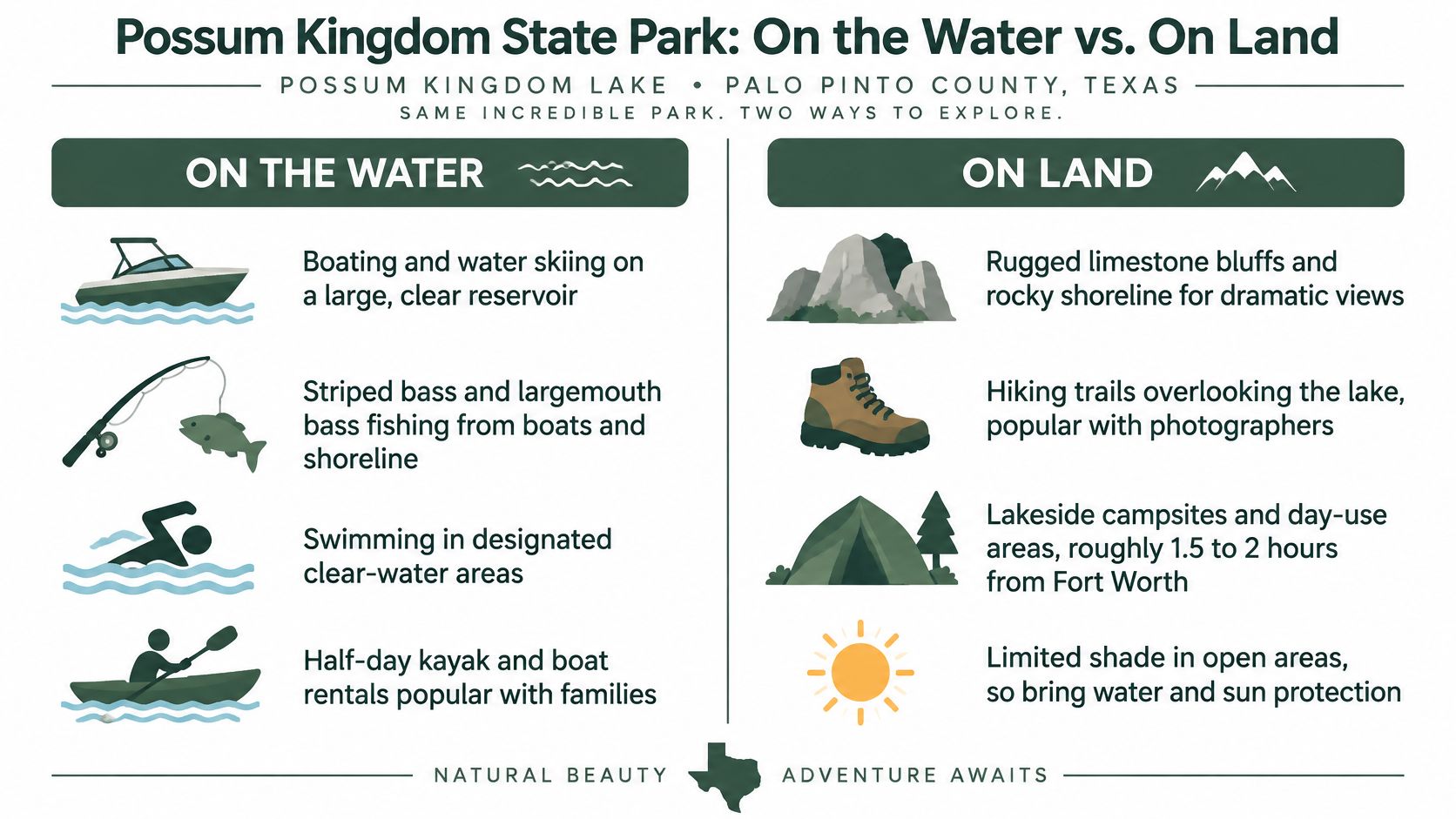
Plan around the launch, not just the campsite
Say your group includes anglers, swimmers, and someone who wants to stay ashore. Choose a base that works for the person on land, too, with a realistic walk to restrooms and somewhere comfortable to sit. A scenic campsite isn’t automatically convenient for loading gear or meeting the boat.
For a broader comparison, our guide to the best boating lakes in Texas can help you decide whether this kind of reservoir trip matches your crew.
Holiday and summer weekends deserve advance planning. Reserve camping early, prepare the boat before entering the launch queue, and don’t assume a rental provider will have equipment available without a booking.
Before you leave: Open Possum Kingdom’s official TPWD page and check alerts, ramp status, entrance fees, campsite availability, and pet rules. If renting a boat or kayak is essential, confirm availability directly with the operator rather than treating rentals as guaranteed park services.
2. Inks Lake State Park
For a family whose main question is “Where can we swim and paddle?”, Inks Lake is a strong starting point. Its Hill Country setting makes it easy to build a trip around shoreline time rather than a complicated boating itinerary.
Paddling among rocky shorelines calls for attention to wind, footing, and where you’ll get in and out.
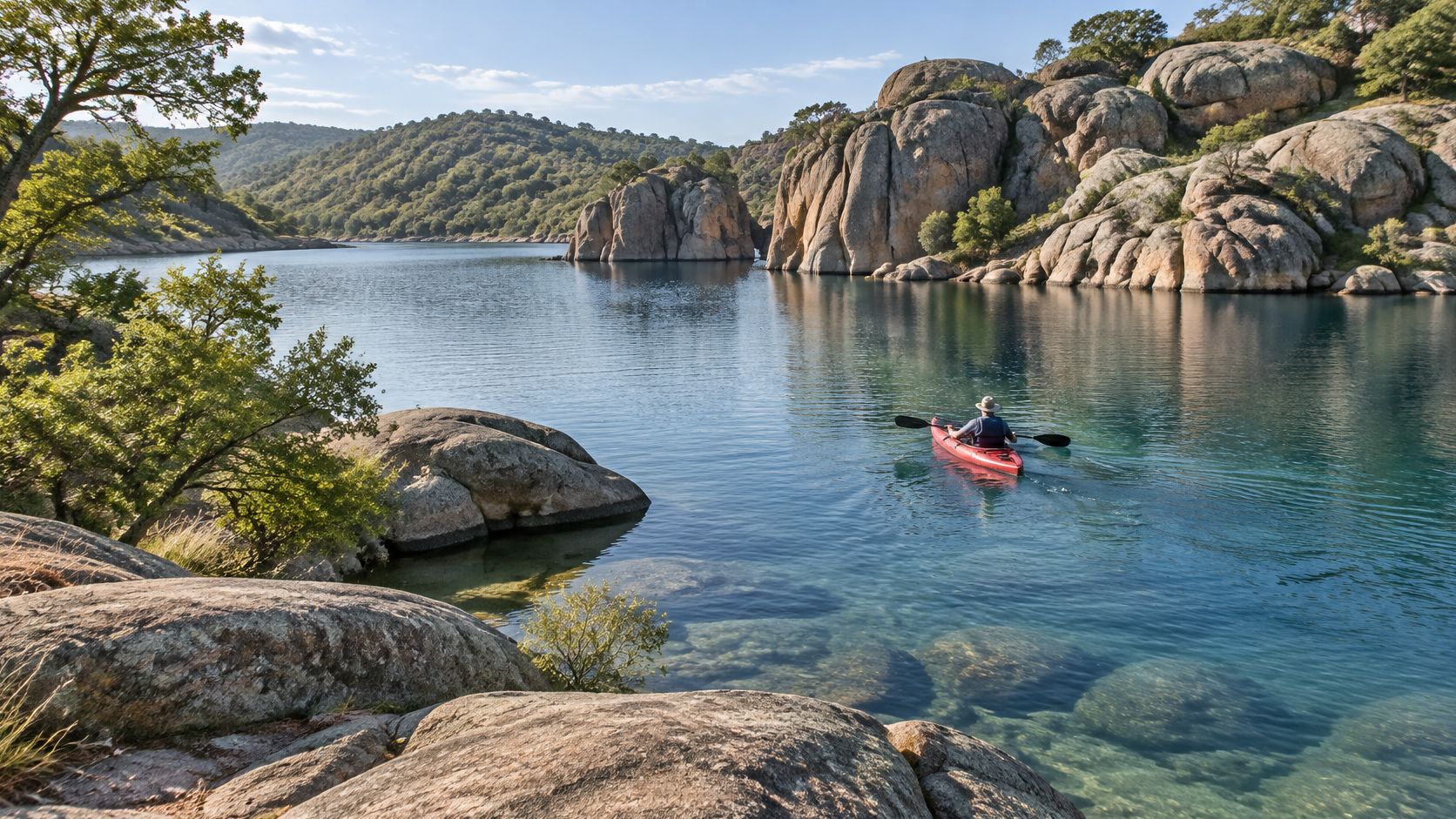
Devil’s Waterhole attracts swimmers, but don’t treat a recognizable swimming spot as a supervised pool. Follow posted restrictions, inspect your entry and exit, and keep children within active adult supervision. Water shoes help with rough footing, but they don’t make slick rock safe.
Keep the day simple
A workable family plan is an early swim, lunch away from the busiest water access, and a paddle only if conditions suit everyone’s ability. Arriving early improves your options, but it doesn’t replace a required reservation or guarantee nearby parking.
This video offers another look at the setting before you plan your visit.
For a longer stay, compare nearby destinations in our guide to Texas state parks in the Hill Country. Keep an alternative land-based outing available if storms or water restrictions interrupt the swimming plan.
Before you leave: Check Inks Lake’s official TPWD page for swimming alerts, Devil’s Waterhole restrictions, day-use availability, rental arrangements, and pet limitations. Check the campsite map separately for shade and walking distance to the water.
3. Lake Mineral Wells State Park and Trailway
Not everyone wants to spend the entire weekend wet. Lake Mineral Wells works well for a mixed-interest group, especially when cyclists or hikers want a substantial land-based activity alongside lake time.
Say one adult wants a trail ride while the rest of the family prefers a picnic and a short shoreline outing. This is the kind of trip where planning separate activities can work better than trying to keep everyone together all day.
Use the scenery as inspiration, but choose your route from the official trail map rather than a photograph.
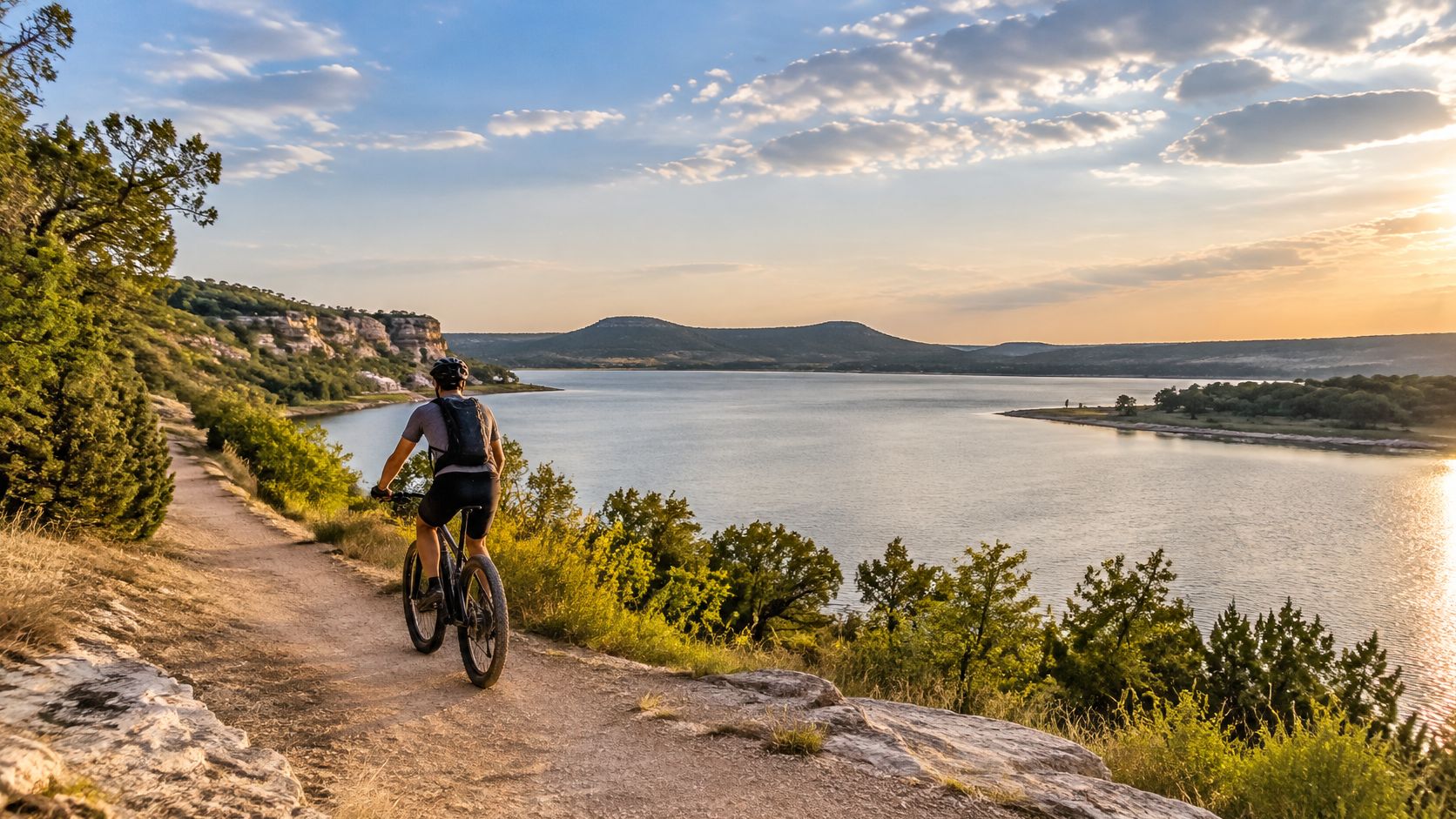
Separate the trail plan from the water plan
The park and trailway aren’t interchangeable starting points. Confirm where you’ll park, which routes allow your activity, and how everyone will reconnect afterward. Don’t assume a trail outing will keep you close to swimming access, drinking water, or the campground.
- For riders: Carry water, a repair kit, and an offline map. Start early in warm weather.
- For families: Pick a meeting point with shade and restrooms rather than an unspecified spot along the lake.
- For paddlers: Confirm launch arrangements and weather independently of trail conditions.
Our guide to Texas state parks near Fort Worth helps compare this mixed-activity option with other nearby outings.
The main trade-off is scheduling. A long ride followed by an ambitious paddle can become a tiring day, especially in summer heat. Choose a primary activity and keep the other optional.
Before you leave: Check the official Lake Mineral Wells TPWD page for trail closures, water access, boating restrictions, campsite availability, and the correct arrival point for your plans.
4. Lake Somerville State Park and Trailway
Choose your unit before you choose your campsite. At Lake Somerville, Birch Creek and Nails Creek are distinct bases, and a reservation at one shouldn’t be treated as interchangeable with a plan centered on the other.
For anglers, that means checking the exact launch you intend to use. For families, it means locating the picnic facilities, restrooms, trails, and shoreline access that fit the day rather than assuming every service is available throughout the park.
Booking rule: Put the unit name in your itinerary, navigation app, and reservation notes. “Lake Somerville” alone isn’t a precise arrival plan.
A typical fishing weekend might start with launching early, returning to camp for lunch, and spending the afternoon ashore. That works only if the chosen campground and usable ramp make the transitions manageable. Don’t book first and investigate the launch afterward.
Match the shoreline to the activity
Bank fishing, launching a motorboat, and carrying a kayak to the water require different access. A shoreline that works for casting may be awkward for unloading a canoe, especially when water levels change.
Wooded areas can make camp more comfortable, but shade at the tent doesn’t mean shade at the fishing spot. Bring insect repellent, protective clothing, and enough water for time away from camp.
Crowds matter most where people converge, particularly ramps and popular day-use areas. Load equipment away from the launch lane and avoid making the ramp your rigging station.
Before you leave: Open the official TPWD page for your chosen unit and confirm alerts, ramp status, fishing rules, campsite utilities, and entrance arrangements. Save the unit’s address before starting the drive.
5. Purtis Creek State Park
A quiet camping trip needs more than a lake without a famous name. Purtis Creek is worth considering when fishing, paddling, and unhurried camp time matter more than covering a large reservoir, but you should still choose dates and campsites carefully.
Say you’re bringing kayaks and want to fish from shore between paddles. Build the weekend around short outings, with meals and downtime at camp, rather than assuming you’ll have unrestricted access everywhere along the bank.
Check the rules before packing the boat
Fishing-focused waters can have specific boating and harvest restrictions. Read the current rules before choosing tackle, loading a motorboat, or planning to keep fish. A boat ramp’s presence doesn’t tell you everything you need to know about permitted boat use.
For paddling, the practical question is whether you can comfortably carry the boat from your parking place to a usable entry point. That matters more than how close the campsite appears to the lake on a small map.
- Shade: Look at campsite photographs and orientation, not just tree symbols on a map.
- Services: Bring your essential food, drinking water, and fishing supplies rather than relying on an unconfirmed shop.
- Navigation: Download the park map and reservation details so you don’t need a reliable mobile signal at arrival.
Quieter is a trip style, not a promise about occupancy. A full campground can still be busy, and neighboring campers may have very different schedules from yours.
Before you leave: Check Purtis Creek’s official TPWD page for current fishing regulations, boating limits, launch conditions, fees, and camping rules. Confirm the route from your chosen campsite to the water before committing to a gear-heavy setup.
6. Lake Brownwood State Park
Lake Brownwood suits an angling-and-camping weekend without requiring every hour to revolve around fishing. Plan a morning on the water, a shaded midday break, and an evening by the lake rather than pushing through the hottest part of the day.
For example, a family pursuing crappie can organize tackle and launch arrangements around the fishing outing, while keeping a picnic or short walk available for anyone who loses interest. Don’t make catching fish the only measure of a successful trip.
A campsite beside the lake is a place to stay, not a guarantee of easy bank fishing, a safe swimming entry, or shade over your picnic table.
The useful trade-off here is between water proximity and camp comfort. Before booking, compare the site’s utilities, terrain, shade, and access to restrooms. A less dramatic view may work better for a family spending substantial time at camp.
Make the fishing plan specific
Choose whether you’ll fish from shore or a boat before packing. Bank anglers need a usable casting area and a manageable walk with equipment; boaters need a functioning ramp and somewhere appropriate to park the tow vehicle.
Don’t rely on a broad seasonal reputation to choose your entire approach. Check the weather, current access, and applicable fishing regulations, then adjust your tackle and timing to the conditions you find.
Carry a separate supply of drinking water for the boat or shoreline session. Water left at camp won’t help when you’ve walked away with rods and a tackle bag.
Before you leave: Review Lake Brownwood’s official TPWD page for ramp alerts, fishing and boating rules, swimming information, and campsite availability. Confirm any facility you’re counting on before making a long drive.
7. Lake Bob Sandlin State Park
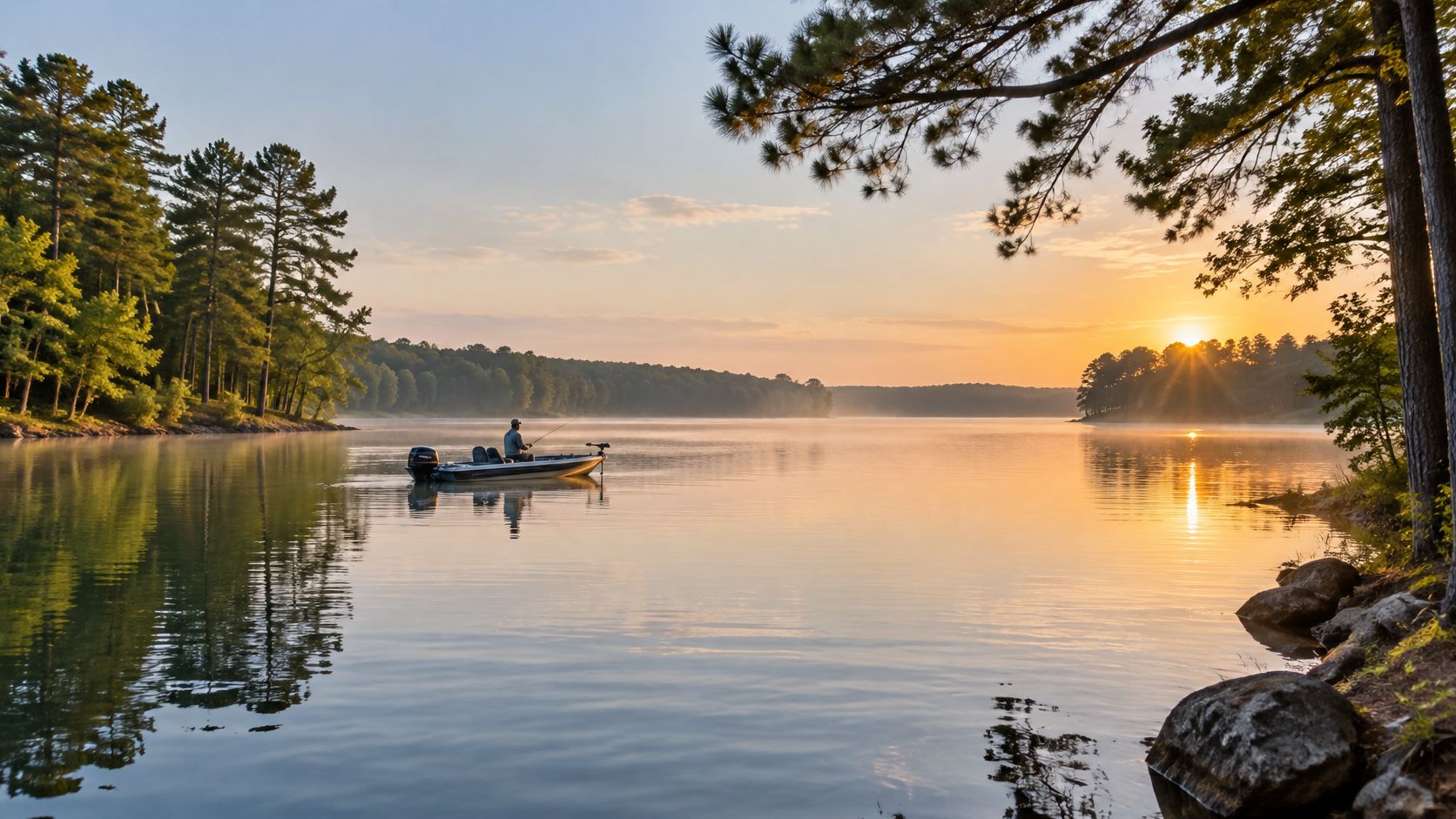
Wooded campsites are a compelling reason to consider Lake Bob Sandlin for a relaxed fishing weekend. The important distinction is between shade where you sleep and convenience where you launch, fish, or spend the afternoon.
A useful plan for a mixed group is an early fishing outing followed by camp time and a modest walk. That gives anglers a reason to get moving without requiring everyone else to spend the day in a boat.
Early fishing can be appealing, but check the forecast and visibility before launching.
Choose comfort without assuming isolation
A wooded setting can feel more sheltered than an exposed shoreline, but it doesn’t guarantee privacy or an empty campground. Study the campsite layout, look for the distance to neighboring sites, and avoid choosing solely from a photograph framed toward the trees.
After rain, use footwear with reliable traction and check trail notices before setting out. Waterproof shoes may help with wet ground, but they aren’t a reason to ignore a closure or walk through standing water.
For services, distinguish between facilities you know are available and supplies you hope to buy. Bring the food, bait, batteries, and other essentials you need, with any replenishment stop planned before arrival.
The same precision applies to boating. Confirm the park launch itself rather than assuming that a report about another ramp on the lake applies to your trip.
Before you leave: Check Lake Bob Sandlin’s official TPWD page for boat-launch alerts, fishing rules, trail conditions, campsite availability, and pet restrictions. Review the site map for shade, restroom access, and trailer arrangements.
8. Lake Colorado City State Park
Lake Colorado City deserves a conditions-first decision. For travelers crossing West Texas, a lakeside stop can be a welcome alternative to another roadside break, but the presence of a reservoir shouldn’t be the only reason to detour.
Start by deciding whether you need a place to camp, somewhere to fish, or a dependable water-based outing. Those are different requirements, and changing lake conditions can affect them differently.
Treat open-country comfort as part of the plan
For a family stopping between longer drives, an early or cooler-weather visit may be more comfortable than an exposed summer afternoon. Bring drinking water and sun protection, and check whether your chosen picnic area or campsite offers useful shade.
If you bring a shade shelter, confirm it’s permitted and secure it for the conditions. Don’t leave a lightly anchored canopy standing unattended.
- For anglers: Confirm usable shore access and the current fishing rules before unpacking.
- For boaters: Verify the specific ramp’s status before towing equipment to the park.
- For overnight travelers: Plan fuel, groceries, and drinking-water supplies before arrival.
A realistic fallback matters here. If fishing or launching isn’t practical, decide in advance whether camping and a quiet outdoor break are enough to justify the stop.
That’s especially important when traveling with children who’ve been promised swimming. Don’t substitute “there’s a lake” for confirmation that swimming is currently allowed and accessible.
Before you leave: Review Lake Colorado City’s official TPWD page for lake conditions, boating and fishing restrictions, swimming status, fees, and campsite services. If the alert language doesn’t answer your main question, contact the park before driving.
Texas Lake State Parks at a Glance
| Item | Lake Type | Swimming | Boating and Fishing | Drive Time from a Major City |
|---|---|---|---|---|
| Possum Kingdom State Park | Large reservoir | Swimming in designated areas | Popular for boating, water sports, and striped bass and largemouth bass fishing | 1.5–2 hours from Fort Worth; 2.5–3 hours from Dallas |
| Inks Lake State Park | Reservoir | Popular swimming at Devil’s Waterhole | Kayaking and other boating; fishing available | About 1 hour from Austin; 1.5–2 hours from San Antonio |
| Lake Mineral Wells State Park and Trailway | Reservoir | Swimming information not highlighted | Fishing access; boating details not specified | About 1 hour from Fort Worth; 1.5–2 hours from Dallas |
| Lake Somerville State Park and Trailway | Reservoir | Swimming information not highlighted | Boating and bass and catfish fishing | About 1.5 hours from Austin; 1.5–2 hours from Houston |
| Purtis Creek State Park | Lake reservoir | Swimming information not highlighted | Paddling and small-boat use; popular for fishing | About 1–1.5 hours from Dallas |
| Lake Brownwood State Park | Reservoir | Swimming information not highlighted | Boating, paddling, and bass and crappie fishing | About 2 hours from Austin; 2.5–3 hours from San Antonio |
| Lake Bob Sandlin State Park | Reservoir | Swimming information not highlighted | Boating and fishing for bass and other freshwater species | About 2–2.5 hours from Dallas; 3 hours or more from Austin |
| Lake Colorado City State Park | Lake reservoir | Swimming information not highlighted | Boat ramps and shoreline fishing for bass and catfish | About 3 hours from Lubbock; 4 hours or more from Austin |
Choosing Your Texas Lake Park and Booking It Right
The best Texas state parks with lakes aren’t interchangeable. Match the park to the activity you’d be disappointed to miss, then treat scenery, trails, and nearby attractions as useful additions.
For swimming, start with Inks Lake, while checking current access and posted hazards. For a boating-centered weekend, investigate Possum Kingdom and make ramp availability your first decision. Anglers can compare Lake Somerville and Lake Brownwood, paying attention to the exact launch or bank-fishing access they’ll use.
For a less hurried camping trip, consider Purtis Creek or Lake Bob Sandlin. Neither name guarantees solitude, so campsite selection and travel dates still matter. Lake Mineral Wells is a useful alternative when cycling or hiking matters as much as water time, while Lake Colorado City calls for a careful conditions check before a water-dependent detour.
Confirm the trip in the right order
- Pick the essential activity: Decide whether swimming, launching, fishing, or paddling is nonnegotiable.
- Verify usable access: Read the official TPWD alerts for the park and the specific unit or ramp.
- Check costs and rules: Confirm entrance fees, pet restrictions, campsite utilities, and any equipment limitations.
- Reserve officially: Book the campsite or day pass through the official Texas State Parks reservation site, reached from the park’s TPWD page.
Our most recent check of the park pages was October 14, 2026. That date records a page review, not a promise that lake levels, closures, fees, or rental arrangements will remain unchanged. Recheck alerts close to departure and again before a long drive if the trip depends on getting onto the water.
Dog owners should give the itinerary a separate review. A park’s general pet policy may not answer whether your dog can accompany you into a particular swimming area, building, or other restricted space. Arrange shade, drinking water, and supervision without assuming the dog can join every activity.
Finally, save your confirmation, park map, arrival instructions, and an alternative plan on your phone. Choose your park today, verify its current TPWD information, then reserve the site or pass that supports the trip you want. That order is more reliable than booking an appealing campsite and discovering afterward that the water access doesn’t fit your plans.
We bring together practical park details, including fees, swimming access, pet rules, camping options, and source-check dates, so you can compare lake trips without starting from scratch. Visit TX State Parks to narrow your options, then follow the official TPWD links for current alerts and reservations.
Fees, hours and rules change. Check the park's official TPWD page before you go.