Lost Maples State Park Fall Foliage Viewing Guide
You’ve picked the obvious Saturday, loaded the camera, and driven out expecting red maples on demand. That’s how most disappointing trips to see Lost Maples State Park fall foliage start. The color is real, but it doesn’t follow your calendar, and neither does the parking lot. Treat this as a timing and capacity decision, and you’ll give yourself a far better chance.
Table of Contents
- A Fall Foliage Visit Worth Planning
- Why Bigtooth Maples Put on a Show
- How to Choose Your Foliage Window
- Choose Your Viewing Area and Route
- Match the Trails to Your Visit Style
- Prepare for Fall Crowds and Closures
- Build a Flexible Fall Day Plan
- Final Thoughts on Timing and Access
A Fall Foliage Visit Worth Planning
A visitor arrives on a busy autumn weekend hoping for brilliant canopy photos, only to find green trees, a long line of cars, or both. She didn’t check the latest foliage report. She assumed late October always means peak color and that she could decide on a route after she parked.
That approach wastes the trip. Lost Maples State Natural Area is a concentrated seasonal destination, not a guaranteed display you can summon on a convenient date. Weather drives the leaves, demand drives access, and the two peak at roughly the same time.
What a Prepared Visitor Does Differently
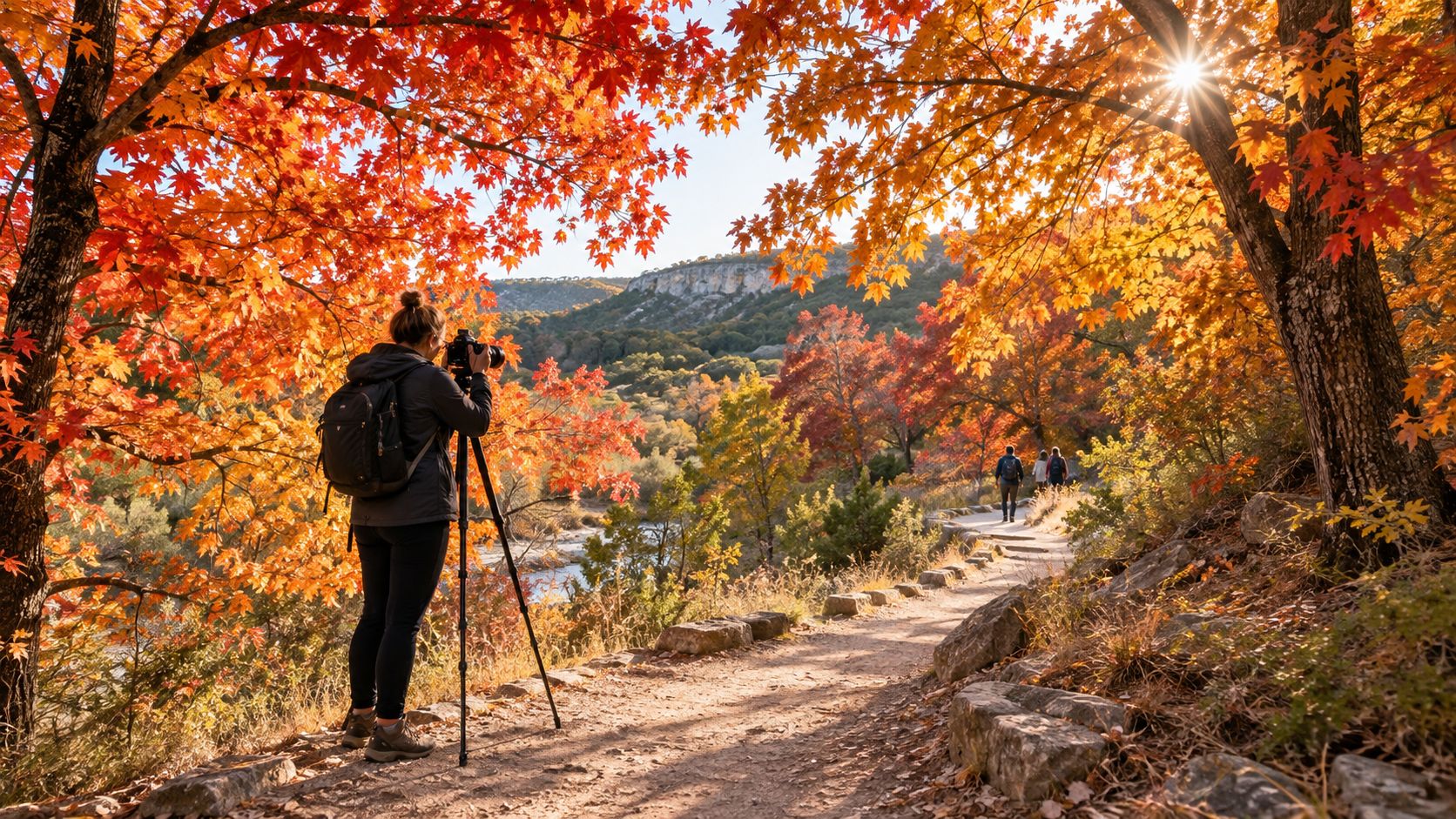
A prepared visitor starts watching official reports before color is expected, holds more than one possible date, and knows in advance whether she wants a developed area photo stop or a canyon trail walk. She also expects variation inside the park. One stand of maples can be turning while another is still green or already dropping leaves.
- Watch conditions early: Don’t wait for social media photos to tell you the season has started.
- Hold a backup date: A single fixed Saturday is the weakest plan you can make.
- Pick a viewing strategy: Decide whether photos, a family outing, or a longer walk matters most.
- Plan for capacity: Fall demand can affect entry before it affects the trees.
Practical rule: Build flexibility into the date first, then optimize the route. A perfect route on the wrong weekend won’t fix green leaves.
You’ll get the most from Lost Maples when you stop asking for one perfect day. Ask instead when to start monitoring, where to look once you’re there, and how you’ll adjust if crowds or weather shift. That’s the difference between hoping for color and planning for it.
Why Bigtooth Maples Put on a Show
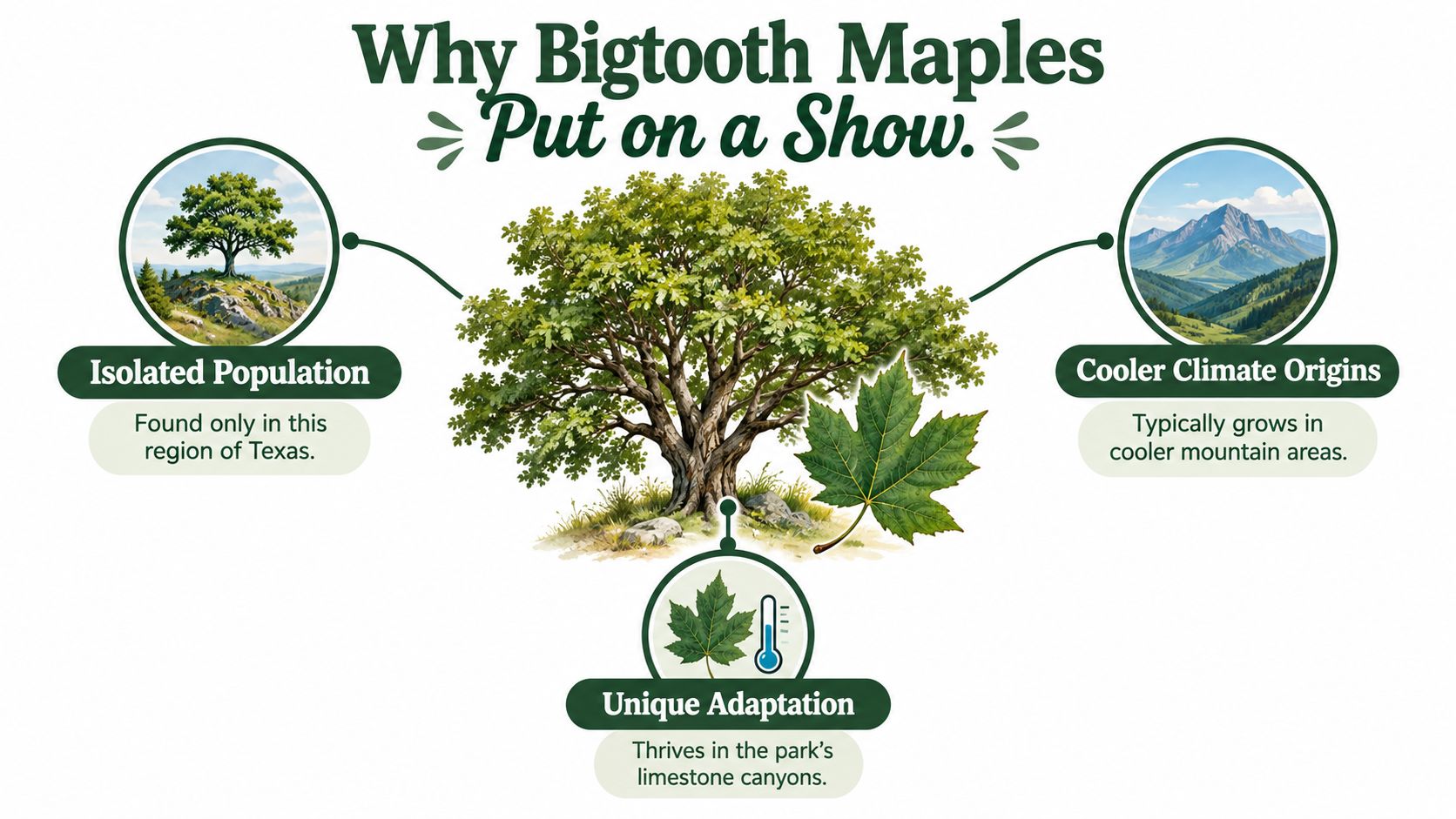
The display centers on an isolated population of Uvalde bigtooth maples, identified by the Texas Parks and Wildlife Department Lost Maples overview as the area’s defining autumn attraction. These maples, Acer grandidentatum, are more commonly associated with cooler regions than most of Texas. That’s why their presence here feels out of place, and why people travel for it.
The concept map below breaks down why this population matters in a Texas setting.
How the Color Actually Develops
Shorter days and cooler temperatures start the process. Leaves stop producing and exporting sugars, chlorophyll breaks down, and yellow and orange pigments that were already present become visible. Under favorable biochemical conditions, red anthocyanins can also form, which is why some trees go crimson while others stay gold.
Don’t expect a uniform switch. You’ll see yellow, orange, red, brown, and bare branches in different places during the same visit. That’s normal for a living seasonal transition, not a sign you missed everything.
Weather decides how long the good part lasts. Cool nights with sunny days can prolong vivid color. An early frost can cut it short by damaging tissue and speeding leaf drop, so a promising week can fade faster than visitors expect.
This short video gives you a useful visual sense of the canopy before you commit to a date.
Go in expecting a progression, not a postcard frozen in place. If you understand that the maples change tree by tree and canyon by canyon, you’ll read the foliage reports correctly and you won’t panic when one area looks past peak while another is just getting started.
How to Choose Your Foliage Window
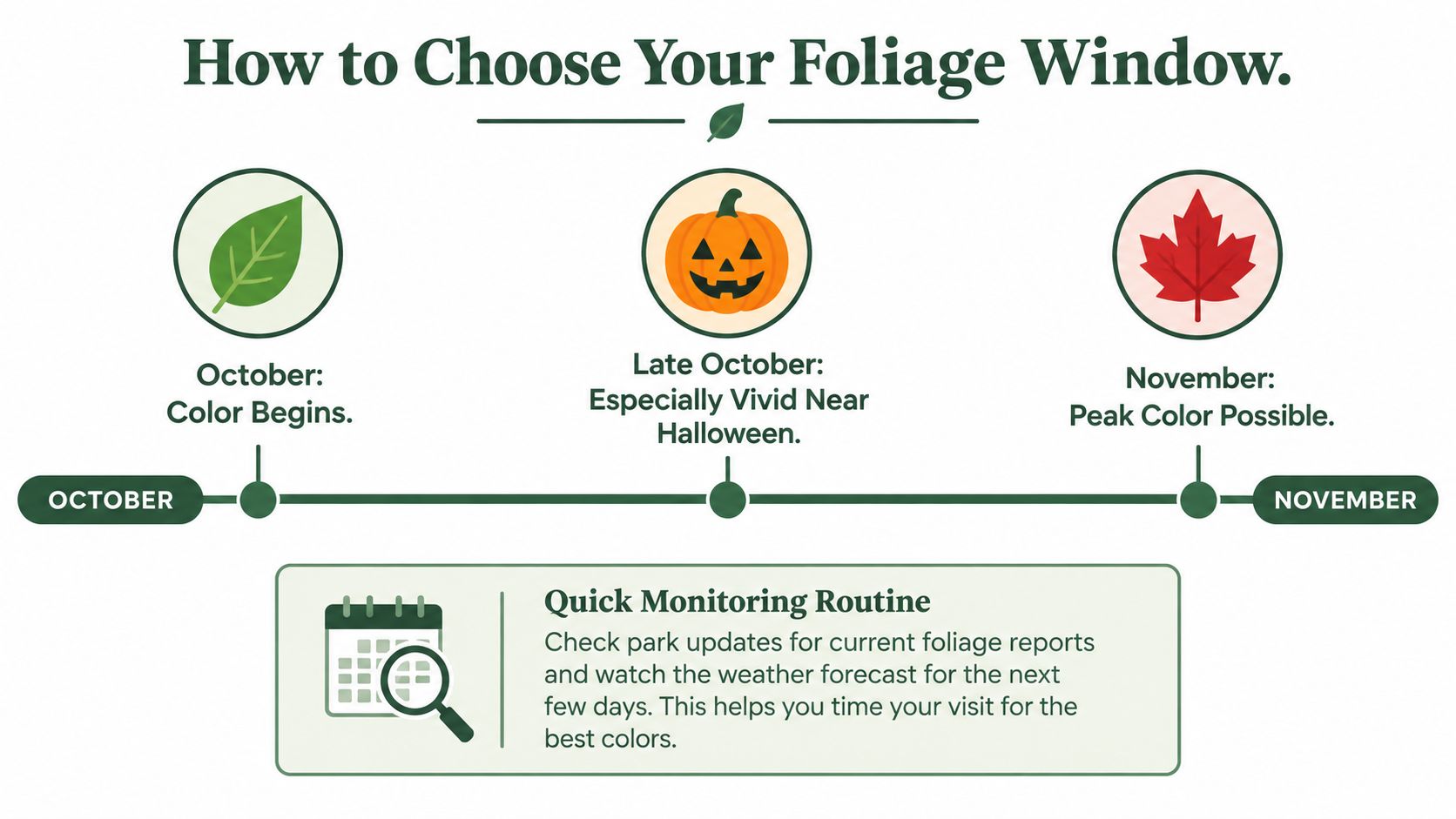
Start with the historical pattern, then let current reports overrule it. Texas Parks and Wildlife Department identifies the principal display as the last two weeks of October through the first two weeks of November, with substantial year to year variation from weather, in its Lost Maples nature and foliage guidance. Color generally begins in October, often becomes dazzling near Halloween, and some years strong demand and color continue closer to Thanksgiving.
That’s a planning window, not a promise. On November 4, 2022, most trees were still green, which should end any faith in a fixed peak date. A 2017 report, by contrast, pointed to the next seven to ten days as likely the showiest period. Same park, different years, different answer.
The timeline below shows the progression you should plan around.
A Monitoring Routine That Works
- Start checking in mid-October: Read the official foliage report before you think you need it. Early reports tell you whether the season is running fast, slow, or patchy.
- Compare several updates: One report is a snapshot. Two or three in sequence show direction, which is what you need for timing.
- Watch the weather alongside the report: Cool nights, sunny days, rainfall, and passing cold fronts can accelerate or delay the transition.
- Keep multiple days open: Plan across several possible days near late October or early November instead of betting everything on one Saturday.
- Check again right before departure: Conditions and alerts can change after you’ve made your plans, so the final check matters most.
Don’t chase a rumored peak date someone posted weeks ago. Chase the trend in the current reports.
If you can only travel once, favor a date inside the historical window but stay ready to shift it. If you can’t shift it, lower your expectations and broaden your route inside the park. A rigid date with rigid expectations is how people leave disappointed even in a decent color year.
Choose Your Viewing Area and Route
The park doesn’t peak all at once, and that’s your advantage. Archived observations show younger maples in the campground and day-use areas may hold red or orange foliage after older trees along the Maple and East trails have moved toward yellow, brown, or leaf fall. If you only check one area, you can misjudge the whole visit.
Start your orientation with the Lost Maples park page with fees and visit essentials, then use the current official report to decide where to head first on the day. Independent orientation helps you compare options, but it doesn’t replace same week conditions.
Lost Maples Fall Viewing Options
| Viewing option | What to expect | Best for |
|---|---|---|
| Campground and day-use areas | Younger maples that may retain red or orange later in the progression | Short photo stops, families, visitors with limited time |
| Maple Trail | Older canyon maples that may shift to yellow, brown, or leaf fall earlier | Walkers who want the classic canyon setting |
| East Trail | Canyon trees on a similar older tree progression, worth comparing rather than assuming | Visitors who want to inspect more than one part of the natural area |
| Combined route | Developed areas plus at least one trail, giving you the fullest color sample | Photographers and anyone arriving outside an obvious peak |
How to Read the Comparison
If reports describe late season color, don’t write the trip off. Head for the developed areas first, where younger trees may still be carrying the strongest reds and oranges. If reports describe early to mid progression, prioritize the trails before older canyon trees move past their best.
Families usually do better starting in developed areas. You get color quickly, you can gauge energy and interest, and you can add a trail only if everyone wants more. Photographers should do the opposite of settling. Sample both settings, because contrast between a fading canyon stand and a vivid younger tree can make stronger images than one uniform scene.
The core decision isn’t which spot is best in the abstract. It’s which spot matches this week’s stage of color and the kind of outing you want. Make that call from the latest report, not from last year’s photos.
Match the Trails to Your Visit Style
A short photo stop and a canyon hike call for different routes. Choose based on how much walking your group wants and what kind of outing you’re after.
For a wider range of Texas state park hiking options, compare trail choices before making Lost Maples your only stop. That can help you set a realistic pace for your group.
Photographers can spend time among the developed areas, working carefully around individual trees instead of covering miles. Families should start with easy-to-reach color and add a trail only if everyone has the energy. For a longer canyon walk, choose the Maple Trail or East Trail and watch how the mix of older and younger maples changes along the route.
Trail conditions and foliage can change together. A route that suited last weekend’s color may offer less this week, so check the latest TPWD report before leaving and reassess once you arrive.
Choose your first stop for a reason: the color stage, the walking distance, or the time your group has. If the canyon trees look past their best while developed areas still hold vivid color, change course. Flexibility within the park makes for a better visit than sticking to a route that no longer fits.
Prepare for Fall Crowds and Closures
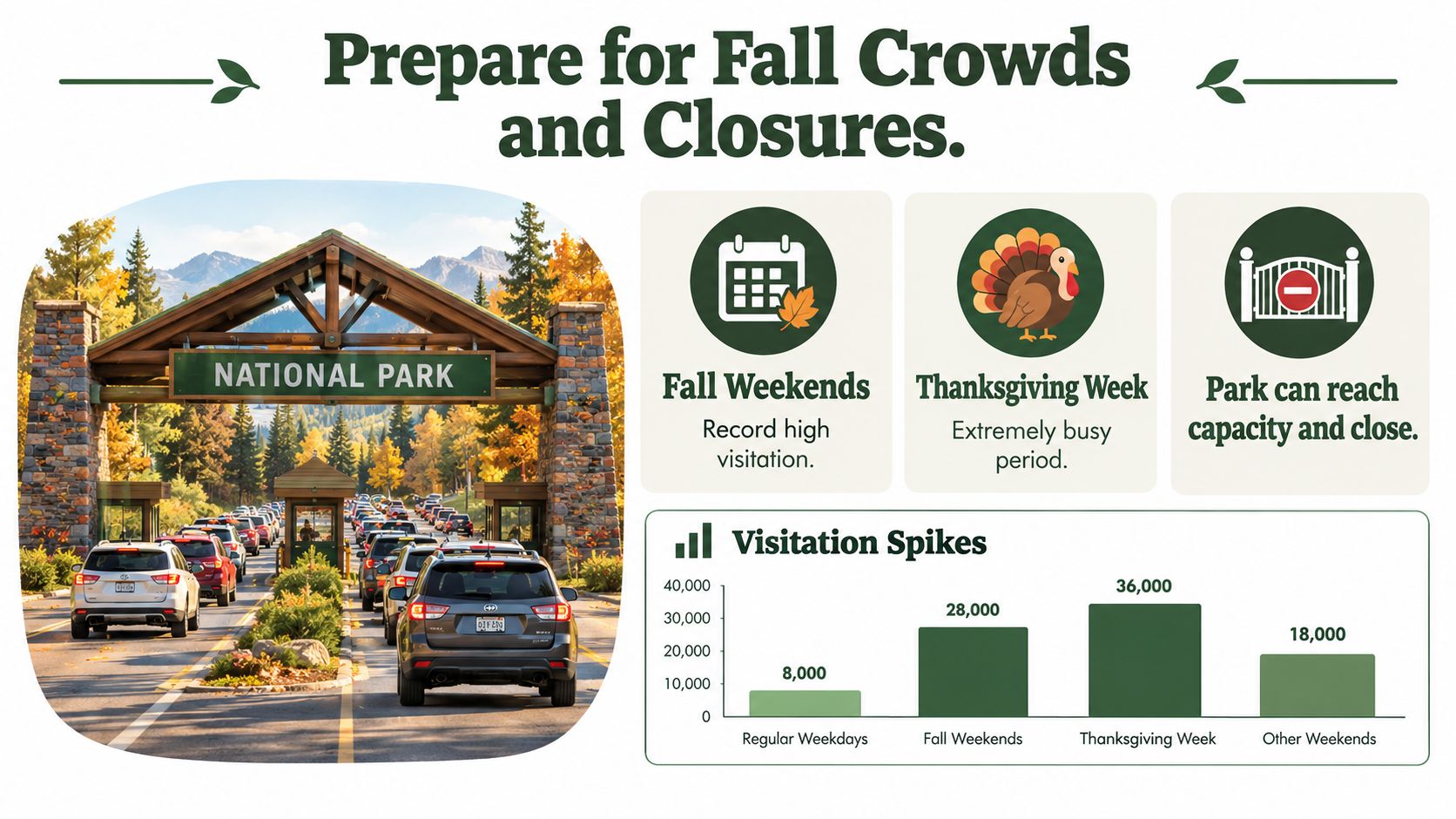
A bright fall weekend can mean a full parking area before your hike begins. Texas Monthly’s account of Lost Maples fall visitation reports about 200,000 visitors annually, with nearly half arriving during the six-week fall period. The natural area covers slightly more than 2,000 acres and has about 10.5 miles of trails, so peak-season demand can quickly strain access.
TPWD’s 2021 foliage reports described record visitation over six to seven weeks and warned of traffic, delays, and capacity closures on fall weekends and during Thanksgiving week. The color peak is brief, and popular dates can fill before the leaves reach their best. Treat entry and parking as part of your timing decision, not as details to sort out after choosing a date.
Before you commit, confirm current entry requirements and alerts on the official TPWD site. Reserve entry or camping ahead of a peak-season visit, and arrive early enough to avoid the worst traffic. Keep another date available if your schedule allows. If your preferred area is crowded, shift to another viewing area rather than forcing the original plan.
The busiest weekend on the calendar may not deliver the best color. Crowds follow holidays and reputation, while foliage depends on weather. Choose a date that fits both the latest color reports and your group’s ability to reach the park early.
Build a Flexible Fall Day Plan
A strong fall visit runs on two decisions: when to go and how to spend the hours you have. Keep one date flexible, then shape the day around current color reports and the kind of outing your group wants. For a second stop or overnight, the Hill Country guide to Texas state parks can help you map nearby options.
For a day trip, choose your first destination before leaving home and give it the best part of your morning. A developed-area visit suits a slower pace, family time, or photography; a trail-focused outing calls for comfortable footwear and enough daylight to finish at an unhurried pace. If conditions shift, change the route rather than trying to fit every stop into one day.
A weekend gives you room to split those priorities. Spend one day walking a trail and the other enjoying a more relaxed visit. Check official foliage updates and park alerts before departure, then adjust your plans to match the conditions you find.
The goal is a day with room to adapt, not a packed itinerary. Choose what matters most, leave time for it, and let current conditions guide the rest.
Final Thoughts on Timing and Access
Three assumptions ruin more Lost Maples trips than bad weather does. The first is that peak color falls on a fixed date. It doesn’t. Photoperiod and temperature drive the process, and annual weather moves the result around the historical window.
The second assumption is that foliage is uniform across the park. It isn’t. Age and location matter, which is why younger trees in developed areas can carry a visit after older canyon trees have faded. Visitors who inspect only one setting routinely misread the season.
Assumptions to Drop Before You Go
- Fixed peak thinking: A date that worked one year can be green or past peak the next.
- Uniform color thinking: One dull stand doesn’t mean the whole natural area is dull.
- Guaranteed access thinking: Fall demand can produce congestion and capacity closures even when your timing is right.
The dependable guidance is narrower and more useful. Monitor conditions beginning in mid-October, aim for late October through mid-November, compare both developed areas and trails, and treat advance planning as part of seeing the foliage. Verify the latest official foliage report and park alerts immediately before travel, because that’s the only version of conditions you’ll meet.
Lost Maples rewards visitors who respect how brief and changeable this event is. Arrive flexible, decide from current evidence, and you’ll stop gambling on Lost Maples State Park fall foliage. You’ll start planning it properly.
Plan your foliage trip with TX State Parks, where you can compare Lost Maples fees, camping, pet rules, and drive times alongside more than ninety other Texas parks, natural areas, and historic sites. Check the park essentials there first, confirm the latest official foliage report and alerts before you leave, and head out with a backup date ready.
Fees, hours and rules change. Check the park's official TPWD page before you go.