Best Waterfalls in Texas: Trails, Fees & Tips for 2026

You’ve saved a promising waterfall photo, packed the car, and committed to a long Hill Country drive. Then you reach a full parking area, a closure notice, or a creek bed that looks nothing like the picture. The problem isn’t necessarily the destination. It’s planning around a photograph instead of current access and water conditions.
The best waterfalls in Texas are the ones that fit the day you can visit. A preserve with controlled entry calls for different preparation than a TPWD park, and a private swimming destination has its own admission rules. A waterfall hike also isn’t automatically a swimming trip, even when the pool below looks inviting.
For your next trip, use TX State Parks as an independent starting point for TPWD park fees, pet rules, swimming access, camping options, and estimated drive-time context. Then follow through to official park pages for final alerts. County preserves and private attractions require separate checks with their operators.
Before you commit: Confirm that you can enter, that the waterfall is worth the approach under current conditions, and that your intended activity is allowed. Those are separate questions.
This shortlist favors useful distinctions over a beauty contest. Hamilton Pool rewards advance planning; Gorman Falls suits hikers who want a substantial waterfall; McKinney Falls makes sense for an Austin-area outing. Other stops deserve a more conditional recommendation, especially when water is a secondary attraction or the destination’s identity and access need clarification.
Choose for the experience you want, then decide whether the latest conditions justify the drive.
Table of Contents
- 1. Hamilton Pool Preserve (Travis County, near Dripping Springs)
- 2. Gorman Falls (Colorado Bend State Park, TPWD)
- 3. McKinney Falls State Park (Austin area, TPWD)
- 4. Pedernales Falls State Park (Hill Country, TPWD)
- 5. Krause Springs (Spicewood, privately owned)
- 6. Westcave Preserve (Hill Country, near Lake Travis)
- 7. Cascade Caverns (Boerne, Kendall County)
- 8. Tonkawa Falls (Verify the Destination Before Traveling)
- 9. Lost Maples State Natural Area (Sabinal Canyon, TPWD)
- 10. Palo Duro Canyon State Park (Panhandle, TPWD)
- Top 10 Texas Waterfalls: Side-by-Side Comparison
- Plan Your Next Texas Waterfall Trip
1. Hamilton Pool Preserve (Travis County, near Dripping Springs)
Hamilton Pool is a planned outing, not a dependable spontaneous swimming stop. Its limestone alcove and pool make an appealing destination, but the practical attraction is the setting as a whole. Don’t make water entry the condition for enjoying your visit.
The preserve operates under Travis County’s rules rather than TPWD’s. Use the county’s reservation process, read the conditions attached to your booking, and check current alerts before leaving. A state park reservation or pass shouldn’t be treated as admission to a county preserve.
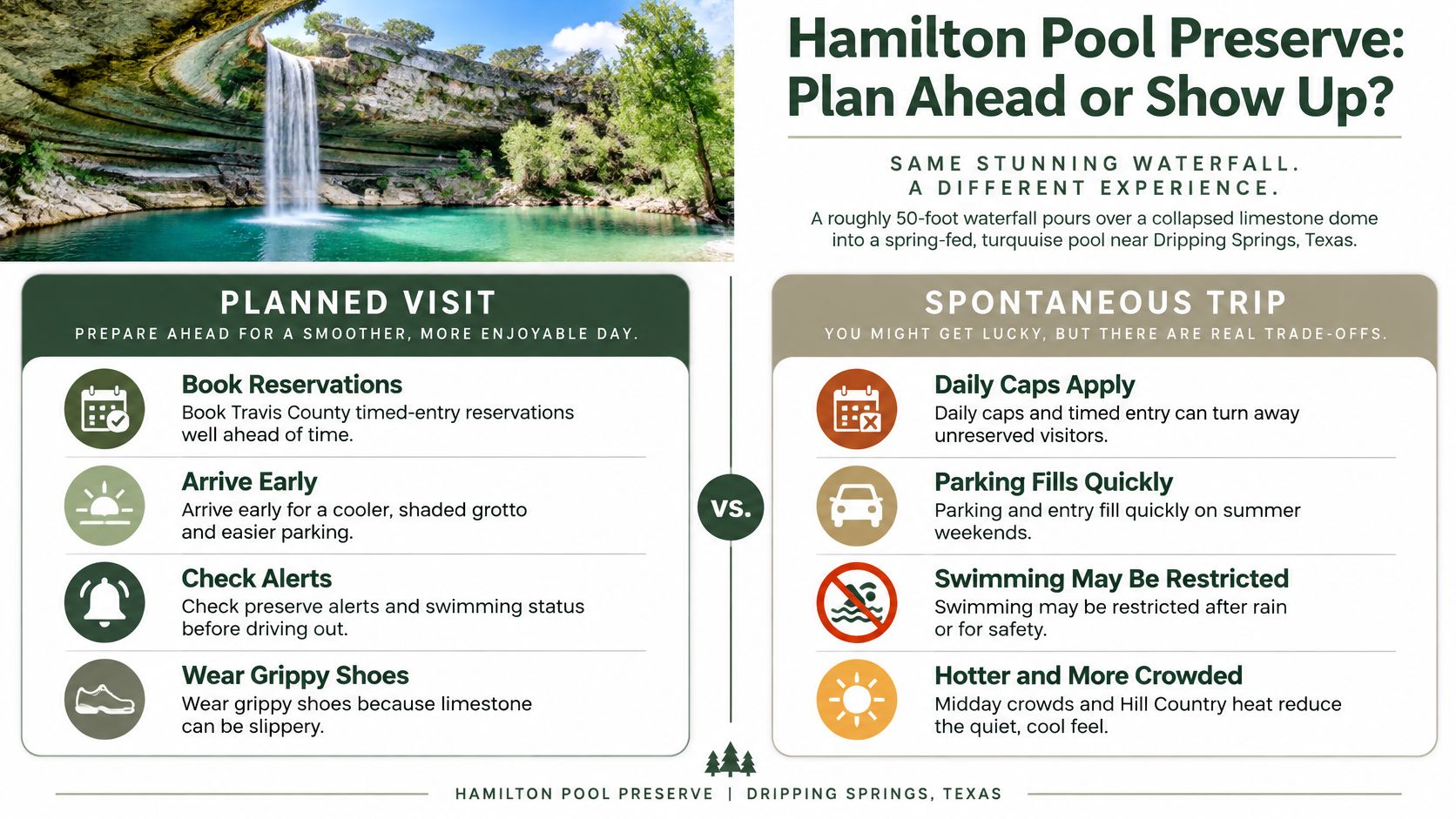
Book the visit, then verify the activity
A reservation answers whether you have an entry arrangement. It doesn’t necessarily answer whether swimming, a particular path, or access beneath the overhang is available that day. Read those restrictions separately rather than assuming the familiar photograph represents the current visitor experience.
- Entry: Secure an available reservation before organizing the rest of your day.
- Footwear: Choose shoes with traction for the approach. Pack water shoes only if permitted water access is part of your confirmed plan.
- Backup: Decide whether a viewing-only visit would still satisfy your group.
For a family driving from outside the area, that last question matters most. If everyone expects a swim, compare alternatives using the guide to clean lakes in Texas, then verify conditions at the alternative too.
Worth the drive: Yes for a reserved preserve visit with flexible expectations. Less so if your entire day depends on entering the pool.
2. Gorman Falls (Colorado Bend State Park, TPWD)
Gorman Falls offers the strongest combination here of vertical scale, distinctive rock, and a purposeful waterfall hike. TPWD manages access through Colorado Bend State Park, so entry follows state park rules: confirm day-use availability and check trail status before you commit to the drive.
The falls spill over a travertine face draped with mosses and ferns, and the trail to the base looks short on the map. Treat that distance as an approach measurement, not a difficulty rating. The final stretch is steep and rocky, and a short route can still demand careful footing, heat management, and enough energy for the return. Don’t choose it solely because the mileage sounds manageable.
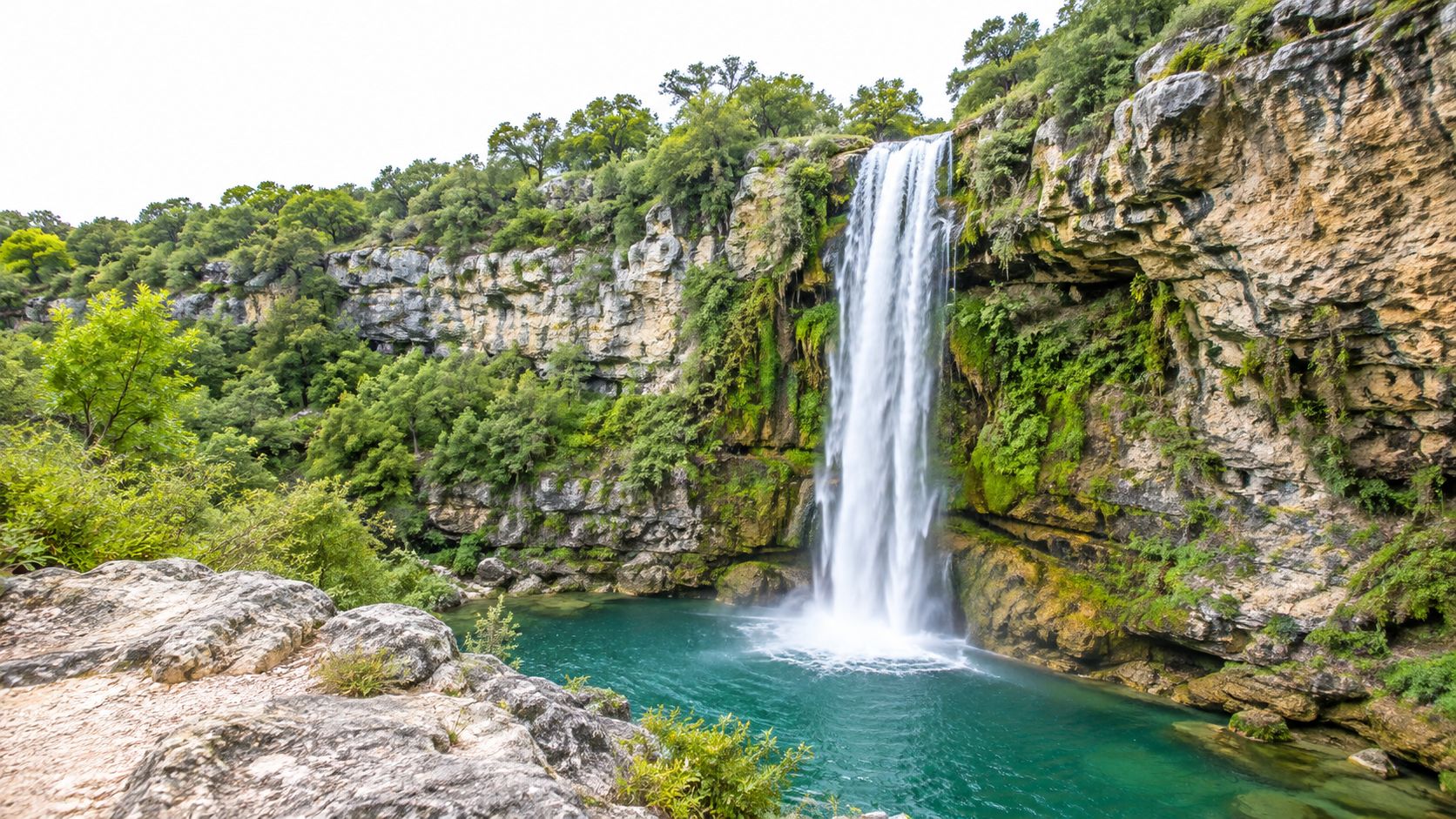
Prepare for the walk back
Start early in warm weather, carry drinking water, and wear closed-toe hiking shoes with dependable grip. Check TPWD’s current trail information before departure, including whether your intended route is open. Leave room in your schedule to move carefully rather than rushing back to meet another booking.
Spring-fed doesn’t mean visually identical every day. Mineral-rich flow built the travertine, but how the falls look on a given day shifts with recent rainfall. Plan around current conditions rather than the thickest curtain of water in an older photograph. Visitors traveling primarily for waterfall photography should look for recent flow reports before committing.
A mixed-ability group should agree before setting out that turning around is acceptable. The strongest hiker’s pace shouldn’t determine whether everyone reaches the falls safely.
Worth the drive: Make Gorman Falls the main outing when hiking is part of the reward. It’s a poor choice as a hurried detour between distant attractions.
3. McKinney Falls State Park (Austin area, TPWD)
For an Austin-area day out, McKinney Falls is the practical short-trip candidate. You can build the visit around waterfall viewing, a walk, and a picnic rather than making every part of the day depend on swimming. That flexibility is especially useful with children or visitors whose enthusiasm for hiking is uncertain.
Check the park’s current admission arrangements before setting off. Then check water-related notices separately. Neither an open entrance nor a pleasant forecast tells you whether creek conditions suit your plans.
Separate viewing from swimming
TPWD’s swimming safety guidance advises visitors to use designated swimming areas, avoid harmful algae, and leave immediately if river water rises or turns muddy. Those warnings matter more than whether other visitors appear comfortable near the water.
- After rainfall: Look for current flood and flow information, not just evidence that the falls look fuller.
- With children: Choose a dry-land viewing plan first, then consider permitted water access.
- With dogs: Verify pet rules and keep animals away from water covered by algae warnings.
- For footwear: Bring traction for walking, with water shoes as a separate option only where entry is allowed.
Suppose you arrive expecting a swim and find an advisory. A picnic and an approved trail can still make the outing worthwhile, but only if your group understands that possibility before leaving home.
Worth the drive: Strong for a flexible near-city outing. Don’t promise a swimming day until you’ve checked the park’s latest notices and the conditions on arrival.
4. Pedernales Falls State Park (Hill Country, TPWD)
Pedernales Falls is about breadth and limestone, not a towering free fall. The TPWD park page describes a river that slides and pools across tilted, layered limestone, so the payoff is a wide run of exposed ledges rather than a single vertical drop. Compare it with other stops on that basis, not as though every waterfall measurement means height.
Choose this stop when exposed rock, river views, and walking matter as much as the water itself. A lower-flow visit can still suit a scenery-focused outing. Someone expecting a dramatic plunge may leave underwhelmed.
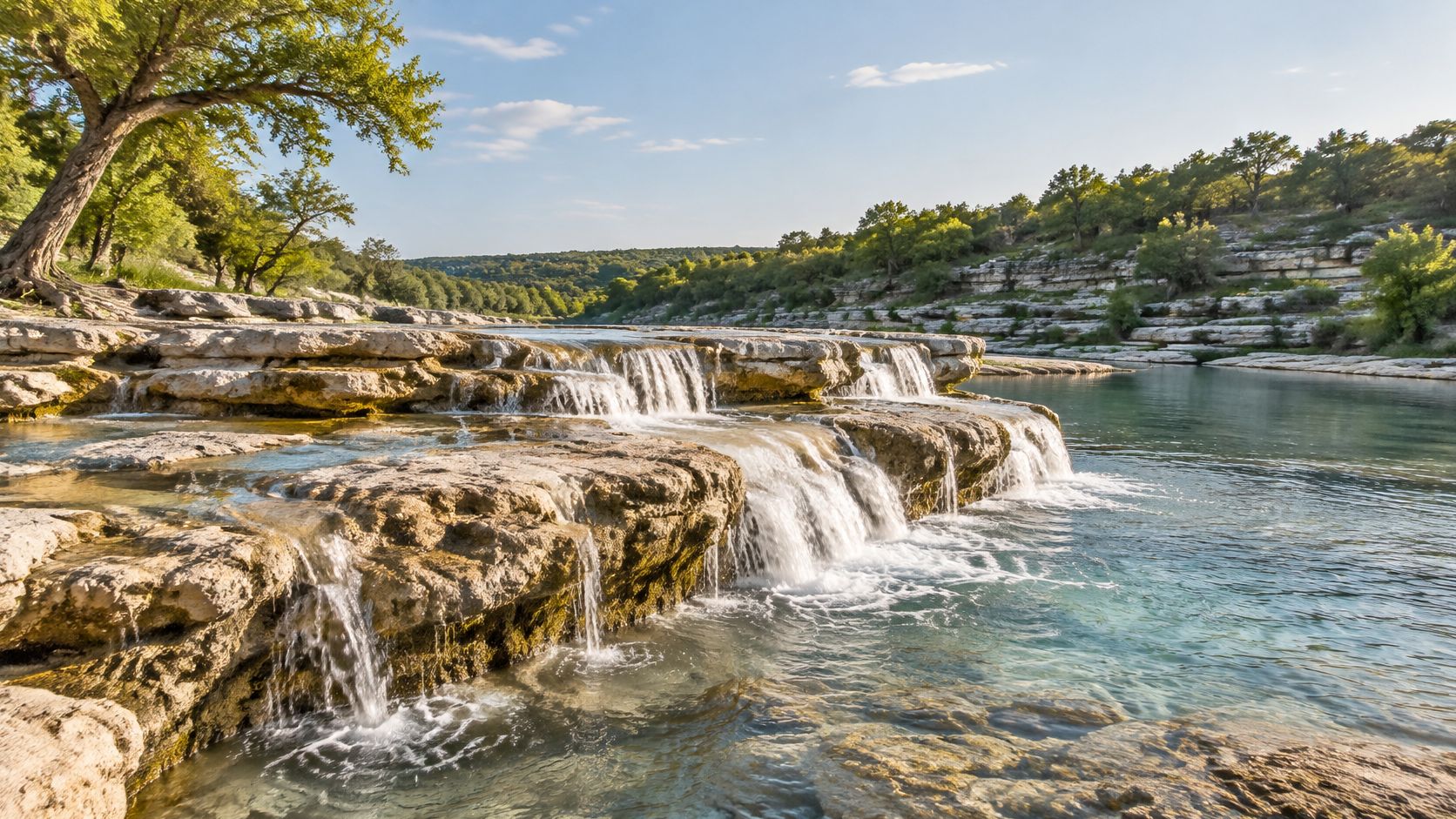
More water can improve a photograph without improving the safety of the visit. Don’t use a stronger-looking cascade as permission to move closer.
Plan around the river you find
Check the park’s current alerts, permitted recreation areas, and trail access before departure. Wear grippy footwear and keep your route within posted boundaries. TPWD rules keep swimmers out of the falls area itself, so don’t assume that permission to get wet elsewhere in the park extends to the main attraction.
A useful family plan is to treat the falls viewpoint as the main activity and any separately permitted water recreation as optional. That avoids pressuring the group to find a swimming spot because swimsuits are already packed.
Season alone isn’t a planning tool. Recent rainfall, upstream conditions, and current restrictions should guide the decision more than a general recommendation to visit in spring.
Worth the drive: Yes when limestone scenery is part of the attraction. Verify first when your sole reason for traveling is a particular flow level or water activity.
5. Krause Springs (Spicewood, privately owned)
If swimming is your priority, Krause Springs belongs on the shortlist to investigate, but don’t describe any natural-water destination as guaranteed swimming. Current permission, operating arrangements, and conditions still decide whether the trip works.
This is a private attraction, so check the operator’s admission rules rather than borrowing expectations from a state park. Confirm hours, fees, payment arrangements, and any booking requirements before you pack. If you’re considering camping, verify that separately instead of assuming day admission includes overnight access.
Ask the questions that change your plan
The useful inquiry isn’t whether the property is open. Ask whether the swimming areas you intend to use are available and whether any restrictions affect your group.
- For swimmers: Check current access and choose entry points that match your ability.
- For non-swimmers: Decide whether the grounds and permitted dry-land activities justify admission.
- For families: Bring appropriate flotation and plan active supervision.
- For footing: Pack secured water shoes, but don’t mistake footwear for protection against current or submerged hazards.
Avoid treating rock jumping as a required part of the experience. If you can’t establish that a particular activity is permitted and appropriate under current conditions, skip it. Clear-looking water doesn’t answer every safety question.
For example, a group with enthusiastic swimmers and a grandparent who wants a relaxed outing should confirm both water access and the practical route to a comfortable stopping place.
Worth the drive: Potentially a better fit for a swimming-centered day than a viewing-only waterfall hike. Make that recommendation conditional on the operator’s current information, not on the spring-fed label.
6. Westcave Preserve (Hill Country, near Lake Travis)
Choose Westcave for a preserve experience, not an improvised swimming excursion. Its appeal is the combination of waterfall scenery, shaded vegetation, and a conservation-focused visit. That calls for respecting the access format rather than trying to fit it into a loose afternoon schedule.
Confirm the available visit type and reservation requirements before traveling. If access to the area you want is guided or time-controlled, build your arrival around that arrangement. Don’t assume admission permits unrestricted wandering.
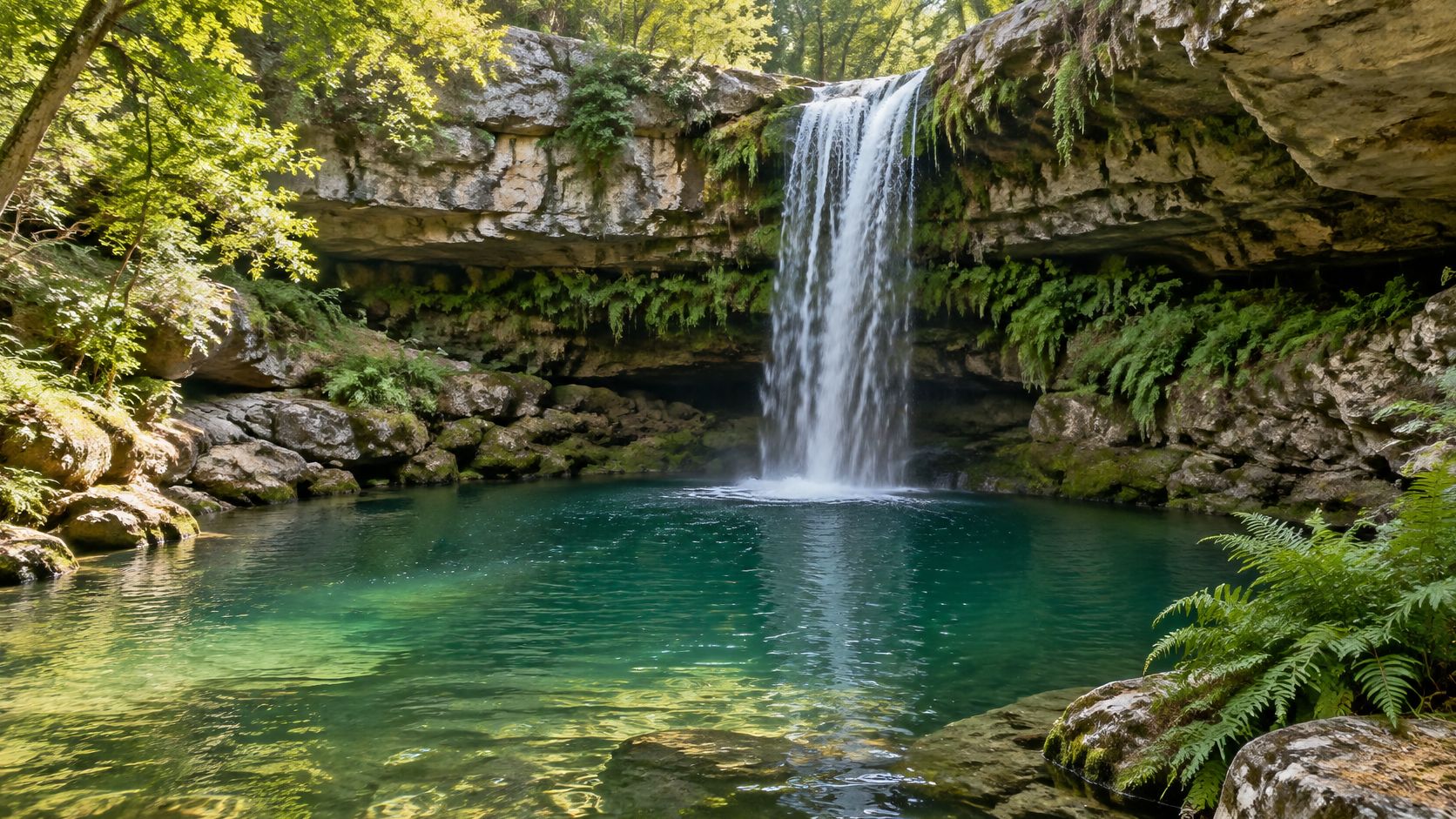
Match the visit to your group
Ask about the walking surface, elevation changes, and pace before booking for anyone with mobility concerns. A shaded destination isn’t automatically an easy walk, and a guided outing may offer less flexibility to stop or turn around than an independent stroll.
Bring drinking water, suitable walking shoes, and insect repellent. Stay on the designated route and leave plants, wet rock surfaces, and the water feature undisturbed. The best photograph is one you can take without stepping beyond the visitor boundary.
This stop suits a traveler who wants to slow down and pay attention to the surroundings. It’s less suitable for a family that has promised children unrestricted splashing or for a photographer who needs freedom to reposition throughout the canyon.
Worth the drive: Yes when you’ve secured the appropriate visit and want the preserve setting. If active waterfall flow is essential, ask about recent conditions before committing to a long journey.
7. Cascade Caverns (Boerne, Kendall County)
Cascade Caverns is a cave-tour choice with a waterfall interest, rather than a substitute for an open-air cascade hike. Make the cave experience the reason to go. Confirm whether the underground water feature is currently visible and included in the tour you’re booking.
That distinction prevents a common planning mistake: buying admission based on a feature shown in promotional imagery without checking the present route. Ask about current tour availability, physical demands, and any restrictions that affect your group.
The video provides visual context for the attraction, not confirmation of today’s operating conditions.
Book for the cave, not just the cascade
Wear closed-toe shoes with grip and bring a light layer if you’re sensitive to cool conditions. Follow the guide’s instructions about footing, photography, and where visitors may stop. Don’t plan to separate from the group to spend extra time beside the water.
For a mixed-interest party, this can work well as part of a Boerne-area day rather than an isolated waterfall mission. Someone interested in geology may enjoy the visit even if the water feature isn’t the main spectacle.
Before booking for children or visitors with mobility limitations, ask direct questions about stairs, narrow passages, and the ability to leave the tour early. Don’t infer accessibility from the fact that it’s a managed attraction.
Worth the drive: A reasonable cave-focused outing after confirmation. Too conditional for a long drive motivated only by seeing an underground waterfall.
8. Tonkawa Falls (Verify the Destination Before Traveling)
Tonkawa Falls needs an identity check before it needs a route plan. Don’t rely on a listing that describes it only as private land near Lake Travis. Establish the exact destination, managing authority, entrance location, and legal access before treating that description as usable travel advice.
The supplied Geological Society of America hydrogeological assessment of Tonkawa Falls describes flow supplied by Tonk Creek baseflow and springs associated with the Edwards and Georgetown formations. It also reports declining flows later in summer and concludes that maintaining attractive flow throughout the year would be difficult. That evidence supports a seasonal, verify-first recommendation, not an assumption of dependable water.
Access rule: A waterfall name and a map pin don’t establish permission to cross land or enter the water.
Resolve access before assessing scenery
Find current information from the actual manager or landowner. Ask whether public entry is permitted, which entrance to use, and whether viewing and swimming have different rules. If you can’t get a clear answer, choose another destination.
A practical example is a traveler adding the falls as a detour after seeing an old social-media post. Without a verified entrance and current permission, that detour isn’t ready to become an itinerary.
Don’t cross fences, follow unofficial tracks, or interpret other parked vehicles as evidence of lawful access. Likewise, don’t transfer a swimming recommendation from a similarly named location.
Worth the drive: Only after you’ve confirmed the place, access, and recent flow. If any remain uncertain, a verified public-park outing is the better use of your day.
9. Lost Maples State Natural Area (Sabinal Canyon, TPWD)
Lost Maples is a canyon-and-trail recommendation with possible water scenery, not a waterfall-first promise. Choose it because you want the scenery and the walk. Treat seasonal cascades or flowing water as a condition to investigate, not a guaranteed centerpiece.
That makes it a useful alternative for travelers who don’t need every outing to end at a plunge pool. It’s a weaker choice for someone comparing destinations solely on the size or force of their waterfalls.
Let the season shape the outing
Check TPWD’s current trail information and ask about river conditions before planning a water-focused visit. If autumn scenery is the main draw, use the Lost Maples fall foliage planning guide to prepare, then verify current conditions rather than relying on a fixed calendar expectation.
- For hikers: Choose a route suited to the least-confident person in the party.
- For campers: Confirm campsite availability before organizing the drive around an overnight stay.
- For water seekers: Ask specifically about current flow instead of assuming a river label guarantees moving water.
- For everyone: Carry drinking water and wear sturdy trail footwear.
Suppose your group includes someone who wants photography and someone who wants a substantial walk. Lost Maples can make sense if both are happy with canyon scenery even when the water is modest.
Don’t improvise a route along the creek to find a cascade that isn’t visible from the approved trail. Water interest doesn’t override access boundaries or safe footing.
Worth the drive: Yes for the broader natural-area experience. Choose a more clearly established waterfall destination if flowing water is your nonnegotiable goal.
10. Palo Duro Canyon State Park (Panhandle, TPWD)
Palo Duro belongs on a scenery-led itinerary, not a waterfall guarantee. Choose it for the canyon views, walking, and the possibility of a longer park stay. Any seasonal water feature should remain a secondary interest unless you have current, specific confirmation.
For a traveler deciding between the Panhandle and the Hill Country primarily to see waterfalls, that difference matters. Don’t make a substantial detour based on an image of temporary runoff.
Build a dry-weather-worthy plan
Choose activities you’ll still enjoy without visible flowing water. The guide to natural wonders of Texas can help place the canyon in a broader scenic itinerary rather than forcing it into a waterfall-only trip.
Check current TPWD trail notices and weather before setting out. Plan walking for cooler parts of the day, carry ample drinking water, and keep a turnaround option. If conditions don’t suit your intended hike, choose an available alternative rather than pressing ahead to justify the drive.
- For camping: Secure the accommodation you need before treating the trip as an overnight plan.
- For photography: Prioritize approved viewpoints rather than searching for storm-fed runoff.
- For water features: Ask park staff whether anything currently flowing is both accessible and appropriate to visit.
For example, a family can plan a canyon-viewing day with a short approved walk and an overnight stay. That itinerary doesn’t collapse if a creek is dry.
Worth the drive: Strong when dramatic scenery is the purpose. Not a responsible recommendation when the only objective is a reliably flowing waterfall.
Top 10 Texas Waterfalls: Side-by-Side Comparison
Texas waterfall trips hinge on who controls access, how tight reservations are, whether flow survives a dry week, and how much trail effort the reward justifies.
| Destination | 🔄 Access & planning | ⚡ Effort and resources | 📊 Water and scenery outlook | ⭐ Ideal use case | 💡 Key advantage or caution |
|---|---|---|---|---|---|
| Hamilton Pool Preserve | Advance timed-entry reservation often needed; check alerts | Approach can be slick; choose shoes with traction | Turquoise spring-fed pool and dramatic waterfall; swimming may close | Families, casual visits, and photography | Iconic scenery; daily caps can limit spontaneous visits |
| Gorman Falls | Check TPWD conditions; plan for a remote park visit | Strenuous, rocky hike; bring water and sturdy hiking shoes | Tall, spring-fed waterfall with canyon scenery | Experienced hikers seeking a quieter destination | Spring-fed flow still varies; steep sections and limited cell service |
| McKinney Falls State Park | Check TPWD water advisories; arrive early on busy weekends | Short accessible routes plus longer trails; water shoes useful | Two creek waterfalls; flow varies with rainfall | Austin-area day trips, family outings, and camping | Convenient city access; creek conditions can change quickly |
| Pedernales Falls State Park | Check TPWD flow reports and closures | Easy-to-moderate viewing and hiking; grippy footwear recommended | Wide limestone ledges; flow varies with rainfall and releases | River scenery, hiking, and photography | Distinctive rock formations; fast water can be hazardous |
| Krause Springs | Verify private operator’s hours, fees, and rules | Low-to-moderate effort; water shoes recommended | Multiple spring-fed pools and small cascades | Swimming, family recreation, and camping | Spring-fed water; summer crowds and jumping risks |
| Westcave Preserve | Reserve ahead; access may be limited or guided | Guided or limited-access trails; insect repellent may help | Shaded waterfall canyon with ferns; flow is seasonal | Quiet nature walks and ecology interest | Cool microclimate; stay on marked trails to protect habitat |
| Cascade Caverns | Book a scheduled cave tour and confirm hours | Guided walking; closed-toe shoes and a light jacket recommended | Underground waterfall and cave formations | Hot-weather outings and geology interest | Unique indoor experience; stairs and uneven surfaces |
| Tonkawa Falls | Verify exact destination, managing authority, entrance, and legal access before travel | Rugged, potentially slippery approach; suitable for experienced visitors | Rain-dependent flow; exact setting must be confirmed before relying on listings | Confirmed-access visits for experienced travelers | A verify-first stop; private-land access may change |
| Lost Maples State Natural Area | Check TPWD river and trail conditions; reserve busy-season stays | Hiking on some steep canyon trails; carry water | Seasonal river pools and modest cascades; notable fall color | Hiking, camping, and autumn foliage | Strong seasonal scenery; waterfall features may be limited |
| Palo Duro Canyon State Park | Check TPWD conditions; book peak-season lodging early | Trails range from easy to strenuous; carry ample water | Dramatic canyon scenery; water features are seasonal and often small | Canyon hiking, camping, and Panhandle trips | Expansive canyon views; summer heat and exposure can be severe |
Plan Your Next Texas Waterfall Trip
Start with the experience you want, not the photograph you like most. Hamilton Pool or McKinney Falls can suit a more structured or near-city outing, although Hamilton Pool requires particular attention to reservations and access restrictions. Gorman Falls is the clearer choice when you want a waterfall hike and are prepared for the trail rather than just the viewpoint.
If swimming matters most, investigate Krause Springs and confirm the operator’s current arrangements. Don’t turn that into a promise of unrestricted or reliably available swimming. Pedernales Falls and Palo Duro make more sense when the surrounding scenery would justify the trip even if the water doesn’t match your expectations.
Make the choice with current information
Shortlist a preferred destination and a realistic alternative. For each, establish who manages access, whether you need a reservation, what you’ll pay, and whether your intended activity is currently permitted. Keep the alternative close enough to be useful, and check its rules too.
For TPWD properties, TX State Parks offers a quick way to compare practical basics, including fees, pet policies, camping, swimming information, and estimated drive times. It’s independent of TPWD, so use its source links and verification dates as a starting point. Final closure notices and changes still belong with the official park information.
County preserves, conservation properties, and private attractions require their own checks. Don’t carry a state park’s dog policy, admission expectations, or water-access rules into another operator’s property.
A good backup isn’t merely another waterfall. It’s an outing your group can legally access and enjoy under the conditions expected that day.
For flow research, the USGS Waterfalls and Rapids dataset can help establish mapped waterfall locations and their relationship to stream networks. Where relevant observations are available, use current stream information alongside manager alerts. A mapped feature confirms a location, not active flow, safe water, or public access.
Leave room to change the plan
Check weather and water-related notices immediately before departure, then reassess when you arrive. An old photograph, an open gate, and other people in the water aren’t substitutes for current permission and conditions. If swimming is unavailable, decide whether a dry-land visit still works rather than searching for an unofficial entry.
Pack for the approach you’ve chosen, including drinking water, appropriate footwear, sun protection, and any required reservation confirmation. Tell the group beforehand whether the day is primarily for hiking, viewing, or permitted swimming. That small conversation prevents disappointment from turning into pressure to take risks.
The best waterfall trip is one you can enjoy without forcing the conditions. Choose the right setting, verify the details, and be willing to take the alternative when the original plan no longer fits.
TX State Parks brings together practical details for TPWD parks, including fees, pet rules, swimming access, camping options, and estimated drive times, with official-source links and verification dates. Visit TX State Parks to compare your waterfall-area options, then confirm current alerts and reservations with the managing park before leaving.
Fees, hours and rules change. Check the park's official TPWD page before you go.