7 Texas Hill Country Waterfalls to Visit in 2026
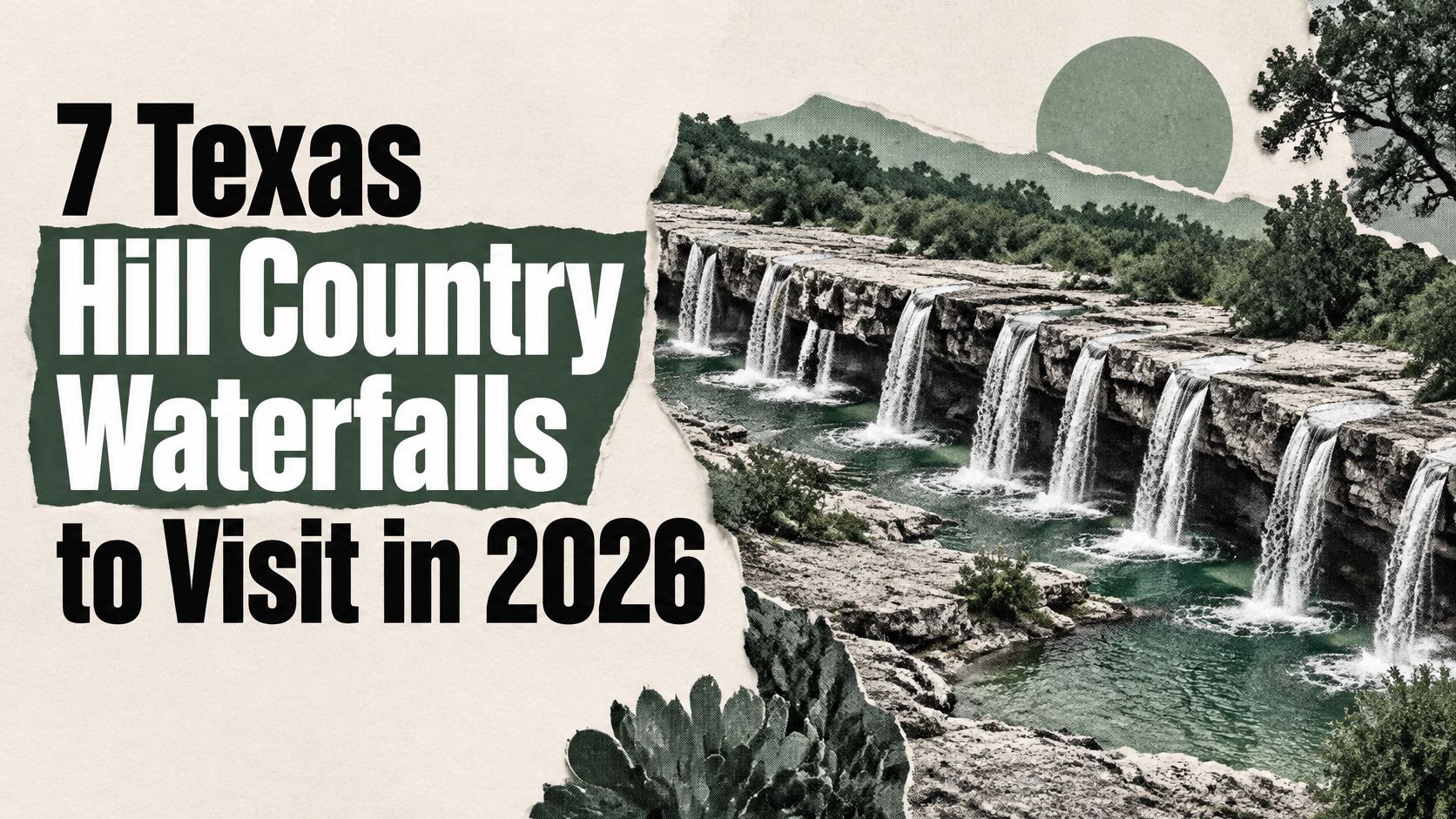
A hot Saturday in July usually starts with a simple plan. Swim under a waterfall, then sit in the shade. By 9 a.m. the popular lot is full, staff are turning cars around, and the creek from last month’s photo is a trickle.
Texas Hill Country waterfalls don’t share one set of rules. The land manager sets entry. Recent rain, or a long dry spell, sets the flow. Your group decides whether the day is a hike, a reserved grotto visit, or a quick swim close to town.
The Texas Parks and Wildlife Department splits the state into seven regions, and the Hill Country is one of them. That frame matters when you’re leaving Austin or San Antonio for a day. The seven falls below sit on two state parks, a county preserve, private springs, a conservancy canyon, a show cave, and a city greenbelt. A few feel open. Most need a day pass, a timed reservation, or a private ticket.
So the list below is grouped by the three things that decide whether a trip works: how you get in, whether the flow depends on last week’s storm, and whether swimming is realistic. Each note covers access, flow, and what the site is good for. Check the managing agency the morning you leave, since conditions posted that week beat any photo from spring.
Table of Contents
- 1. Gorman Falls (Colorado Bend State Park)
- 2. Pedernales Falls State Park
- 3. Hamilton Pool Preserve
- 4. Krause Springs
- 5. Westcave Preserve (Sculptured Falls)
- 6. Cascade Caverns
- 7. Twin Falls (Barton Creek Greenbelt, Austin)
- How the seven Texas Hill Country waterfalls compare on management, location, and best use
- Plan Your Falls Trip Around Flow, Access, and Closures
1. Gorman Falls (Colorado Bend State Park)
Gorman Falls works when you want a real hike, not a pull-off. It sits inside Colorado Bend State Park near Lampasas, on the northern edge of the Hill Country, where water seeps through limestone and spills over mossy tufa into a shaded pool on the Colorado River system. Flow is stronger after rain and weaker in a dry stretch. The rock itself is the fragile part. Tufa builds slowly, and boots, hands, and climbing on the falls damage it.
This is a poor choice if the whole point is an easy swim under the drop. Day hikers who do it well treat the falls as the scenic stop, then swim in the river and picnic back in the park. Campers use Colorado Bend as a base and fold the falls into a longer backcountry day. Either way, plan on half a day. The walk out and back eats the morning.
What to sort out before you leave
- Park page first: Check the Colorado Bend State Park notes, then the official TPWD page, for trail status, reservations, and fees.
- Water and shoes: Carry at least 2 liters per person and wear closed-toe shoes with grip. Summer heat on exposed limestone is the part people underestimate.
- Storm timing: Go after recent rain for a fuller seep, but skip the trip if the park has posted trail or access closures. Wet rock and a “stronger falls” photo are not the same decision.
Start early. Shade at the falls doesn’t help you on the walk in, and a late start is how a scenic hike turns into a heat problem.
2. Pedernales Falls State Park
Pedernales Falls spreads across a staircase of limestone ledges near Johnson City, and it reads differently depending on the river’s mood. Families from Austin treat it as an all-day picnic park. Hikers loop the trails for river views from more than one rim. The overlook can also look calm while rain upstream is already pushing the river up, which makes this the easiest fall on the list to misjudge.
The Pedernales River drains about 1,302 square miles, drops an average of 10.5 feet per mile, and is highly prone to flash flooding. Estimated discharge jumps from about 16,400 cubic feet per second in a 2-year flood to roughly 320,000 cubic feet per second in a 500-year flood, according to the National Park Service geodiversity atlas for Lyndon B. Johnson National Historical Park. Rain that fell upstream hours ago can reach the ledges while you’re still standing on dry rock.
A scenic ledge and a legal swim are different decisions, and high water retires the second one fast.
Entry runs $6 per adult, kids 12 and under free, and swimming is allowed in the park. The catch is where. TPWD’s Pedernales Falls guidance bars swimming and wading in the falls area itself, and the designated swim spot takes a strenuous hike of a quarter mile or more down steep rock stairs with no handrail. The Pedernales Falls State Park guide lays out the fee, trails, and swim-area rules in one place before you drive out.
Three practical notes:
- Weekend parking: Arrive early. Capacity ends a lot of Saturday plans before the scenery does.
- Footwear: Water shoes with grip. Wet limestone stays slick even when the current looks lazy.
- Dogs and trash: Leash rules apply, and everything you carry in leaves with you.
If storms are anywhere in the forecast, pull up the park’s alert status on the TPWD site before you leave Austin, and check it again before you get out of the car.
3. Hamilton Pool Preserve
Hamilton Pool works on a reservation clock. Near Dripping Springs, Travis County manages the preserve, and entry is by advance reservation. The payoff is a collapsed grotto where water drops over the rim into a cliff-ringed pool.
The one geology point that matters here is the bowl. A limestone overhang shelters the pool and puts the falls at the edge, so after rain the rim can run loud and white, while a dry stretch can leave a thinner curtain. Storms can still shut the whole visit down, which makes the county closure page more useful than the forecast icon on your phone.
See the grotto and the rim fall in this short look before you book a date you can’t use.
Who should book it
Book it for the setting first and treat swimming as a bonus that the county may allow on the day. If your slot lands after storms, expect the drive to be the expensive part of a bad guess. Flexible dates matter more than perfect plans: a reserved entry can coincide with closed water, and an open gate can still mean wading is off the table.
A reservation gets you through the gate. It doesn’t guarantee swimming, and it doesn’t outrank a flood closure.
Reserve through Travis County Parks well ahead, then recheck access and swimming rules on the county page the day you go. Bring water shoes and a dry bag. If your date is gone, the state-managed waterfall options across Texas work as a backup list, while the county site still decides Hamilton itself.
4. Krause Springs
Krause Springs is the private, spring-fed day that feels closer to a swimming park than a hike. Near Spicewood, the grounds hold a chain of pools and small falls, plus cliff jumps, rope swings, stonework, and shaded picnic spots. Families treat it as a full summer day. Other visitors pair it with Lake Travis or Marble Falls and never put on hiking shoes.
Depth checks come first here. Murky water hides rock under the cliff jumps, and a ledge that was safe in May can sit over a shallow shelf by August. Wade in and confirm the landing before anyone jumps.
The springs explain why this stop works when creek falls run thin. The U.S. Geological Survey reports that Edwards Aquifer withdrawals serve more than 1.5 million people in greater San Antonio, and Krause taps the same groundwater, so the pools hold their level through dry stretches that shrink rainfall-fed falls.
Private rules, not park rules
- Admission is the owner’s call: Hours, price, and pet policy live on the Krause Springs site, not on a TPWD page. Ask before you bring a dog.
- Shade goes first: Summer weekends fill the lot and the good trees early. Water shoes help on a rocky bottom.
If you want a reserved grotto or a long trail, pick another stop on this list. If you want hours in the water with a picnic table close by, Krause is one of the clearer matches.
5. Westcave Preserve (Sculptured Falls)
Sculptured Falls at Westcave Preserve suits a quiet walk more than a swim day. The preserve sits in Travis County near Round Mountain. Water steps over limestone shelves into a deep, cool pool, with a grotto-like shelter and canyon woods around it. The Hill Country Conservancy manages the land for sensitive habitat, so the visit is guided by rules, not by how close you can get to the spray.
Weekday mornings are the version that works. You’ll share the trail with fewer people, and the canyon stays cooler than the Hill Country ridges. After rain, photographers get a fuller falls. After a drought, you may get shelves with a thin sheet of water and a walk that is still worth it if habitat, not swimming, was the reason you came.
Reservation and trail manners
Book through the Hill Country Conservancy before you drive. The official preserve page is where hours, group rules, and weather closures show up, and a social post will lag behind a closure. Stay on marked trails. The habitat protection is the reason the falls still look like this, and cutting a switchback is how that gets worn out.
Wear sturdy shoes. The canyon footing is uneven, and slick limestone shows up in ordinary shade, not only after storms. Carry your water. Cell service is limited, so download the reservation and the directions while you still have a signal. This is a poor backup if Hamilton Pool is closed and you still want a swim. It’s a good backup if you wanted a small group, a short canyon, and a falls you can see without turning the pool into a beach.
6. Cascade Caverns
Cascade Caverns, near Boerne, is the falls you visit when the creeks outside are either dry or dangerous. The waterfall is underground. A guided tour takes you through the show cave to a drop inside the limestone, which stays cool while the Hill Country afternoon sits in the 90s and above. Families use it as the hot-day activity. Visitors who want town time afterward fold in Boerne’s shops and restaurants instead of another trailhead.
You trade weather risk for ticket logistics. There’s no swimming, no dogs on a canyon path, and no decision about whether the pool is legal. There is a schedule. Weekend and holiday tours fill, and “we’ll just show up” is how you end up in Boerne with nothing booked.
- Tickets and times: Use the Cascade Caverns site for the current tour clock, prices, and whether a reservation is required that week.
- Floors: Shoes with traction. Cave paths stay damp, and a casual sandal is the wrong tool.
- Layers: Cave air is cool in every season. A T-shirt that felt right in the parking lot is thin halfway through the tour.
- Access: If stairs or uneven floors are a problem, ask about the tour route before you buy. Don’t assume a show cave is step-free.
This stop fails if you wanted sun and a swim. It works on the afternoon when every outdoor falls on your list is either closed for high water or not worth the heat.
7. Twin Falls (Barton Creek Greenbelt, Austin)
Park at a Barton Creek Greenbelt trailhead on a weekday morning and you can reach Twin Falls before the crowds do. Small cascades, pools, and rock slides sit on City of Austin land inside Austin’s Hill Country edge, a short walk into the greenbelt. Residents fit it in after work. Visitors tack it onto a longer greenbelt day when a timed entry two counties away sounds like too much planning.
Barton Creek runs on runoff. The flow point made earlier applies hardest here: rain decides whether you find falls worth the walk or wet limestone and a dry channel. The TPWD Hill Country water overview backs the one check that matters for this stop: look at recent rain and current creek conditions before you drive over, because an old photo tells you nothing about today.
Brown, fast water cancels the swim plan. Give the creek a day or more to drop and clear.
- City rules: Read Austin Parks and Recreation before you go. Closures and access on city land change on a different track than state park alerts.
- Timing: Weekday mornings beat weekend afternoons on both parking and pool space.
- Footing: Water shoes on slick rock, and pack out everything. The greenbelt shows wear fast.
- Storms: Skip the creek entirely after heavy rain. Flash floods move through this corridor faster than the sky over the trailhead suggests.
Twin Falls earns its place as the easy Austin add-on: low logistics, high dependence on the last few days of rain.
How the seven Texas Hill Country waterfalls compare on management, location, and best use
Three things decide whether a falls visit works: how you get in, whether the water needs recent rain, and whether a swim is realistic. The table sorts all seven on those columns, with management and location kept for reference.
| Waterfall | Access | Flow | Swimming | Managed By | Location | Best For |
|---|---|---|---|---|---|---|
| Gorman Falls (Colorado Bend State Park) | Ticketed | Spring-fed | No | Texas Parks and Wildlife Department (TPWD) | Colorado Bend State Park, near Lampasas, Texas | Hikers willing to walk for a travertine falls |
| Pedernales Falls State Park | Ticketed ($6 per adult, kids 12 and under free) | Rain-dependent | Yes | Texas Parks and Wildlife Department (TPWD) | Johnson City, Texas (Blanco County) | Families wanting swimming, hiking, and picnicking |
| Hamilton Pool Preserve | Reserved | Rain-dependent | Conditional | Travis County Parks | Dripping Springs, Texas (Travis County) | Visitors who book ahead for the grotto and falls |
| Krause Springs | Ticketed | Spring-fed | Yes | Private owner (Krause family) | Spicewood, Texas (Burnet County) | Swimmers wanting reliable spring-fed pools |
| Westcave Preserve (Sculptured Falls) | Reserved | Spring-fed | No | Hill Country Conservancy | Round Mountain area, Travis County, Texas | Walkers wanting a quiet, conservation-focused visit |
| Cascade Caverns | Ticketed | Rain-dependent | No | Private operator | Near Boerne, Texas (Kendall County) | Families wanting a guided cave tour and indoor waterfall |
| Twin Falls (Barton Creek Greenbelt, Austin) | Free | Rain-dependent | Conditional | City of Austin | Barton Creek Greenbelt, Austin, Texas (Travis County) | Austin residents wanting a short hike and creekside stop |
Read it by column. Twin Falls is the only free stop, and the flow column shows why it fails in a dry spell. Hamilton Pool and Westcave require a reservation, so neither works as a spontaneous trip. Of the four ticketed sites, only Pedernales Falls and Krause Springs offer a real swim, and spring-fed Krause holds water long after the creeks thin out.
Plan Your Falls Trip Around Flow, Access, and Closures
A Hill Country falls day usually fails for one of three reasons: no water, no slot, or a closed gate. Sort the trip by access first. Reserved or tour-only stops go in the calendar before the cooler goes in the car. Ticketed private stops need hours and entry checked that week. Free creek and greenbelt access can wait for a same-day call, but only after radar and flow look right.
Make the decision rule blunt:
- Reserved or guided: no slot, no drive.
- Ticketed: confirm hours and entry before leaving town.
- Free or first-come: check that morning, and keep a backup within an hour.
Run three checks every time:
- Flow: look at the last week of rain and any storm upstream, rather than old photos.
- Access: confirm the reservation, tour, ticket, day pass, and gate hours.
- Alerts: read the managing agency page for closures, swimming status, and trail limits the morning you go.
High water can move a legal swim spot to dangerous or closed in one storm. A dry spell can do the opposite, leaving spring-fed pools thin and creek falls nearly dry. Pick the access rule, do the three checks, then choose the falls that still makes sense.
TX State Parks is an independent field guide to Texas state parks and nearby natural areas, with Hill Country entries that put fees, swimming access, pet rules, and drive-time context in one place before you pick a waterfall day. If you’re sorting Gorman Falls, Pedernales Falls, or another park-based stop for 2026, start with the park page, then confirm the live alerts with the agency that manages the land. Visit TX State Parks to line up the access rules before the parking lot fills.
Fees, hours and rules change. Check the park's official TPWD page before you go.