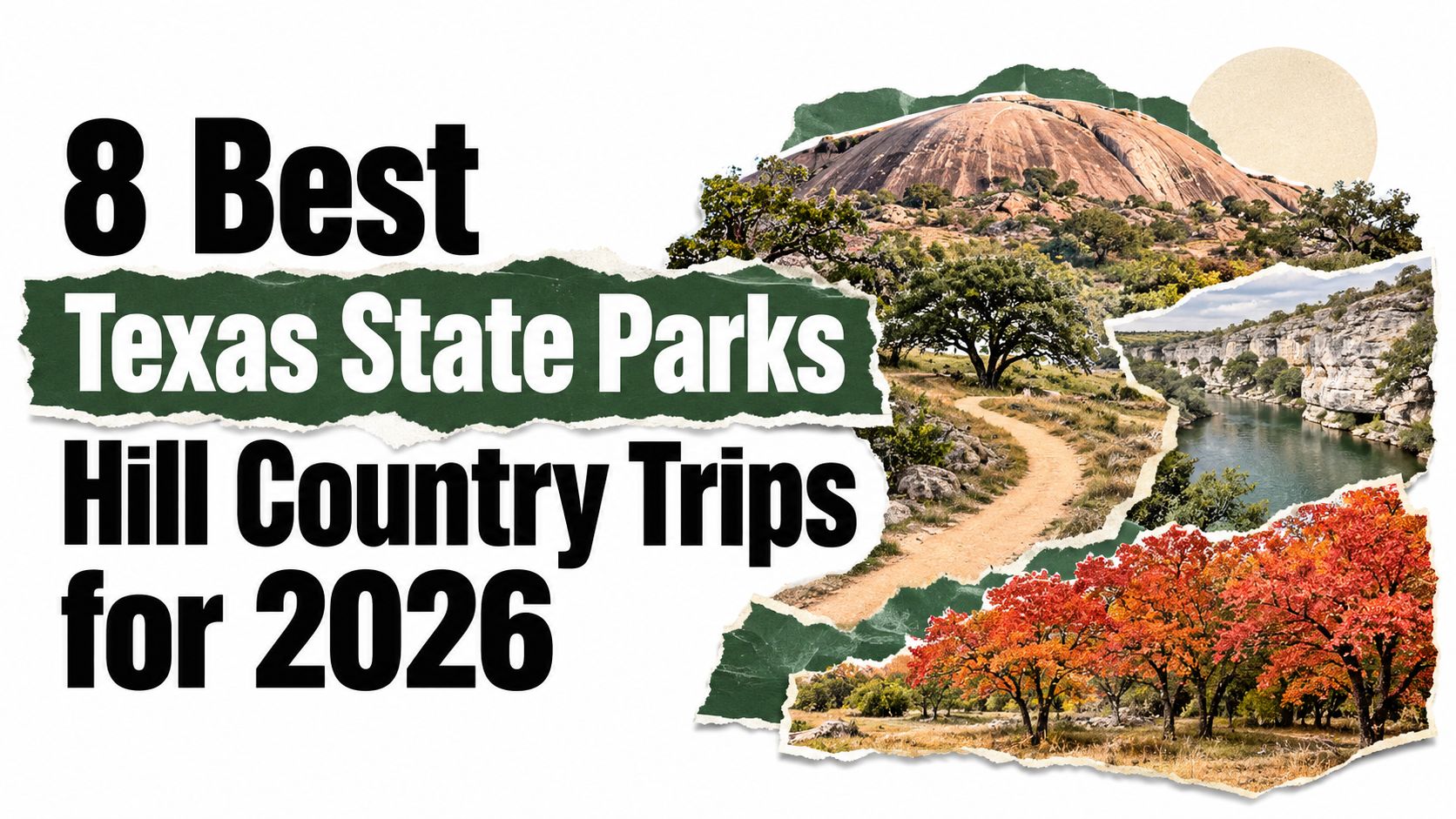
8 Best Texas State Parks Hill Country Trips for 2026
Saturday in October, you have one day, and you want a waterfall, a high view, or a swim without burning it on a three-hour drive. The Hill Country can do all three. Pink granite, limestone rivers, and maple canyons sit close enough that the wrong park is usually a planning miss, not a geography problem.
The park that works is the one that matches the job and the week you picked. A summit hike dies at noon in July with an empty bottle. A river day dies when the ramp is closed and the swim beach is a gravel bar. A fall-color weekend dies in a full lot at 9 a.m.
These eight Texas state parks Hill Country trips are grouped by goal, not by a scenery ranking. Each one names the constraint that most often wrecks that specific plan. The Hill Country is one of seven regions used by Texas Parks and Wildlife. Our activity indexes already sort 86 parks for hiking, 75 for camping, and 55 for swimming, so start with the activity and skip the parks that can’t deliver it.
Table of Contents
- 1. Enchanted Rock State Natural Area
- 2. Pedernales Falls State Park
- 3. Lost Maples State Natural Area
- 4. Garner State Park
- 5. Guadalupe River State Park
- 6. Colorado Bend State Park
- 7. Inks Lake State Park
- 8. Blanco State Park
- Hill Country State Parks at a Glance
- Plan Your Hill Country Park Visit with Confidence
1. Enchanted Rock State Natural Area
Enchanted Rock is the summit trip. The pink granite dome rises 425 feet above the surrounding country, 18 miles north of Fredericksburg. You come for the top, the night sky, and rock that pops and groans as it cools after a hot day. You do not come for a swim. Swimming isn’t allowed, and the day-use fee is $8 per adult, with kids 12 and under free.
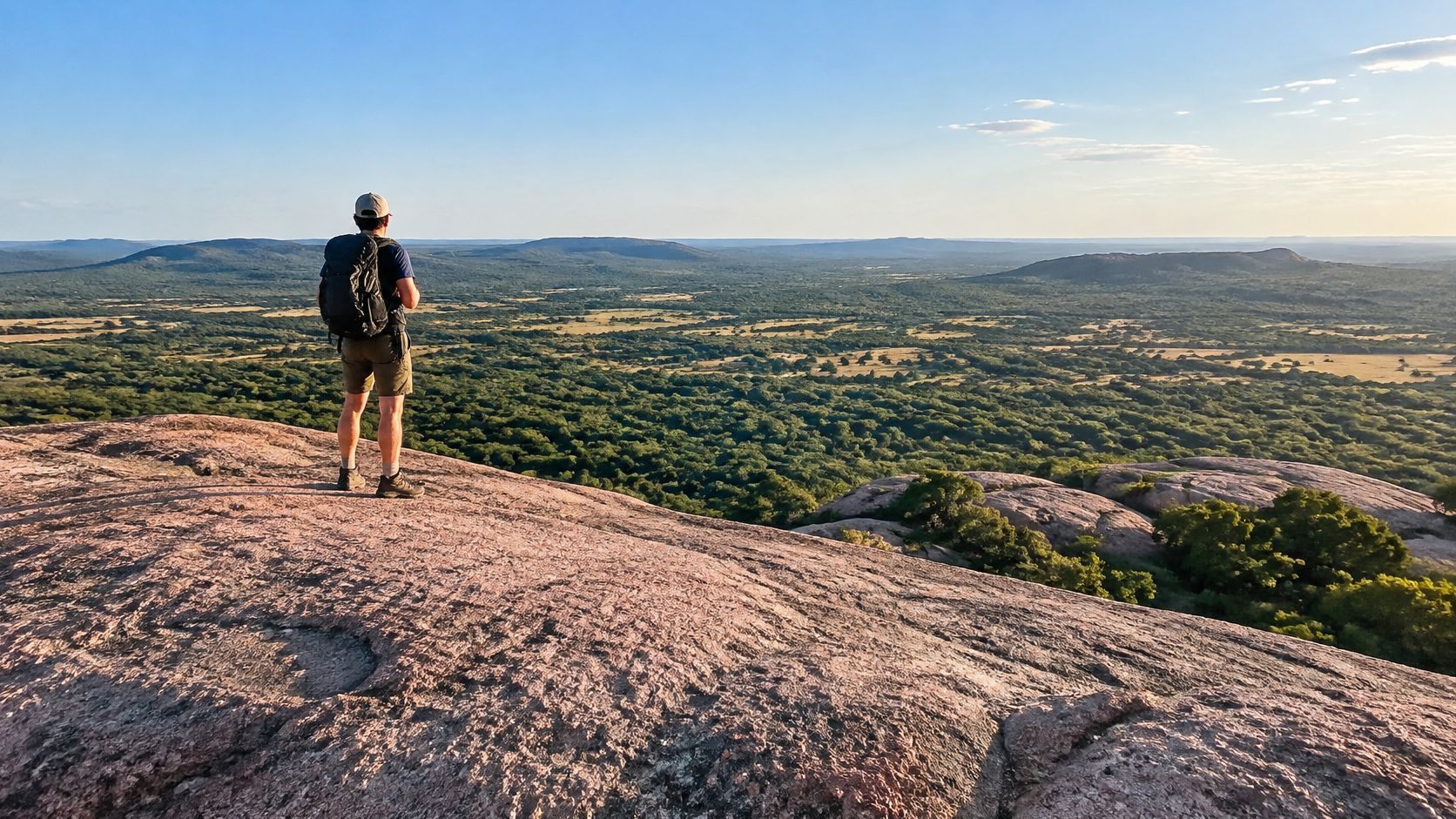
Say you leave Austin at dawn on a clear Saturday, hike the Summit Trail (0.8 mile, steep), and turn around before the granite turns into a griddle. That plan works. The same hike at 1 p.m. in August, with one bottle and no reservation, does not.
What ruins the summit day
There is no water on the dome. Heat, not distance, is the failure. The trail is short and still punishes late starts, cotton sneakers, and people who treat “steep” as marketing.
Start rule: On warm months, be on the rock at opening or after the worst heat, and carry every ounce of water you will drink.
- Reserve first: Check current day-use rules before you drive. A full park sends you home.
- Skip the swim fantasy: This is a hike and a sky park, not a river park.
- Pack for exposure: Hat, extra water, and shoes that grip slick granite.
Cell service thins out on the rock. Download the map, tell someone your turnaround time, and don’t count on a bar of signal if someone twists an ankle.
The short film below is a useful preview of the approach and the open rock, not a substitute for the morning start.
2. Pedernales Falls State Park
Pedernales Falls, near Johnson City, is the one-day river-and-ledge trip. Rapids, limestone shelves, and swim holes sit in a park that still feels tied to the Johnson country around it. Swimming is allowed. Entrance is $6 per adult, kids 12 and under free.
The trip that works is a family that arrives early, wears water shoes, and treats the falls overlook and the swim hole as two different decisions. The trip that fails is the one that drives in after a storm, assumes yesterday’s Facebook photo is today’s river, and spends the afternoon in a full lot.
The shelf is the hazard
Limestone looks friendly until it is wet. Slick rock, sudden current, and a drop you didn’t see from the overlook are the usual injuries, not a long trail.
- Read the river that morning: Closures after storms are common. If the falls are off-limits, don’t “just look” from a closed area.
- Shoes stay on: Water shoes or sticky trail shoes. Bare feet on wet shelves are how the day ends early.
- Parking is the clock: Summer weekends fill. First cars in, last cars circling.
If the only photo you trust is from last July, you don’t have a plan. You have a guess.
A workable Saturday is overlook first, a short hike while legs are fresh, then a guarded decision about swimming once you have seen the flow. Pair it with Johnson City lunch after, not before, so a closure doesn’t eat the whole day in the car.
3. Lost Maples State Natural Area
Lost Maples, near Vanderpool, is the fall-color weekend. Bigtooth maples go red and gold in late autumn along the Sabinal, on canyon trails that don’t feel like the rest of central Texas. Services are thin. You carry food, water, and a backup plan for a full campground.
The constraint isn’t the color. It’s the calendar. Peak weekends book out, and a spontaneous Saturday in November often means a day-use lot and a conga line on the popular loop. Weekdays in November are the version of this park people brag about afterward.
For timing, trail choice, and what “peak” looks like year to year, use our Lost Maples fall foliage guide before you lock lodging.
A color weekend that still feels like a hike
Say you take Friday off, camp a weekday night, and hike while the canyon is still quiet. That beats a three-hour dawn drive into a Saturday traffic jam of leaf-watchers.
- Book the weekend early: Fall is the product. Treat it like a holiday, not a maybe.
- Weekday if you can: Smaller crowds, same trees, easier parking.
- Self-sufficient: Limited services. Don’t arrive hungry and hopeful.
Color varies. A dry year and a wet year don’t peak on the same weekend. Check the week you go, not a blog post from three Novembers ago, and have a shorter canyon walk ready if the lot for the long loop is already stacked.
4. Garner State Park
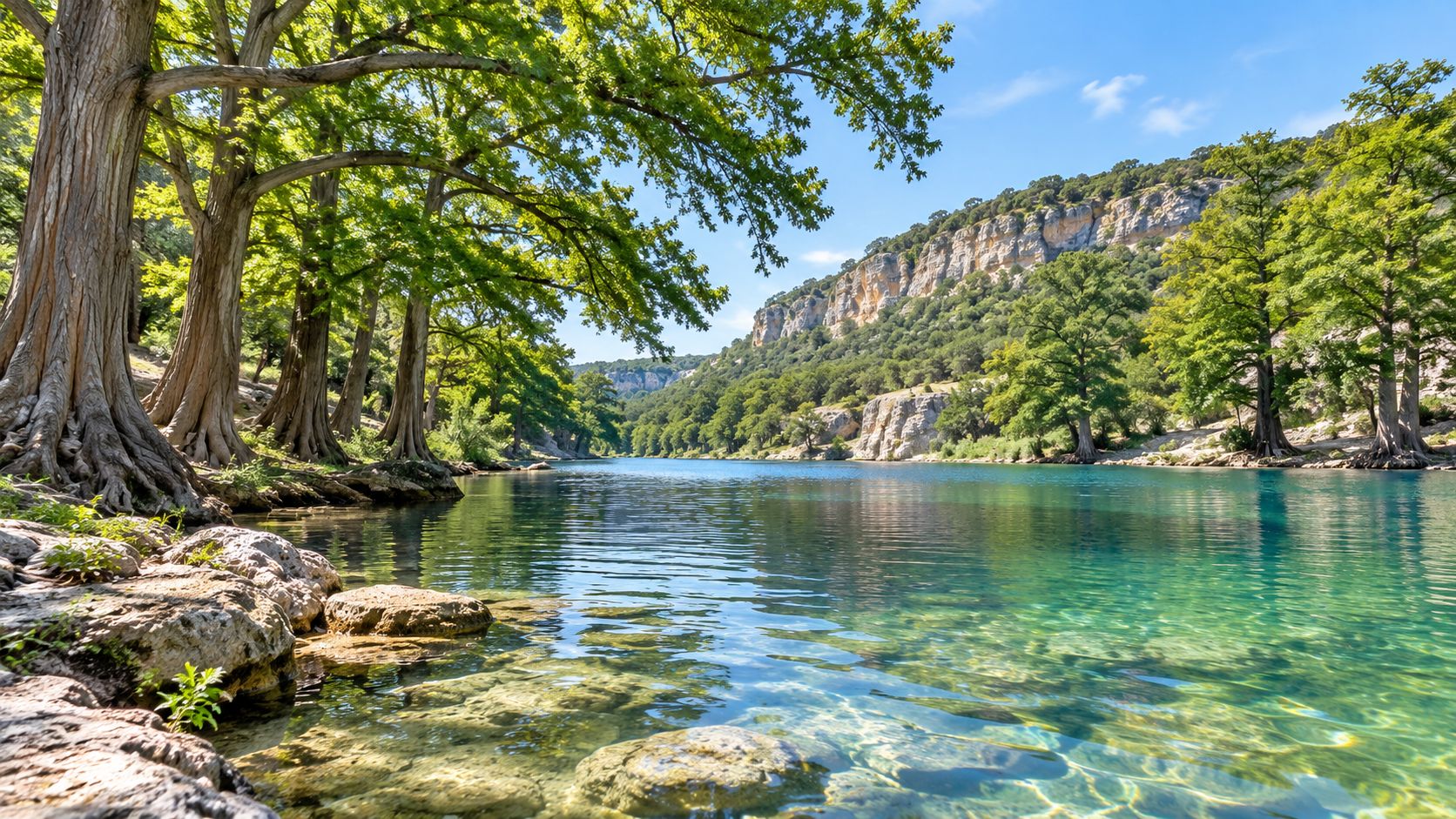
Garner, near Concan on the Frio, is the classic family river park: cabins, swimming, canyon hikes, and a dance-floor reputation that outruns the quiet parks around it. It is also where Hill Country demand piles up. The KXAN report on 2025 park visitation put the Hill Country at about 2.15 million visitors across 16 parks, second among state park regions, with Garner alone above 455,000.
That volume is the constraint. Cabins and sites for peak season go months out. A dry Frio is the other failure mode. Tubing a river that is a warm puddle is not the trip you sold the kids.
In 2025, Texas Parks and Wildlife announced Bear Creek State Park, a 1,720-acre property in Uvalde County near Garner, per the TPWD acquisition release. It is new public land in the same county, not a same-day substitute when Garner is full. Don’t plan this year’s float around a park that isn’t your reserved site.
- Reserve peak dates early: Summer and holiday cabins do not appear the week of.
- Life jackets on the water: Even a mild Frio float punishes overconfident swimmers.
- Confirm flow: Drought weekends still look pretty in old photos and feel miserable in person.
If you can’t get a site, pick a different goal for that weekend. Forcing Garner on a walk-up Saturday is how families spend the day in the entrance line.
5. Guadalupe River State Park
Choose Guadalupe River State Park, near Spring Branch, for a river day with cypress-lined banks and trails as a backup if the water is too low for paddling or swimming. Hill Country rivers can run low in drought years, so check current conditions before you go.
Ask the water, not the brochure
A park may offer swimming and paddling, but current conditions can close a launch, stop rentals, or make swimming unsafe. Check the TPWD park alerts before leaving, and confirm whether the launch is usable, rentals are operating, and your group has enough drinking water.
- Check alerts the morning you leave. Conditions can change after you book.
- Use a dry bag and phone leash. A spill in shallow water can end the day’s photos.
- Go early or on a weekday. Weekend parking can cut the river visit short.
Keep a trail walk as your backup. If the water is too low or access is closed, a cypress-bank hike can still make the drive worthwhile.
6. Colorado Bend State Park
At Colorado Bend State Park, the goal is a backcountry hike to Gorman Falls, not a quick roadside stop. The trail takes time, the park has limited development, and the access road can complicate plans after rain. Go for a quieter day outdoors, with enough time and supplies to manage without nearby conveniences.
Hill Country parks can have very different visitor numbers and access rules. Fox 7’s 2025 visitation roundup reports that some sites reach capacity and require reservations for camping or day use, while wet weather can close trails and backcountry sites. The same reporting put Devil’s Sinkhole State Natural Area at 1,357 visitors in 2025. It also described TPWD evacuating or relocating 124 campsites and contacting hundreds of visitors during a 2025 Hill Country disruption. Low visitation may mean more solitude, but limited facilities, restricted access, or road conditions can still derail a trip.
Compare Gorman Falls with the easier options in this guide to Hill Country waterfalls before choosing a hike for your group.
- Pack for the day: Bring water, food, and first aid. There may be no store nearby.
- Give the falls enough time: Factor in the return hike, photo stops, and slower hikers. Leave a buffer before dark.
- Check the road: Wet limestone and a remote entrance can make access unreliable after rain.
Two capable hikers, an early start, and flexible plans suit this trip. A stroller, a sunset deadline, or an assumption that the falls are a paved overlook do not.
7. Inks Lake State Park
Inks Lake, in Burnet County, is the lake day. Clear water, pink granite shoreline, swimming, boats, and scuba in a park that feels different from the limestone rivers an hour south. It pairs cleanly with a cavern stop if you are already in Burnet County, as long as you don’t assume the lake will be lively in January or empty in July.
The summer version is a designated swim area, sun gear, and a boat or rental you reserved with the crowd in mind. The failure is showing up for a dive or a paddle when the lake is down and the ramp you remember is a longer walk to the water.
If boats are the point of the weekend, not a maybe, start with our best boating lakes in Texas and then confirm this lake’s level, not last summer’s.
Lake days have their own rules
Cell service around the campground is patchy. Don’t plan to travel, pay, or call a tow from the peninsula and hope. Wi-Fi at a bathhouse, when it works, is not a safety net on the water.
- Level and ramp first: A “clear lake” photo doesn’t tell you if you can launch.
- Swim where it’s marked: Posted areas exist because the rest of the shore is rock and boat traffic.
- Sun is the injury: Granite reflects heat. Extra water and a real hat beat a quick drugstore stop you won’t find inside the park.
A practical split is morning on the water, midday in the shade, and a short loop on the north-end trails once the worst heat drops. Those trails are rock, not a flat nature stroll, so don’t assign them to the tired kid as a cooldown.
8. Blanco State Park
Blanco State Park is the small-town river stop. You are in Blanco, on the Blanco River, with shaded picnic ground and a pace that fits families who also want a winery porch or a historic main street the same day. It is not a backcountry badge and it is not trying to be one.
The constraint is the river plus the town calendar. Spring and summer weekends fill the small campground. A pretty downtown doesn’t put water in a low riverbed. Check swim conditions the week you go, then book the site if you want to stay, not if you might stay.
Stack the town, don’t bet the whole day on the swim
Say you picnic at the park late morning, swim only if the level and the rules say yes, and eat in town after. That uses Blanco for what it is. Driving in at 2 p.m. on a holiday Saturday, expecting both a site and a private hole, sets you up to eat gas-station food in the car.
- River check: Swimming follows the water, not the town’s reputation.
- Reserve spring and summer: Small parks fill faster than their size suggests.
- Leave time for town: Restaurants and a short main-street walk are the bonus, not a consolation prize you invent at 4 p.m.
Dogs and kids do well here when you already know the pet rule and the swim status for that week. Guessing both at the gate is how a “relaxed” day gets sharp.
Hill Country State Parks at a Glance
| Item | Main Draw | Best For | Main Caution |
|---|---|---|---|
| Enchanted Rock State Natural Area | Pink granite summit and dark night skies | Hiking, stargazing, and sweeping views | Exposed rock gets hot; the summit has little shade |
| Pedernales Falls State Park | River rapids and limestone shelves | River scenery, hiking, and swimming | Flash-flood risk after rain; rocks can be slippery |
| Lost Maples State Natural Area | Bigtooth maples and vivid fall color | Autumn hiking and foliage viewing | Fall crowds; reserve early |
| Garner State Park | Frio River swimming and canyon trails | Family stays, tubing, and summer recreation | Heavy peak-season crowds; book well ahead |
| Guadalupe River State Park | Cypress-lined Guadalupe River | Tubing, paddling, swimming, and hiking | The river can rise quickly after rain |
| Colorado Bend State Park | Gorman Falls and rugged river scenery | Backcountry hiking and camping | Remote, with rugged trails and limited services |
| Inks Lake State Park | Clear lake and granite shoreline | Swimming, boating, and diving | Lake levels fluctuate; summer weekends are busy |
| Blanco State Park | Relaxed Blanco River access | Family picnics, wading, and a low-key visit | River conditions change; fewer extensive trails |
Plan Your Hill Country Park Visit with Confidence
Pick the park that matches the goal, then protect the constraint. Summit means early and extra water. River and lake days mean this week’s level, not last year’s photo. Fall color means a reservation. Backcountry means a full pack and a road check. Garner means you already booked, or you pick another goal.
Do that check the week you travel, not the month you daydreamed. Foliage shifts. Ramps close. A park that allows swimming on paper can still post a no-swim alert after a drop in flow.
A TPWD visitor study collected 26,825 completed surveys across 67 state parks and found about 94% of respondents satisfied or very satisfied with the visit, with no meaningful gap between day visitors and overnight visitors or across seasons. The bar is already high. What knocks a good park down to a bad day is usually a rule, a closure, or a full lot you could have seen before you left.
On our park pages, fees, swimming, dogs, camping, and drive time sit at the top, each with a link to the official page and the date we last checked it. We pull those facts from each park’s TPWD pages. We aren’t affiliated with or endorsed by Texas Parks and Wildlife, so alerts and closures still belong on the official park page the morning you leave. Campsite and day-pass reservations are made on the official Texas State Parks reservation site, not here.
Before you roll, run a short list. Goal matched to park. Water or foliage checked for that week. Weekend or peak fall dates already booked. Dog rule and swim status confirmed. Drive time estimated without pretending traffic doesn’t exist. Gas, water, and a paper backup of the reservation, because several of these parks go quiet on a phone.
That is enough to trade a hopeful pin on a map for a day that still works when the Hill Country does what it always does: fill up, heat up, and change the river under you.
TX State Parks is an independent field guide to Texas state parks, with Hill Country pages that put fees, pet rules, swimming, camping, and drive times up front and link each fact back to TPWD with a last-checked date. Use it to match a summit, river, fall-color, or lake day to a real park before the weekend fills. Start with the Hill Country listings on TX State Parks.
Fees, hours and rules change. Check the park's official TPWD page before you go.